


Identification of a Plasmodium falciparum intercellular adhesion molecule-1 binding domain: a parasite adhesion trait implicated in cerebral malaria
- PMID: 10677532
- PMCID: PMC26510
- DOI: 10.1073/pnas.040545897
Identification of a Plasmodium falciparum intercellular adhesion molecule-1 binding domain: a parasite adhesion trait implicated in cerebral malaria
Erratum in
- Proc Natl Acad Sci U S A. 2006 Aug 8;103(32):12209. Fagen, T [corrected to Fagan, T]
Abstract
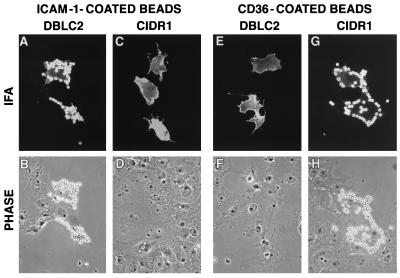
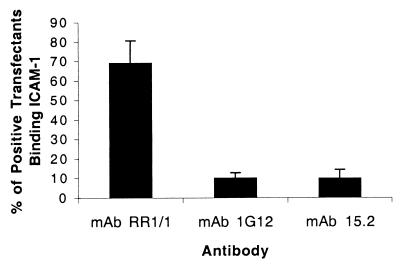
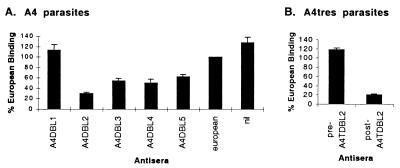
Binding of infected erythrocytes to brain venules is a central pathogenic event in the lethal malaria disease complication, cerebral malaria. The only parasite adhesion trait linked to cerebral sequestration is binding to intercellular adhesion molecule-1 (ICAM-1). In this report, we show that Plasmodium falciparum erythrocyte membrane protein 1 (PfEMP1) binds ICAM-1. We have cloned and expressed PfEMP1 recombinant proteins from the A4tres parasite. Using heterologous expression in mammalian cells, the minimal ICAM-1 binding domain was a complex domain consisting of the second Duffy binding-like (DBL) domain and the C2 domain. Constructs that contained either domain alone did not bind ICAM-1. Based on phylogenetic criteria, there are five distinct PfEMP1 DBL types designated alpha, beta, gamma, delta, and epsilon. The DBL domain from the A4tres that binds ICAM-1 is DBLbeta type. A PfEMP1 cloned from a distinct ICAM-1 binding variant, the A4 parasite, contains a DBLbeta domain and a C2 domain in tandem arrangement similar to the A4tres PfEMP1. Anti-PfEMP1 antisera implicate the DBLbeta domain from A4var PfEMP1 in ICAM-1 adhesion. The identification of a P. falciparum ICAM-1 binding domain may clarify mechanisms responsible for the pathogenesis of cerebral malaria and lead to interventions or vaccines that reduce malarial disease.
Figures



References
Publication types
MeSH terms
Substances
Grants and funding
LinkOut - more resources
Full Text Sources
Other Literature Sources
Research Materials
Miscellaneous
