


Colonization of the respiratory tract by a virulent strain of avian Escherichia coli requires carriage of a conjugative plasmid
- PMID: 10678971
- PMCID: PMC97312
- DOI: 10.1128/IAI.68.3.1535-1541.2000
Colonization of the respiratory tract by a virulent strain of avian Escherichia coli requires carriage of a conjugative plasmid
Abstract
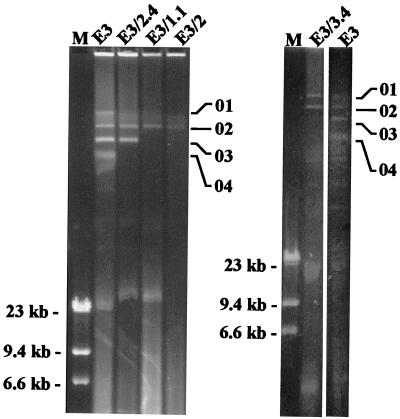
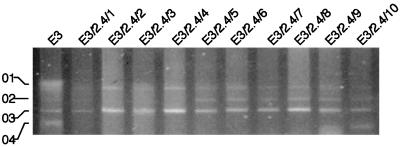
The E3 strain of E. coli was isolated in an outbreak of respiratory disease in broiler chickens, and experimental aerosol exposure of chickens to this strain induced disease similar to that seen in the field. In order to establish whether the virulent phenotype of this strain was associated with carriage of particular plasmids, four plasmid-cured derivatives, each lacking two or more of the plasmids carried by the wild-type strain, were assessed for virulence. Virulence was found to be associated with one large plasmid, pVM01. Plasmid pVM01 was marked by introduction of the transposon TnphoA, carrying kanamycin resistance, and was then cloned by transformation of E. coli strain DH5alpha. The cloned plasmid was then reintroduced by conjugation into an avirulent plasmid-cured derivative of strain E3 which lacked pVM01. The conjugant was shown to be as virulent as the wild-type strain E3, establishing that this plasmid is required for virulence following aerosol exposure. This virulence plasmid conferred expression of a hydroxamate siderophore, but not colicins, on both strain E3 and strain DH5alpha. Carriage of this plasmid was required for strain E3 to colonize the respiratory tracts of chickens but was not necessary for colonization of the gastrointestinal tract. However, the virulence plasmid did not confer virulence, or the capacity to colonize the respiratory tract, on strain DH5alpha. Thus, these studies have established that infection of chickens with E. coli strain E3 by the respiratory route is dependent on carriage of a conjugative virulence plasmid, which confers the capacity to colonize specifically the respiratory tract and which also carries genes for expression of a hydroxymate siderophore. These findings will facilitate identification of the specific genes required for virulence in these pathogens.
Figures
References
-
- Acheson D W, Keusch G T, Lightowlers M, Donohue R A. Enzyme linked immunosorbent assay for Shiga toxin and Shiga-like toxin II using P1 glycoprotein from hydatid cysts. J Infect Dis. 1990;161:134–137. - PubMed
-
- Adams L M, Simmons C P, Rezmann L, Strugnell R A, Robins-Browne R M. Identification and characterization of a K88- and Cs31A-like operon of a rabbit enteropathogenic Escherichia coli strain which encodes fimbriae involved in the colonization of rabbit intestine. Infect Immun. 1997;65:5222–5230. - PMC - PubMed
-
- Arp L H, Graham C, Cheville N F. Comparison of clearance rates of virulent and avirulent Escherichia coli in turkeys after aerosol exposure. Avian Dis. 1979;23:386–391.
-
- Arp L H, Jensen A E. Piliation, hemagglutination, motility, and generation time of Escherichia coli that are virulent or avirulent for turkeys. Avian Dis. 1980;24:153–161.
Publication types
MeSH terms
Substances
LinkOut - more resources
Full Text Sources
Other Literature Sources
