


pncA mutations as a major mechanism of pyrazinamide resistance in Mycobacterium tuberculosis: spread of a monoresistant strain in Quebec, Canada
- PMID: 10681313
- PMCID: PMC89721
- DOI: 10.1128/AAC.44.3.528-532.2000
pncA mutations as a major mechanism of pyrazinamide resistance in Mycobacterium tuberculosis: spread of a monoresistant strain in Quebec, Canada
Abstract
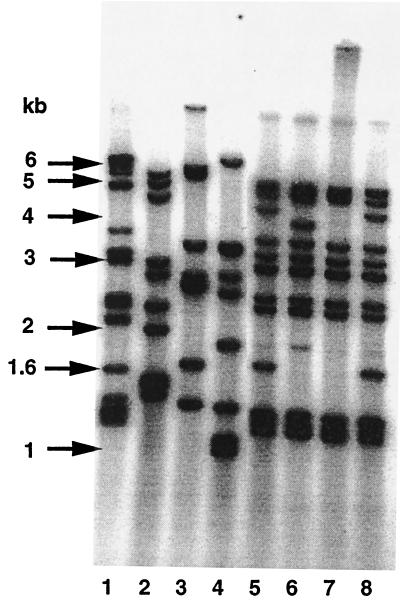
Pyrazinamide (PZA) is an important first-line tuberculosis drug that is part of the currently used short-course tuberculosis chemotherapy. PZA is a prodrug that has to be converted to the active form pyrazinoic acid by pyrazinamidase (PZase) activity, encoded by the pncA gene of Mycobacterium tuberculosis, and loss of PZase activity is associated with PZA resistance. To further define the genetic basis of PZA resistance and determine the frequency of PZA-resistant strains having pncA mutations, we sequenced the pncA gene from a panel of 59 PZA-resistant clinical isolates from Canada, the United States, and Korea. Two strains that did not contain pncA mutations and had positive PZase turned out to be falsely resistant. Three PZase-negative strains (MIC, >900 microgram of PZA per ml) and one PZase-positive strain (strain 9739) (MIC, >300 microgram of PZA per ml) did not have pncA mutations. The remaining 53 of the 57 PZA-resistant isolates had pncA mutations, confirming that pncA mutation is the major mechanism of PZA resistance. Various new and diverse mutations were found in the pncA gene. Interestingly, 20 PZA-monoresistant strains and 1 multidrug-resistant isolate from Quebec, Canada, all had the same pncA mutation profile, consisting of an 8-nucleotide deletion and an amino acid substitution of Arg140-->Ser. Strain typing indicated that these strains are highly related and share almost identical IS6110 patterns. These data strongly suggest the spread of a PZA-monoresistant strain, which has not previously been described.
Figures
References
-
- Heifets L B. Drug susceptibility tests in the management of chemotherapy of tuberculosis. In: Heifets L B, editor. Drug susceptibility in the chemotherapy of mycobacterial infections. Boca Raton, Fla: CRC Press; 1991. pp. 89–122.
-
- Heifets L B. Pyrazinamide. In: Yu V L, Merigan T C, Barriere S L, editors. Antimicrobial therapy and vaccines. Baltimore, Md: Williams and Wilkins; 1999. pp. 668–676.
-
- Hewlett D, Horn D L, Alfalla C. Drug-resistant tuberculosis: inconsistent results of pyrazinamide susceptibility testing. JAMA. 1995;273:916–917. - PubMed
-
- Hirano K, Takahashi M, Kazumi Y, Fukasawa Y, Abe C. Mutation in pncA is a major mechanism of pyrazinamide resistance in Mycobacterium tuberculosis. Tuber Lung Dis. 1997;78:117–122. - PubMed
-
- Konno K, Feldman F M, McDermott W. Pyrazinamide susceptibility and amidase activity of tubercle bacilli. Am Rev Respir Dis. 1967;95:461–469. - PubMed
Publication types
MeSH terms
Substances
Grants and funding
LinkOut - more resources
Full Text Sources
Other Literature Sources
Medical
