


Wound collagen deposition in rats: effects of an NO-NSAID and a selective COX-2 inhibitor
- PMID: 10683192
- PMCID: PMC1571897
- DOI: 10.1038/sj.bjp.0703112
Wound collagen deposition in rats: effects of an NO-NSAID and a selective COX-2 inhibitor
Abstract
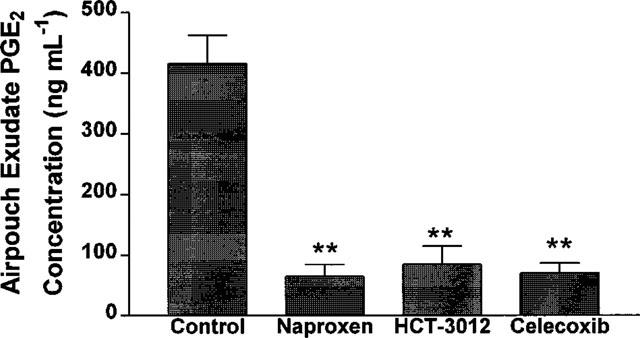
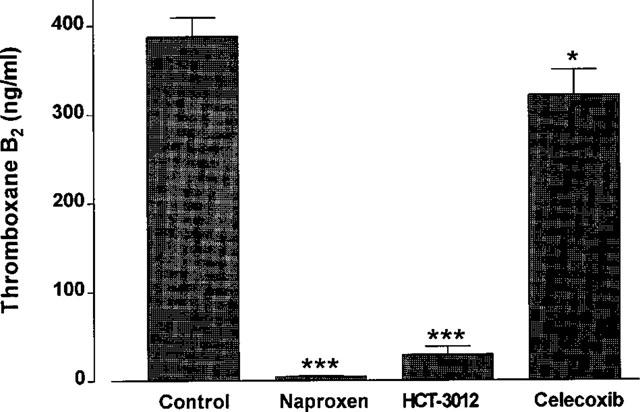
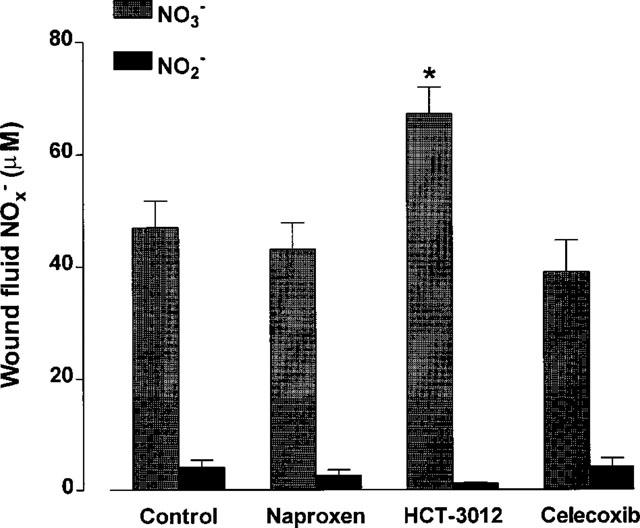
Selective cyclo-oxygenase (COX)-2 inhibitors and nitric oxide-releasing nonsteroidal anti-inflammatory drugs (NSAIDs) exhibit reduced toxicity in the gastrointestinal tract, but may affect wound healing in other tissues. In this study, we have compared the effects of a selective COX-2 inhibitor (celecoxib), a nitric-oxide releasing derivative of naproxen (HCT-3012) and naproxen in a model of wound collagen deposition in the rat. Polyvinyl alcohol sponges were implanted subcutaneously in rats. The rats were treated daily for 5 days with the test drugs at equieffective anti-inflammatory doses. Naproxen (10 mg kg(-1)) significantly decreased (45%) collagen deposition at the wound site relative to the vehicle-treated control group. In contrast, HCT-3012 (14.5 mg kg(-1)) significantly increased (62%) collagen deposition, while celecoxib (10 mg kg(-1)) had no effect. Naproxen and HCT-3012 suppressed prostaglandin (PG) E(2) levels at the wound site and whole blood thromboxane synthesis to similar degrees. Celecoxib had no significant effect on wound fluid PGE(2) levels, but slightly reduced whole blood thromboxane synthesis (by 17%). COX-1 mRNA and protein were expressed in the wound exudate, the skin surrounding the wound and in normal skin. In contrast, COX-2 mRNA, but not protein, was expressed in wound and normal skin. These results demonstrate that HCT-3012 can significantly enhance collagen deposition at a wound site, despite inhibiting prostaglandin synthesis to the same extent as the parent drug. Nitric oxide-releasing NSAIDs may represent a safer alternative to standard NSAIDs for use as anti-inflammatory and analgesic agents by post-surgery patients.
Figures



References
-
- ALLGAYER H., DESCHRYVER K., STENSON W.F. Treatment with 16,16′ dimethylprostaglandin E2 before and after induction of colitis with trinitrobenzenesulfonic acid in rats decreases inflammation. Gastroenterology. 1989;96:1290–1300. - PubMed
-
- BARBUL A., FISHEL R.S., SHIMAZU S., WASSERKRUG H.L., YOSHIMURA N.N., TAO R.C., EFRON G. Intravenous hyperalimentation with high arginine levels improves wound healing and immune function. J. Surg. Res. 1985;38:328–334. - PubMed
-
- BRADFORD M.M. A rapid and sensitive method for the quantitation of microgram quantities of protein utilizing the principle of protein-dye binding. Anal. Biochem. 1976;72:248–254. - PubMed
-
- CHOMCZYNSKI P., SACCHI N. Single-step method of RNA isolation by acid guanidiium thiocyanate-phenol-chloroform extraction. Anal. Biochem. 1987;162:156–159. - PubMed
Publication types
MeSH terms
Substances
LinkOut - more resources
Full Text Sources
Other Literature Sources
Research Materials
