


The development of post-kala-azar dermal leishmaniasis (PKDL) is associated with acquisition of Leishmania reactivity by peripheral blood mononuclear cells (PBMC)
- PMID: 10691926
- PMCID: PMC1905576
- DOI: 10.1046/j.1365-2249.2000.01163.x
The development of post-kala-azar dermal leishmaniasis (PKDL) is associated with acquisition of Leishmania reactivity by peripheral blood mononuclear cells (PBMC)
Abstract
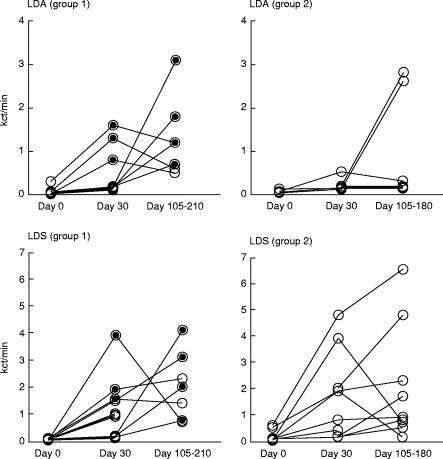
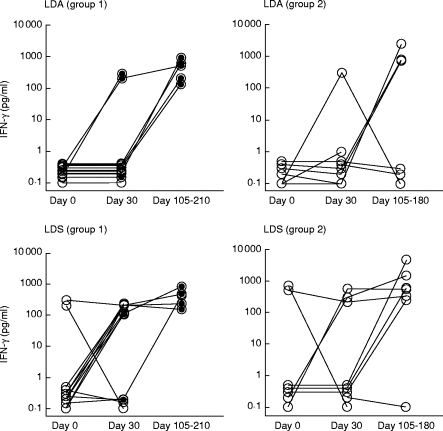
PKDL develops in about 50% of Sudanese patients treated for visceral leishmaniasis (kala-azar). Patients with kala-azar were entered into this study and followed for a period of up to 2 years. During follow up 12 patients developed PKDL and eight did not. Proliferative responses and cytokine production to Leishmania donovani and control antigens were measured in vitro using PBMC isolated at the time of diagnosis of kala-azar, after treatment of visceral leishmaniasis, during follow up, and at the time of diagnosis of PKDL. Proliferative responses and interferon-gamma (IFN-gamma) production were low at diagnosis and increased after treatment of kala-azar in both patients who developed (group 1) and those who did not develop PKDL later (group 2). In group 1, development of PKDL was always associated by an increased PBMC response to Leishmania antigen in proliferation and IFN-gamma production assays. There were no differences in Leishmania antigen-induced production of IL-4, IL-5 and IL-10 between or within the two groups. We have previously shown that Leishmania parasites spread to the skin during visceral leishmaniasis and proposed that PKDL was the result of an immunological attack on parasites, which have survived in the skin despite the drug treatment. The finding that PKDL develops after treatment of kala-azar as Leishmania-reactive T cells start to circulate in peripheral blood in sufficient numbers to be detected in in vitro assays supports this hypothesis.
Figures
References
MeSH terms
Substances
LinkOut - more resources
Full Text Sources
