


Evaluation of the Oricult-N dipslide for laboratory diagnosis of vaginal candidiasis
- PMID: 10698997
- PMCID: PMC86339
- DOI: 10.1128/JCM.38.3.1063-1065.2000
Evaluation of the Oricult-N dipslide for laboratory diagnosis of vaginal candidiasis
Abstract
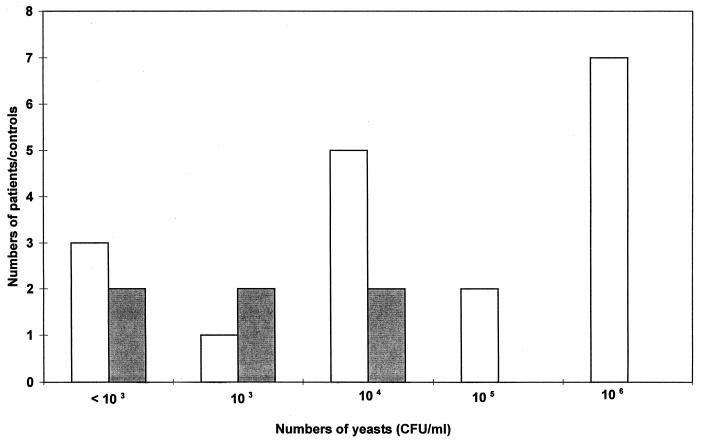
The Oricult-N semiquantitative dipslide (Orion Diagnostica, Espoo, Finland) was evaluated for the laboratory diagnosis of vaginal candidiasis. It was compared with broth culture (Vagicult; Orion Diagnostica). Oricult-N was positive for 14.5% of 124 symptomatic patients and 12% of 50 asymptomatic controls. The results for broth cultures were 17 and 22%, respectively. Thus, the test group and the control group did not differ significantly by either method. High vaginal yeast counts (>/=10(5) CFU/ml) were detected by Oricult-N in 7% of patients and in 0% of controls, but both groups harbored low numbers of yeasts. An accurate quantitative cutoff point separating a level of yeast associated with infection from vaginal yeast carriage could not be defined in the study. Nevertheless, the easy semiquantitation allowed by the Oricult-N method could be helpful because, especially in low-count carriers of Candida, other potential causes of vaginal symptoms should be considered. The Oricult-N method was technically simple and could be applied in primary health care. Further studies are required, however, before Oricult-N can be recommended as a routine diagnostic tool.
Figures
References
-
- Axéll T, Simonsson T, Birkhed D, Rosenborg J, Edwardsson S. Evaluation of a simplified diagnostic aid (Oricult-N) for detection of oral candidoses. Scand J Dent Res. 1985;93:52–55. - PubMed
-
- Bro F. The diagnosis of Candida vaginitis in general practice. Scand J Prim Health Care. 1989;7:19–22. - PubMed
-
- Eckert L O, Hawes S E, Stevens C E, Koutsy L A, Eschenbach D A, Holmes K K. Vulvovaginal candidiasis: clinical manifestations, risk factors, management algorithm. Obstet Gynecol. 1998;92:757–765. - PubMed
-
- Evans E G V. Diagnostic laboratory techniques in vaginal candidosis. Br J Clin Pract Suppl. 1990;71:70–72. - PubMed
Publication types
MeSH terms
Substances
LinkOut - more resources
Full Text Sources
Other Literature Sources
