


Novel diagnostic algorithm for identification of mycobacteria using genus-specific amplification of the 16S-23S rRNA gene spacer and restriction endonucleases
- PMID: 10699003
- PMCID: PMC86348
- DOI: 10.1128/JCM.38.3.1094-1104.2000
Novel diagnostic algorithm for identification of mycobacteria using genus-specific amplification of the 16S-23S rRNA gene spacer and restriction endonucleases
Abstract
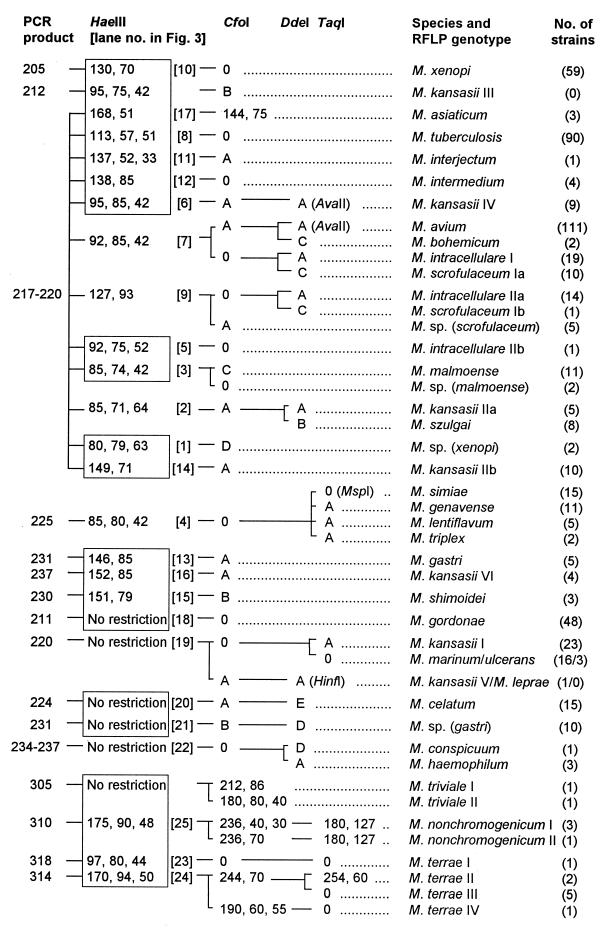
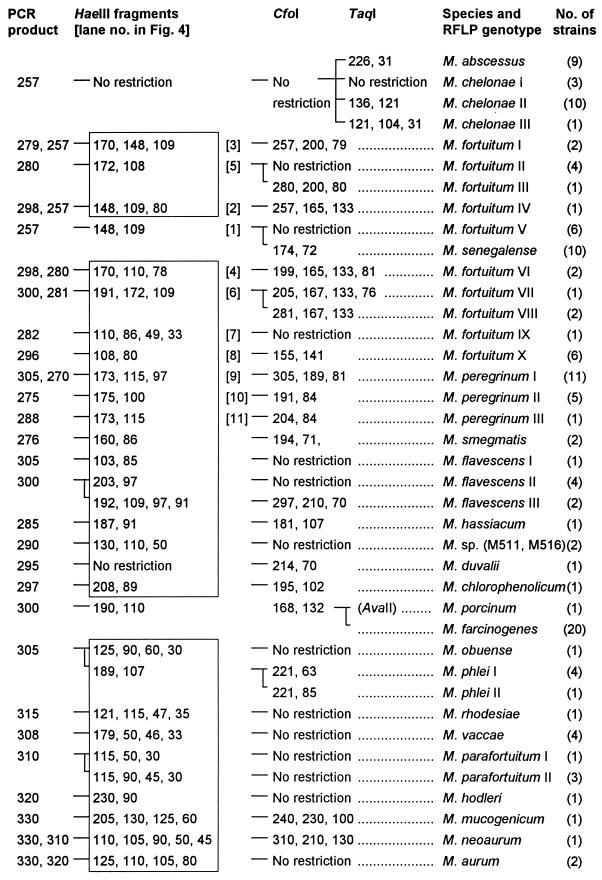
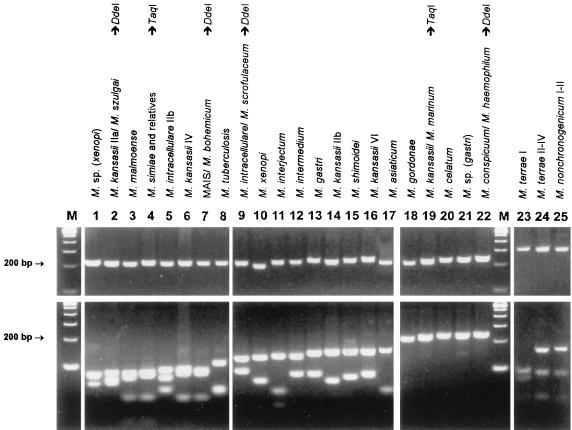
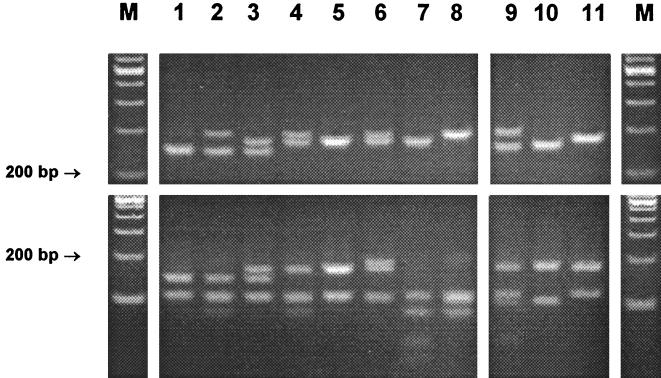
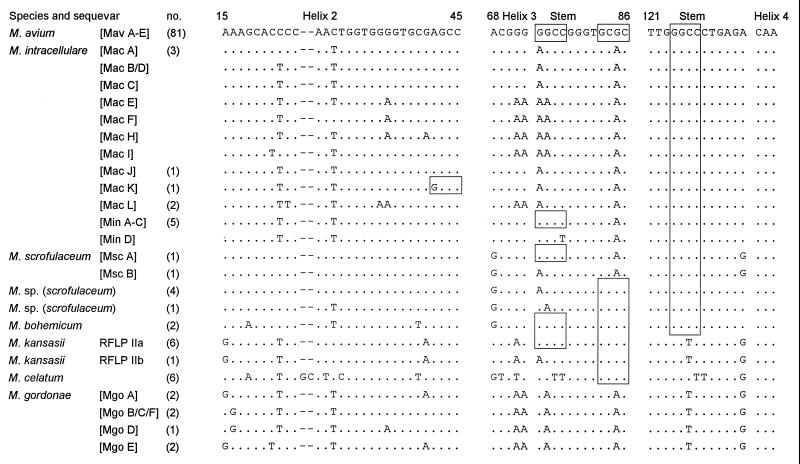
A novel genus-specific PCR for mycobacteria with simple identification to the species level by restriction fragment length polymorphism (RFLP) was established using the 16S-23S ribosomal RNA gene (rDNA) spacer as a target. Panspecificity of primers was demonstrated on the genus level by testing 811 bacterial strains (122 species in 37 genera from 286 reference strains and 525 clinical isolates). All mycobacterial isolates (678 strains among 48 defined species and 5 indeterminate taxons) were amplified by the new primers. Among nonmycobacterial isolates, only Gordonia terrae was amplified. The RFLP scheme devised involves estimation of variable PCR product sizes together with HaeIII and CfoI restriction analysis. It yielded 58 HaeIII patterns, of which 49 (84%) were unique on the species level. Hence, HaeIII digestion together with CfoI results was sufficient for correct identification of 39 of 54 mycobacterial taxons and one of three or four of seven RFLP genotypes found in Mycobacterium intracellulare and Mycobacterium kansasii, respectively. Following a clearly laid out diagnostic algorithm, the remaining unidentified organisms fell into five clusters of closely related species (i.e., the Mycobacterium avium complex or Mycobacterium chelonae-Mycobacterium abscessus) that were successfully separated using additional enzymes (TaqI, MspI, DdeI, or AvaII). Thus, next to slowly growing mycobacteria, all rapidly growing species studied, including M. abscessus, M. chelonae, Mycobacterium farcinogenes, Mycobacterium fortuitum, Mycobacterium peregrinum, and Mycobacterium senegalense (with a very high 16S rDNA sequence similarity) were correctly identified. A high intraspecies sequence stability and the good discriminative power of patterns indicate that this method is very suitable for rapid and cost-effective identification of a wide variety of mycobacterial species without the need for sequencing. Phylogenetically, spacer sequence data stand in good agreement with 16S rDNA sequencing results, as was shown by including strains with unsettled taxonomy. Since this approach recognized significant subspecific genotypes while identification of a broad spectrum of mycobacteria rested on identification of one specific RFLP pattern within a species, this method can be used by both reference (or research) and routine laboratories.
Figures
References
-
- Alcaide F, Richter I, Bernasconi C, Springer B, Hagenau C, Schulze-Röbbecke R, Tortoli E, Martin R, Böttger E, Telenti A. Heterogeneity and clonality among isolates of Mycobacterium kansasii: implications for epidemiological and pathogenicity studies. J Clin Microbiol. 1997;35:1959–1964. - PMC - PubMed
-
- Anz W, Schröder K-H. Photochromogenic strains of Mycobacterium gastri? Zentrabl Bakteriol. 1970;214:553–554. - PubMed
-
- De Smet A L, Brown I N, Yates M, Ivanyi J. Ribosomal internal transcribed spacers are identical among Mycobacterium avium-intracellulare complex isolates from AIDS patients, but vary among isolates from elderly pulmonary disease patients. Microbiology. 1995;141:2739–2747. - PubMed
MeSH terms
Substances
Associated data
- Actions
- Actions
- Actions
LinkOut - more resources
Full Text Sources
Other Literature Sources
Medical
Molecular Biology Databases
