


Massive idiosyncratic exon skipping corrects the nonsense mutation in dystrophic mouse muscle and produces functional revertant fibers by clonal expansion
- PMID: 10704448
- PMCID: PMC2174546
- DOI: 10.1083/jcb.148.5.985
Massive idiosyncratic exon skipping corrects the nonsense mutation in dystrophic mouse muscle and produces functional revertant fibers by clonal expansion
Abstract
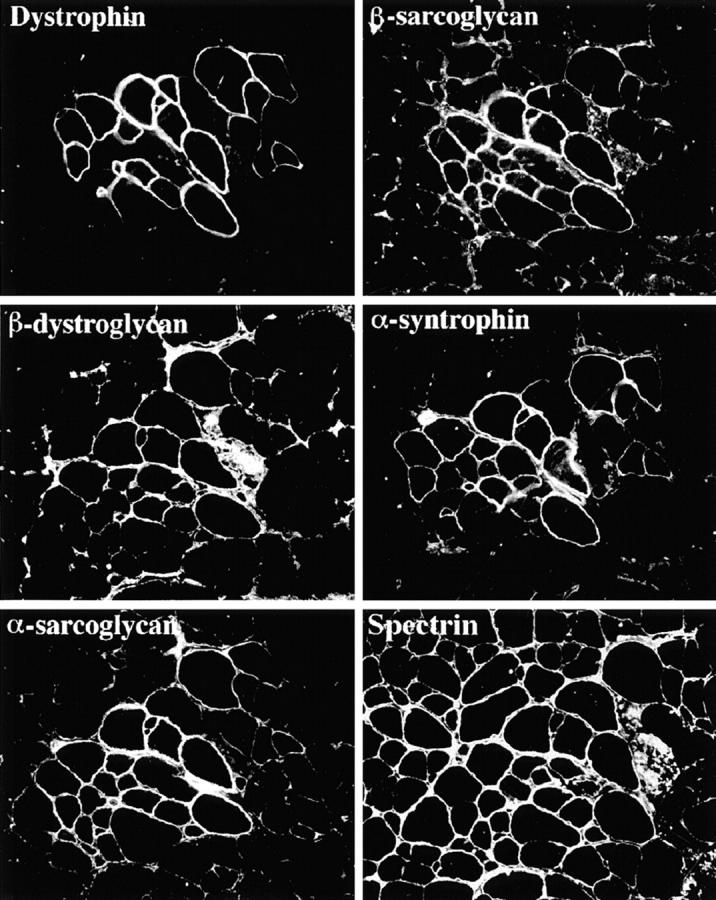
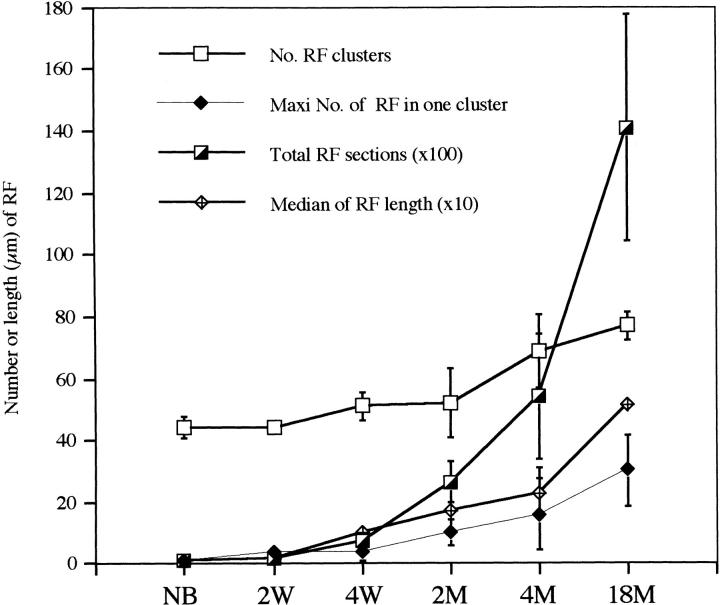
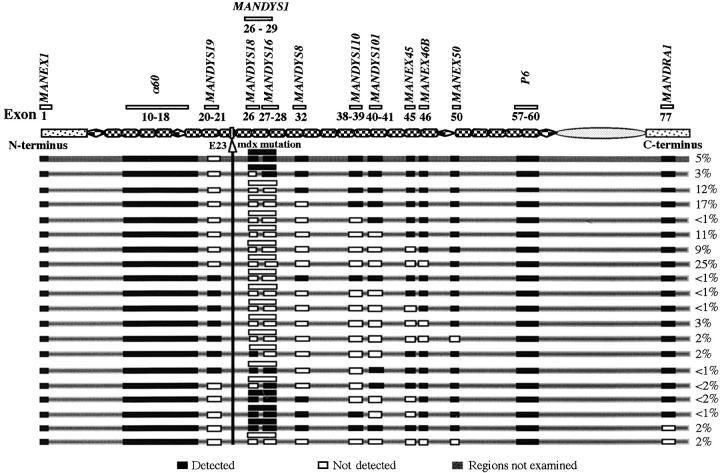
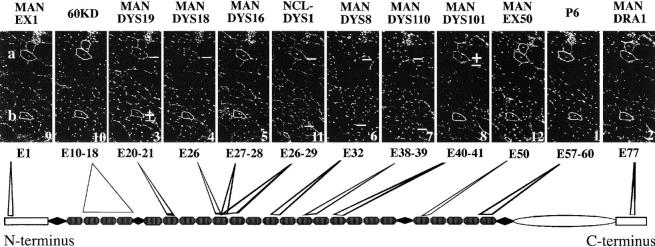
Conventionally, nonsense mutations within a gene preclude synthesis of a full-length functional protein. Obviation of such a blockage is seen in the mdx mouse, where despite a nonsense mutation in exon 23 of the dystrophin gene, occasional so-called revertant muscle fibers are seen to contain near-normal levels of its protein product. Here, we show that reversion of dystrophin expression in mdx mice muscle involves unprecedented massive loss of up to 30 exons. We detected several alternatively processed transcripts that could account for some of the revertant dystrophins and could not detect genomic deletion from the region commonly skipped in revertant dystrophin. This, together with exon skipping in two noncontiguous regions, favors aberrant splicing as the mechanism for the restoration of dystrophin, but is hard to reconcile with the clonal idiosyncrasy of revertant dystrophins. Revertant dystrophins retain functional domains and mediate plasmalemmal assembly of the dystrophin-associated glycoprotein complex. Physiological function of revertant fibers is demonstrated by the clonal growth of revertant clusters with age, suggesting that revertant dystrophin could be used as a guide to the construction of dystrophin expression vectors for individual gene therapy. The dystrophin gene in the mdx mouse provides a favored system for study of exon skipping associated with nonsense mutations.
Figures
References
-
- Allen D.L., Roy R.R., Edgerton V.R. Myonuclear domain in muscle adaptation and disease. Muscle Nerve. 1999;22:1350–1360. - PubMed
-
- Amalfitano A., Rafael J.A., Chamberlain J.S. Structure and mutation of the dystrophin gene. In: Brown S.C., Lucy-Jack A., editors. Dystrophin Gene, Protein and Cell Biology. Cambridge University Press; Cambridge, UK: 1997. pp. 1–26.
-
- Baylies M.K., Bate M., Ruiz Gomez M. Myogenesisa view from Drosophila . Cell. 1998;93:921–927. - PubMed
-
- Bockhold K.J., Rosenblatt J.D., Partridge T.A. Aging normal and dystrophic mouse muscleanalysis of myogenicity in cultures of living single fibers. Muscle Nerve. 1998;21:173–183. - PubMed
Publication types
MeSH terms
Substances
LinkOut - more resources
Full Text Sources
Other Literature Sources
Medical
