


Antiviral properties of a series of 1,6-naphthyridine and 7, 8-dihydroisoquinoline derivatives exhibiting potent activity against human cytomegalovirus
- PMID: 10722493
- PMCID: PMC89794
- DOI: 10.1128/AAC.44.4.929-937.2000
Antiviral properties of a series of 1,6-naphthyridine and 7, 8-dihydroisoquinoline derivatives exhibiting potent activity against human cytomegalovirus
Abstract
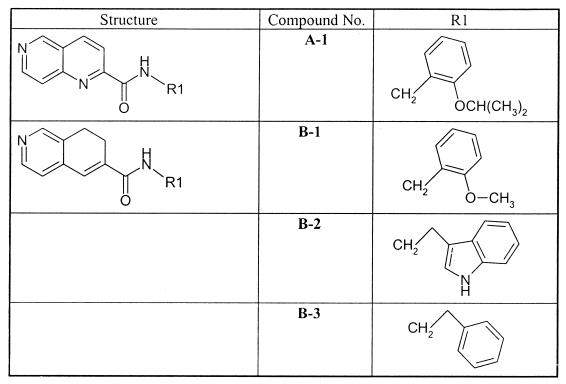
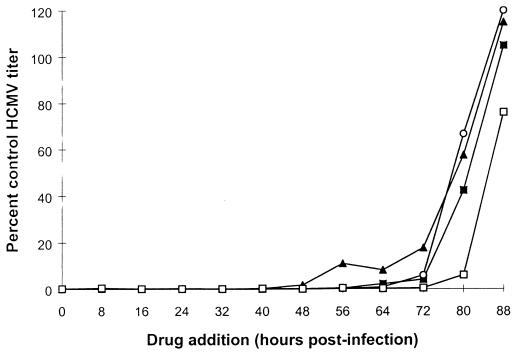
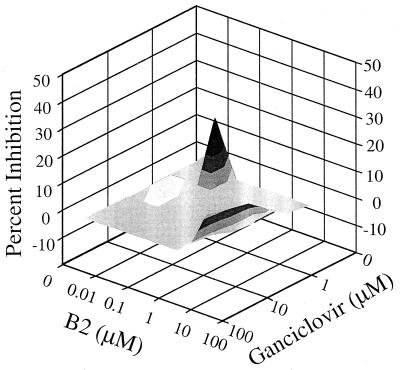
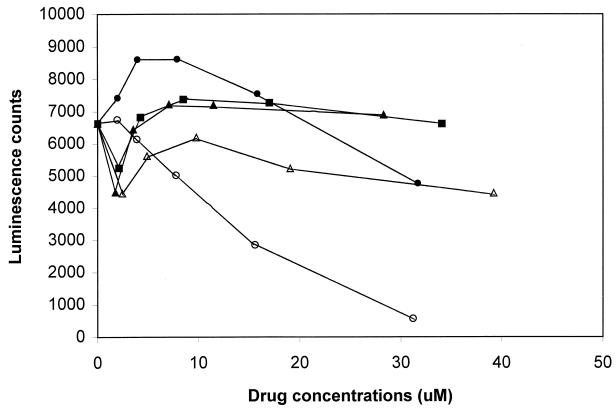
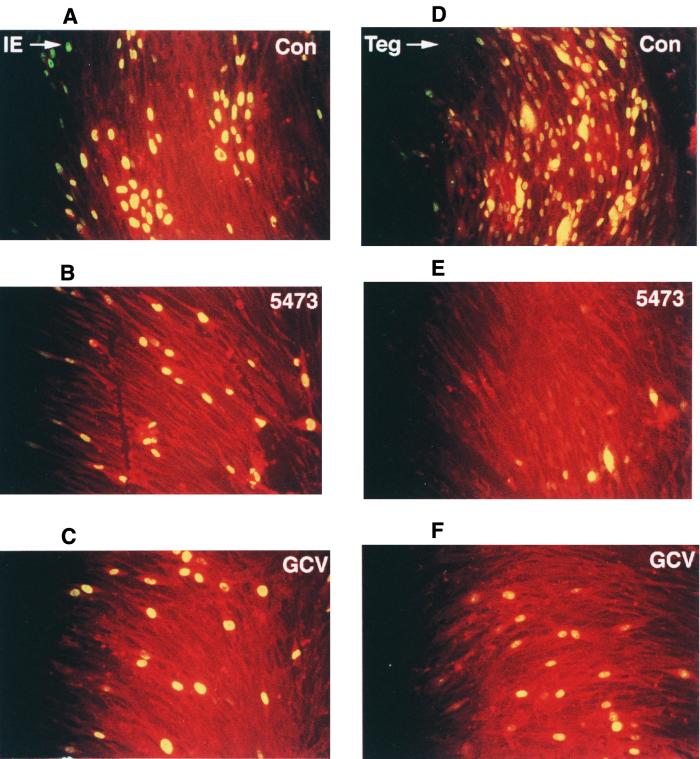
A series of 1,6-naphthyridine (L. Chan, H. Jin, T. Stefanac, J. F. Lavallee, G. Falardeau, W. Wang, J. Bedard, S. May, and L. Yuen, J. Med. Chem. 42:3023-3025, 1999) and isoquinoline (L. Chan, H. Jin, T. Stefanac, W. Wang, J. F. Lavallee, J. Bedard, and S. May, Bioorg. Med. Chem. Lett. 9:2583-2586, 1999) analogues exhibiting a high level of anti-human cytomegalovirus (HCMV) activity were investigated in a series of studies aimed at better understanding the mechanism of action of some representatives of this class of compounds. In vitro antiviral profiling revealed that these compounds were active against a narrow spectrum of viruses, essentially the human herpesviruses and type 2 rhinovirus. In HCMV assays, a 39- to 223-fold lower 50% inhibitory concentration was obtained for compound A1 than for ganciclovir against strains AD 169 and Towne. In addition, ganciclovir, foscarnet, cidofovir, and BDCRB (2-bromo-5,6-dichloro-1-beta-D-ribofuranosylbenzimidazole)-resistant HCMV strains remained susceptible to 1,6-naphthyridines and 7, 8-dihydroisoquinolines tested in this study, supporting the view that a novel mechanism of action could be involved. Drug combination studies showed a small but significant synergistic antiviral effect between compound B2 and ganciclovir. Cytotoxicity profiling of representative compounds under various cell growth conditions indicated a generally similar cytotoxic effect, relative to ganciclovir, in log-phase growing cells. However, in stationary cells, a relatively higher level of toxicity was observed than that for control compound. Effect of time of drug addition showed that the anti-HCMV activity of compound A1, ganciclovir, and cidofovir was lost at approximately the same time (72 h postinfection), indicating that the compound was affecting events at the early and late stage of virus replication. This interpretation is also supported by reduction of de novo synthesis of pp65 tegument protein and lack of any effect of the compound on viral adsorption. A reduction of the HCMV enhancer-promoter-directed luciferase expression was also observed in a stably transfected cell line when compound A1 was present at relatively high concentrations.
Figures
References
-
- Baldanti F, Underwood M R, Stanat S C, Biron K K, Chou S, Sarasini A, Silini E, Gerna G. Single amino acid changes in the DNA polymerase confer foscarnet resistance and slow-growth phenotype, while mutations in the UL97-encoded phosphotransferase confer ganciclovir resistance in three double-resistant human cytomegalovirus strains recovered from patients with AIDS. J Virol. 1996;70:1390–1395. - PMC - PubMed
-
- Barnard J A, Huffman J H, Sidwell R W, Reist E J. Selective inhibition of cytomegalovirus by 9-(3′-ethylphosphono-1′-propyloxy-methyl)guanine. Antivir Res. 1993;22:77–89. - PubMed
-
- Biron K K. Ganciclovir-resistant human cytomegalovirus clinical isolates: resistance mechanisms and in vitro susceptibility to antiviral agents. Transplant Proc. 1991;23:162–167. - PubMed
-
- Buckheit R W, Kinjerski T L, Fliakas-Boltz V, Russell J D, Stup T L, Pallansch L A, Brouwer W G, Dao D C, Harrison W A, Schultz R J, Bader J P, Yang S S. Structure-activity and cross-resistance evaluations of a series of human immunodeficiency virus type 1-specific compounds related to oxathin carboxanilide. Antimicrob Agents Chemother. 1995;39:2718–2727. - PMC - PubMed
-
- Causey D. Concomitant ganciclovir and zidovudine treatment for cytomegalovirus retinitis with HIV infection: an approach to treatment. J Acquir Immune Defic Syndr. 1991;4:S16–S21. - PubMed
MeSH terms
Substances
LinkOut - more resources
Full Text Sources
Other Literature Sources
