


AZU-1: a candidate breast tumor suppressor and biomarker for tumor progression
- PMID: 10749935
- PMCID: PMC14852
- DOI: 10.1091/mbc.11.4.1357
AZU-1: a candidate breast tumor suppressor and biomarker for tumor progression
Abstract
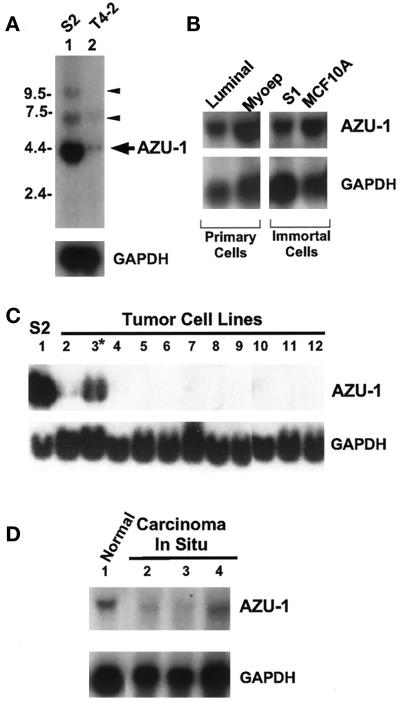
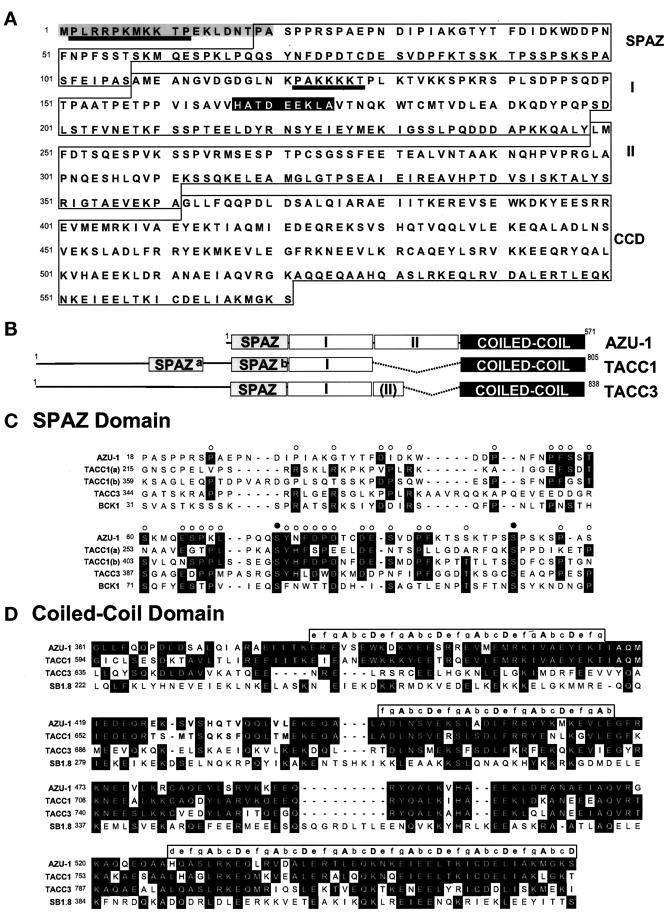
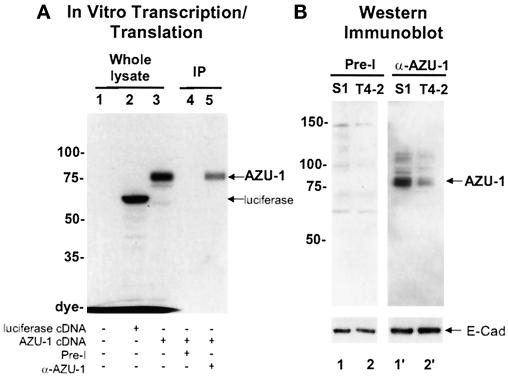
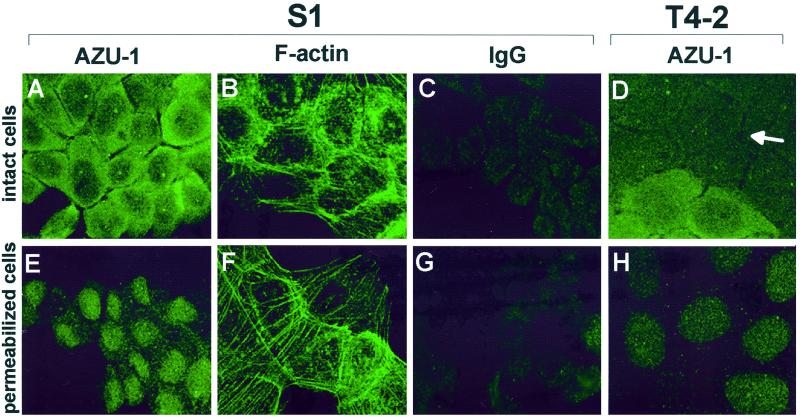
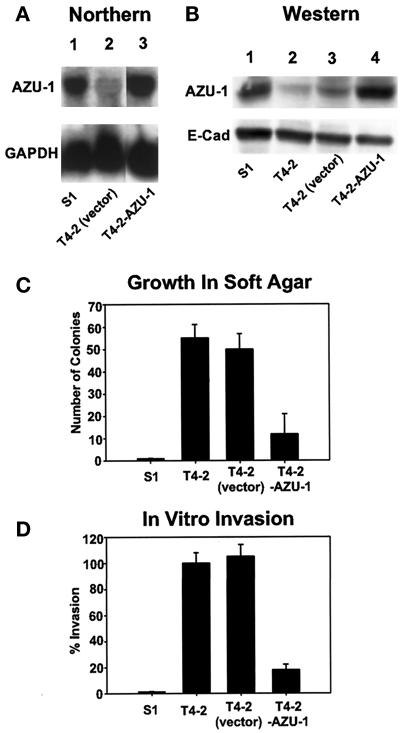
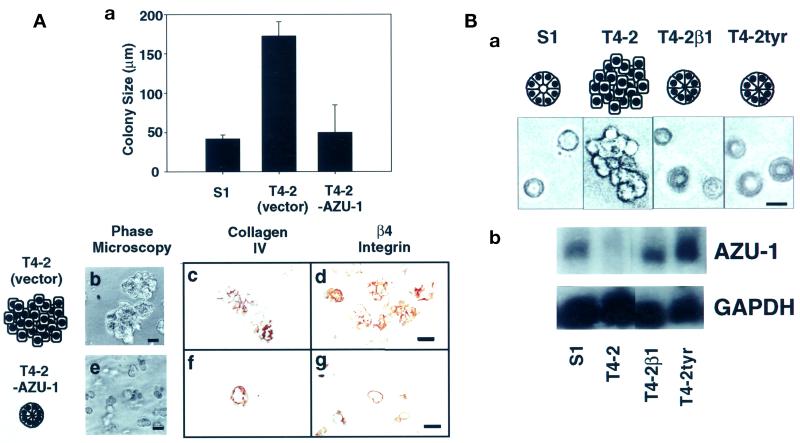
To identify genes misregulated in the final stages of breast carcinogenesis, we performed differential display to compare the gene expression patterns of the human tumorigenic mammary epithelial cells, HMT-3522-T4-2, with those of their immediate premalignant progenitors, HMT-3522-S2. We identified a novel gene, called anti-zuai-1 (AZU-1), that was abundantly expressed in non- and premalignant cells and tissues but was appreciably reduced in breast tumor cell types and in primary tumors. The AZU-1 gene encodes an acidic 571-amino-acid protein containing at least two structurally distinct domains with potential protein-binding functions: an N-terminal serine and proline-rich domain with a predicted immunoglobulin-like fold and a C-terminal coiled-coil domain. In HMT-3522 cells, the bulk of AZU-1 protein resided in a detergent-extractable cytoplasmic pool and was present at much lower levels in tumorigenic T4-2 cells than in their nonmalignant counterparts. Reversion of the tumorigenic phenotype of T4-2 cells, by means described previously, was accompanied by the up-regulation of AZU-1. In addition, reexpression of AZU-1 in T4-2 cells, using viral vectors, was sufficient to reduce their malignant phenotype substantially, both in culture and in vivo. These results indicate that AZU-1 is a candidate breast tumor suppressor that may exert its effects by promoting correct tissue morphogenesis.
Figures
References
-
- Alford D, Taylor-Papadimitriou J. Cell adhesion molecules in the normal and cancerous mammary gland. J Mamm Gl Biol Neo. 1996;1:207–218. - PubMed
-
- Alroy I, Yarden Y. The ErbB signaling network in embryogenesis and oncogenesis: signal diversification through combinatorial ligand-receptor interactions. FEBS Lett. 1997;410:83–86. - PubMed
-
- Briand P, Nielsen KV, Madsen MW, Petersen OW. Trisomy 7p and malignant transformation of human breast epithelial cells following epidermal growth factor withdrawal. Cancer Res. 1996;56:2039–2044. - PubMed
-
- Briand P, Petersen OW, Van Deurs B. A new diploid nontumorigenic human breast epithelial cell line isolated and propagated in chemically defined medium. In Vitro Cell Dev Biol. 1987;23:181–188. - PubMed
Publication types
MeSH terms
Substances
Grants and funding
LinkOut - more resources
Full Text Sources
Other Literature Sources
Molecular Biology Databases
Miscellaneous
