Randomised controlled trial of nurse practitioner versus general practitioner care for patients requesting "same day" consultations in primary care
- PMID: 10764366
- PMCID: PMC27347
- DOI: 10.1136/bmj.320.7241.1043
Randomised controlled trial of nurse practitioner versus general practitioner care for patients requesting "same day" consultations in primary care
Abstract
Objective: To ascertain any differences between care from nurse practitioners and that from general practitioners for patients seeking "same day" consultations in primary care.
Design: Randomised controlled trial with patients allocated by one of two randomisation schemes (by day or within day).
Setting: 10 general practices in south Wales and south west England.
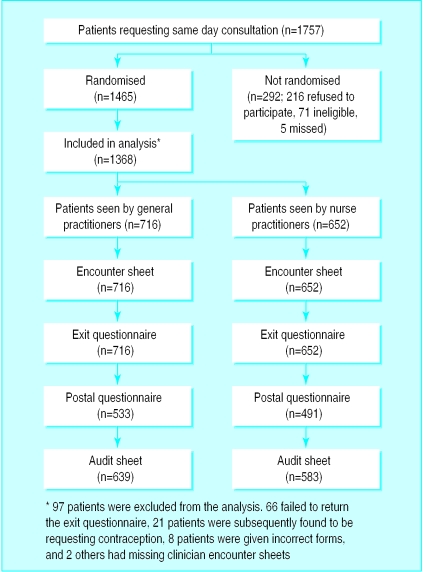
Subjects: 1368 patients requesting same day consultations.
Main outcome measures: Patient satisfaction, resolution of symptoms and concerns, care provided (prescriptions, investigations, referrals, recall, and length of consultation), information provided to patients, and patients' intentions for seeking care in the future.
Results: Generally patients consulting nurse practitioners were significantly more satisfied with their care, although for adults this difference was not observed in all practices. For children, the mean difference between general and nurse practitioner in percentage satisfaction score was -4.8 (95% confidence interval -6.8 to -2.8), and for adults the differences ranged from -8.8 (-13.6 to -3.9) to 3.8 (-3.3 to 10.8) across the practices. Resolution of symptoms and concerns did not differ between the two groups (odds ratio 1.2 (95% confidence interval 0.8 to 1.8) for symptoms and 1.03 (0.8 to 1.4) for concerns). The number of prescriptions issued, investigations ordered, referrals to secondary care, and reattendances were similar between the two groups. However, patients managed by nurse practitioners reported receiving significantly more information about their illnesses and, in all but one practice, their consultations were significantly longer.
Conclusion: This study supports the wider acceptance of the role of nurse practitioners in providing care to patients requesting same day consultations.
Figures
Comment in
-
Doctors and nurses. Length of consultation is important for patient satisfaction.BMJ. 2000 Sep 16;321(7262):699-700. BMJ. 2000. PMID: 10987789 No abstract available.
References
Publication types
MeSH terms
LinkOut - more resources
Full Text Sources
Medical