


Classical conditioning of feeding in Aplysia: I. Behavioral analysis
- PMID: 10777799
- PMCID: PMC6773138
- DOI: 10.1523/JNEUROSCI.20-09-03369.2000
Classical conditioning of feeding in Aplysia: I. Behavioral analysis
Abstract
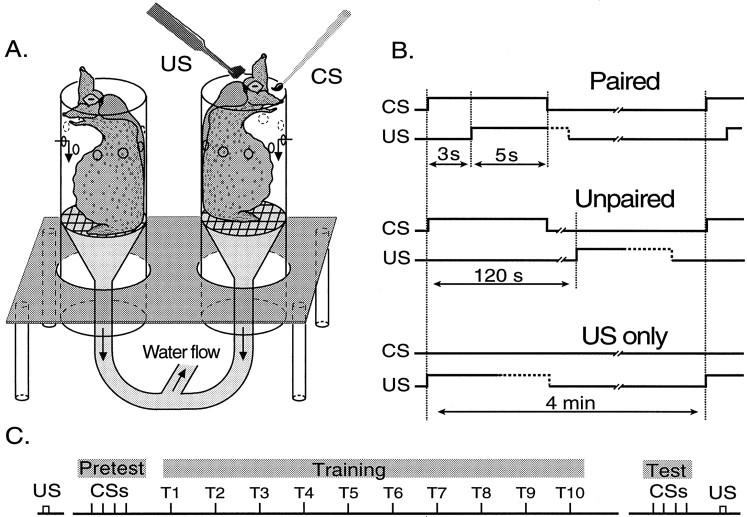
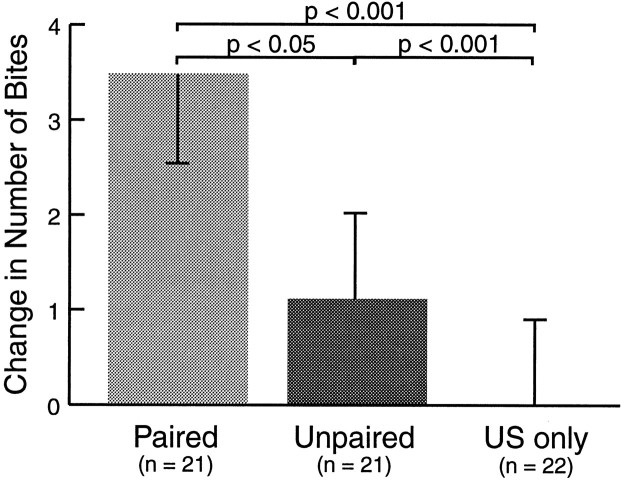
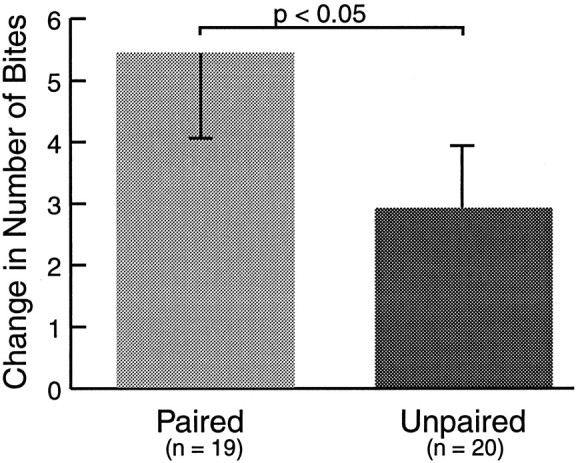
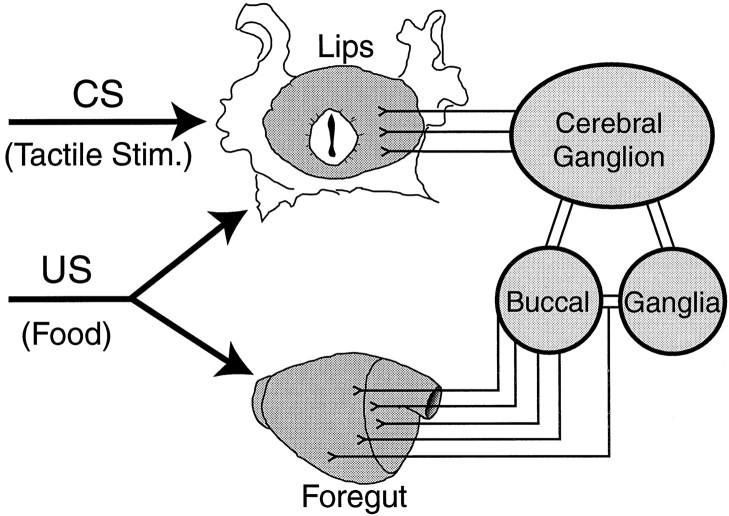
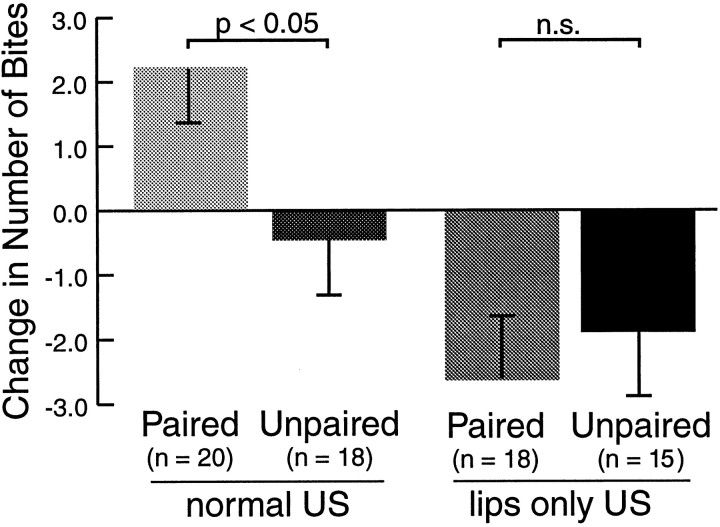
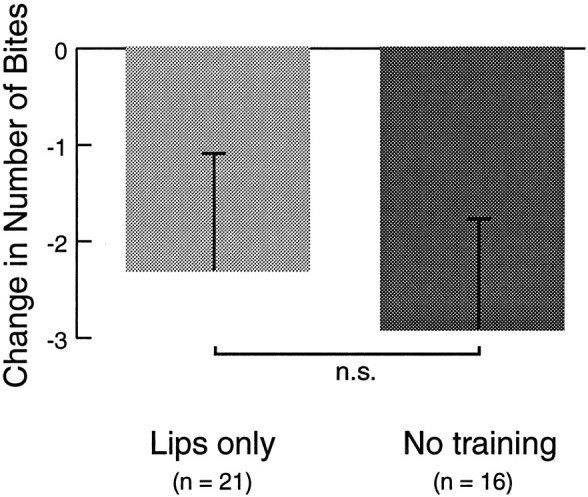
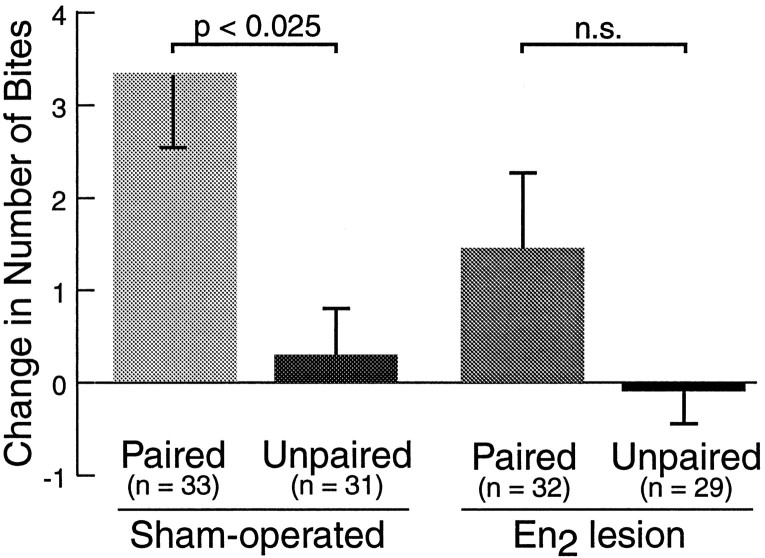
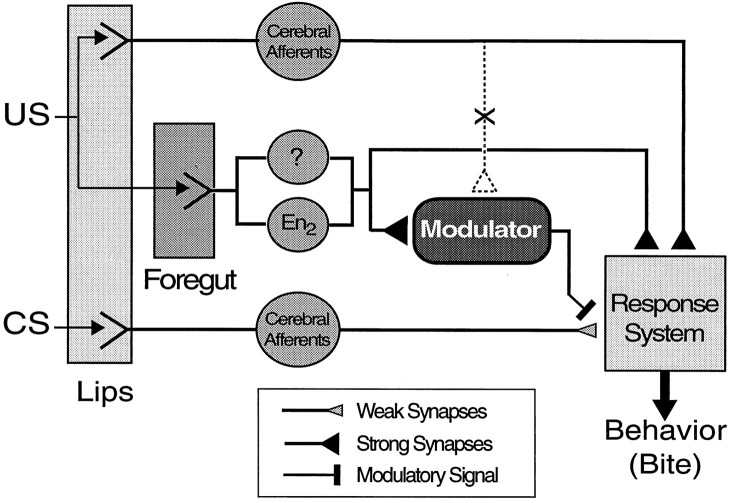
A training protocol was developed to classically condition feeding behavior in Aplysia californica using tactile stimulation of the lips as the conditional stimulus (CS) and food as the unconditional stimulus (US). Paired training induced a greater increase in the number of bites to the CS than unpaired training or US-only stimulation. Memory for classical conditioning was retained for at least 24 hr. The organization of the reinforcement pathway that supports classical conditioning was analyzed in additional behavioral experiments. No evidence was found for the contribution to appetitive reinforcement of US-mediating pathways originating in the lips of the animals. Bilateral lesions of the anterior branch of the esophageal nerve, which innervates parts of the foregut, however, were found to attenuate classical conditioning. Thus, it appears likely that reinforcement during appetitive classical conditioning of feeding was mediated by afferent pathways that originate in the foregut. The companion paper () describes two neurophysiological correlates of the classical conditioning.
Figures
References
-
- Agranoff BW, Klinger PD. Puromycin effect on memory fixation in the goldfish. Science. 1964;146:952–953. - PubMed
-
- Alexander JE, Audesirk TE, Audesirk GJ. Rapid, nonaversive conditioning in a freshwater gastropod. II. Effects of temporal relationships in learning. Behav Neural Biol. 1982;36:391–402. - PubMed
-
- Alexander JE, Audesirk TE, Audesirk GJ. One-trial reward learning in the snail Lymnea stagnalis. J Neurobiol. 1984;15:67–72. - PubMed
-
- Anderson JA. Patterns of response of neurons in the cerebral ganglion of Aplysia californica. Exp Neurol. 1967;19:65–77. - PubMed
-
- Audesirk TE, Alexander JE, Audesirk GJ, Moyer CM. Rapid, nonaversive conditioning in a freshwater gastropod. I. Effects of age and motivation. Behav Neural Biol. 1982;36:379–390. - PubMed
Publication types
MeSH terms
Grants and funding
LinkOut - more resources
Full Text Sources
Medical
