


Identification of a novel E2F3 product suggests a mechanism for determining specificity of repression by Rb proteins
- PMID: 10779352
- PMCID: PMC85655
- DOI: 10.1128/MCB.20.10.3626-3632.2000
Identification of a novel E2F3 product suggests a mechanism for determining specificity of repression by Rb proteins
Abstract
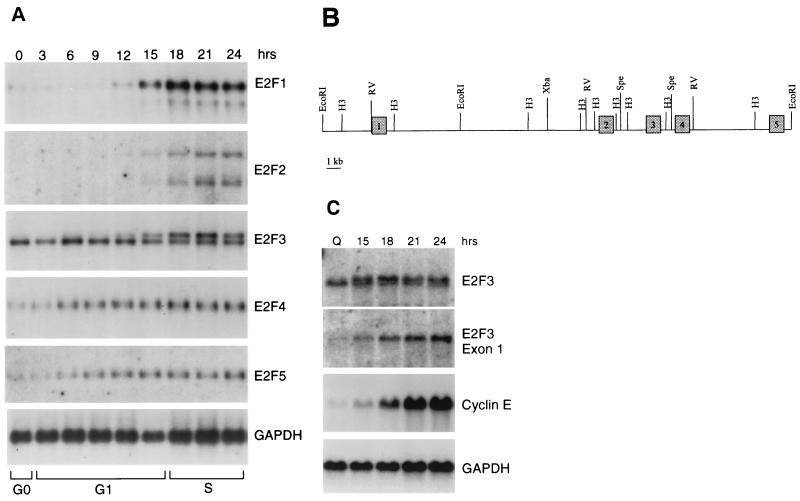
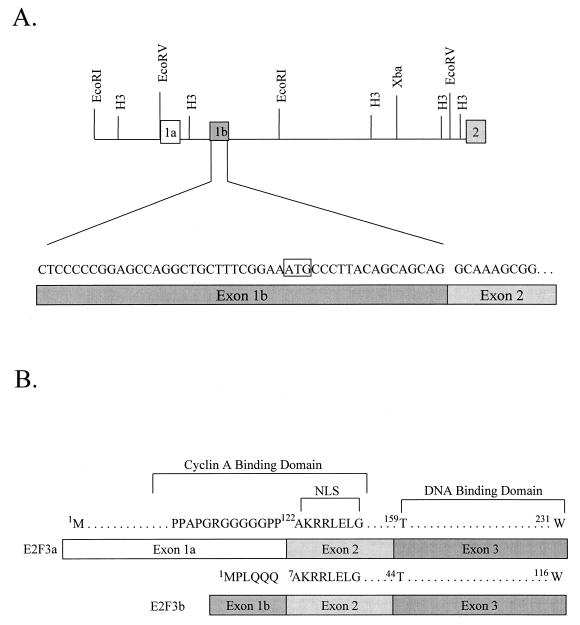
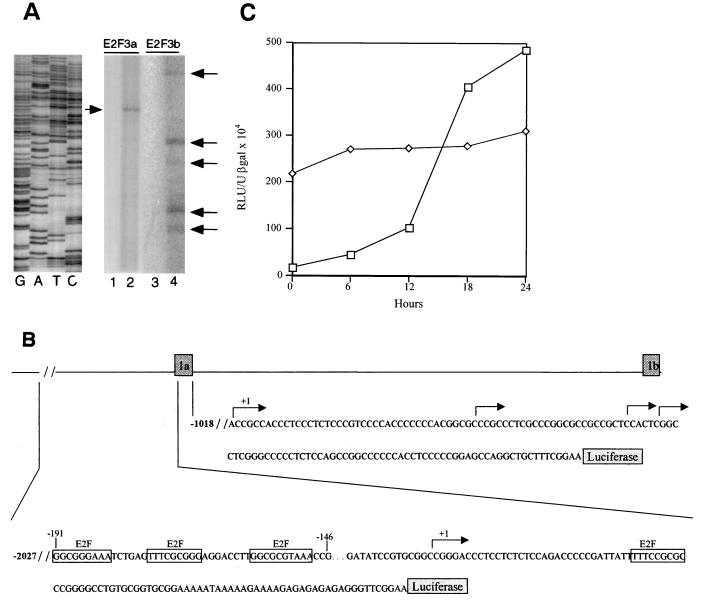
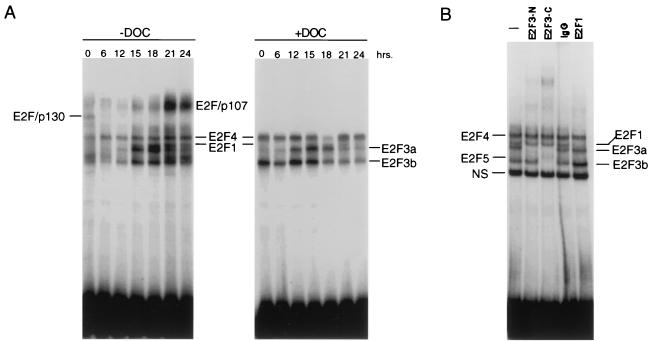
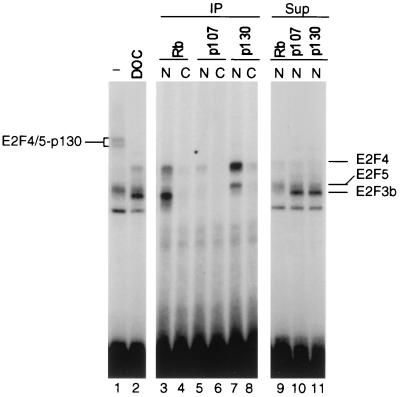
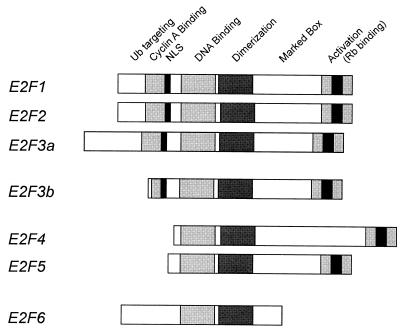
The tumor suppressor function of Rb is intimately related to its ability to interact with E2F and repress the transcription of E2F target genes. Here we describe a novel E2F product that specifically interacts with Rb in quiescent cells. This novel E2F, which we term E2F3b, is encoded by a unique mRNA transcribed from an intronic promoter within the E2F3 locus. The E2F3b RNA differs from the previously characterized E2F3 RNA, which we now term E2F3a, by the utilization of a unique coding exon. In contrast to the E2F3a product that is tightly regulated by cell growth, the E2F3b product is expressed equivalently in quiescent and proliferating cells. But, unlike the E2F4 and E2F5 proteins, which are also expressed in quiescent cells and form complexes with the p130 protein, the E2F3b protein associates with Rb and represents the predominant E2F-Rb complex in quiescent cells. Thus, the previously described specificity of Rb function as a transcriptional repressor in quiescent cells coincides with the association of Rb with this novel E2F product.
Figures
References
-
- Dyson N. The regulation of E2f by pRB-family proteins. Genes Dev. 1998;12:2245–2262. - PubMed
-
- George C P, Kadonaga J T. Primer extension analysis of RNA. In: Krieg P A, editor. A laboratory guide to RNA isolation, analysis, and synthesis. New York, N.Y: Wiley-Liss, Inc.; 1996. pp. 133–139.
Publication types
MeSH terms
Substances
LinkOut - more resources
Full Text Sources
Molecular Biology Databases
