Analysis of p53-regulated gene expression patterns using oligonucleotide arrays
- PMID: 10783169
- PMCID: PMC316542
Analysis of p53-regulated gene expression patterns using oligonucleotide arrays
Abstract
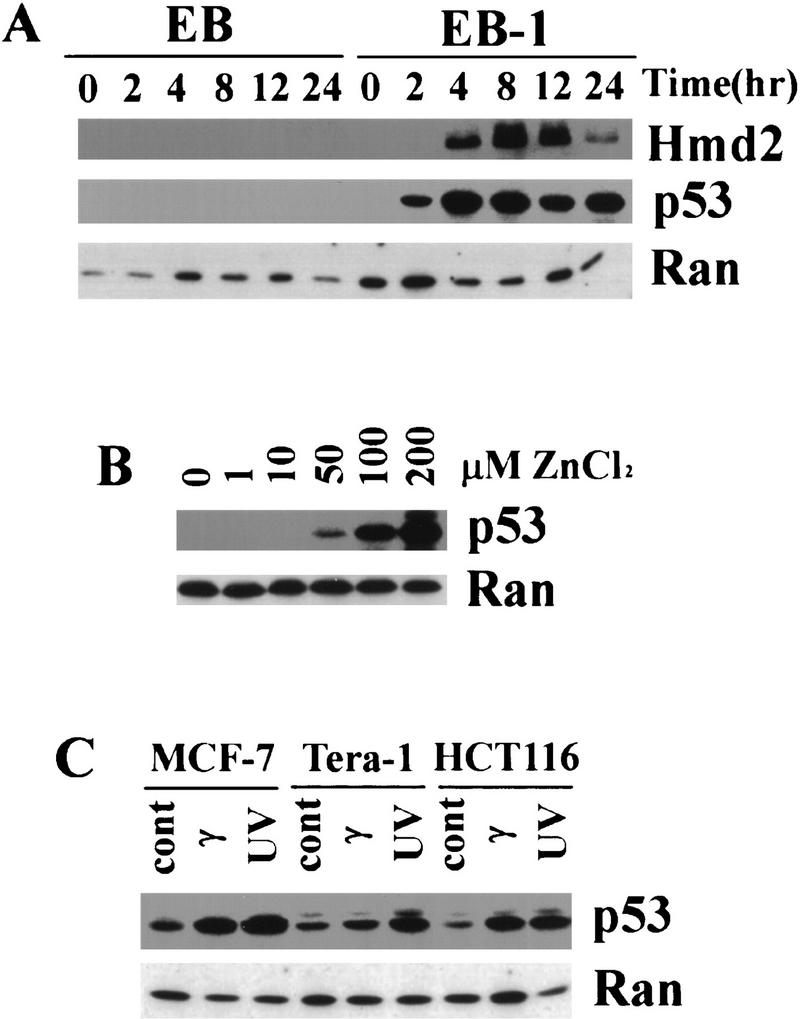
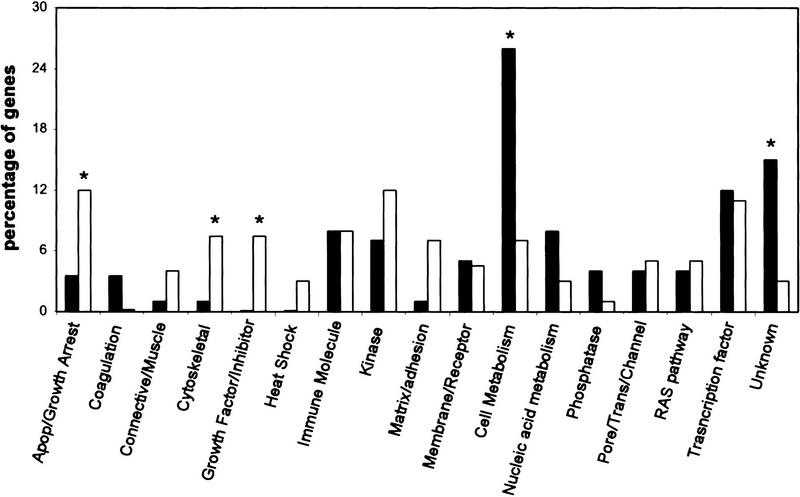
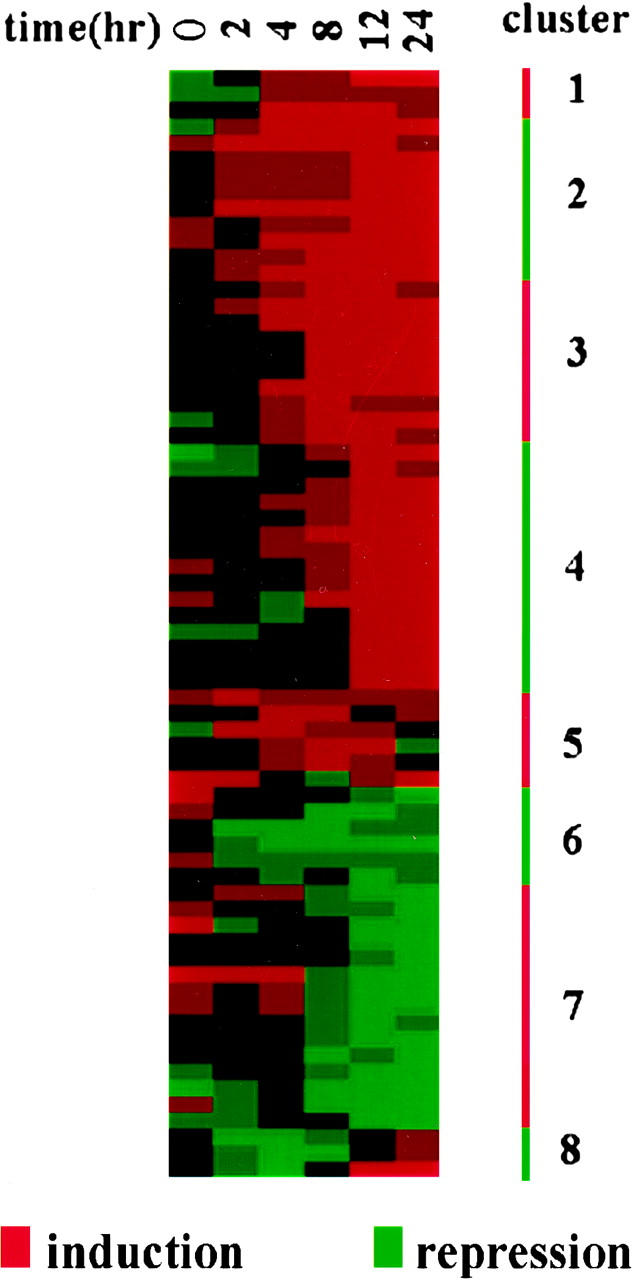
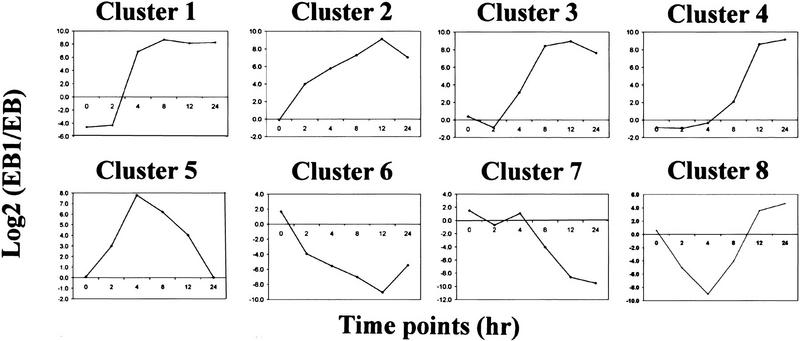
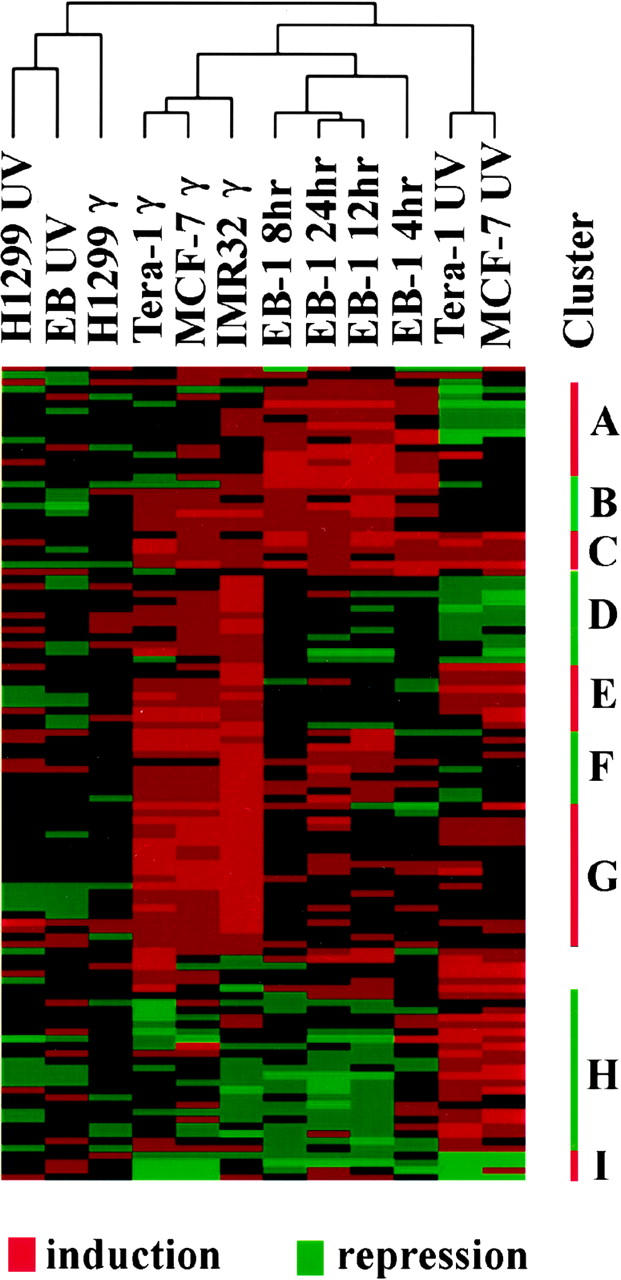
Oligonucleotide microarrays were employed to quantitate mRNA levels from a large number of genes regulated by the p53 transcription factor. Responses to DNA damage and to zinc-inducible p53 were compared for their transcription patterns in cell culture. A cluster analysis of these data demonstrates that genes induced by gamma radiation, UV radiation, and the zinc-induced p53 form distinct sets and subsets with a few genes in common to all these treatments. Cell type- or cell line-specific p53 responses were detected. When p53 proteins were induced with zinc, the kinetics of induction or repression of mRNAs from p53-responsive genes fell into eight distinct classes, five different kinetics of induction, and three different kinetics of repression. In addition, low levels of p53 in a cell induced or repressed only a subset of genes observed at higher p53 levels. The results of this study demonstrate that the nature of the p53 response in diverse mRNA species depends on the levels of p53 protein in a cell, the type of inducing agent or event, and the cell type employed. Of 6000 genes examined for p53 regulatory responses, 107 induced and 54 repressed genes fell into categories of apoptosis and growth arrest, cytoskeletal functions, growth factors and their inhibitors, extracellular matrix, and adhesion genes.
Figures
References
-
- Baker SJ, Markowitz S, Fearon ER, Willson JK, Vogelstein B. Suppression of human colorectal carcinoma cell growth by wild-type p53. Science. 1990;249:912–915. - PubMed
-
- Banin S, Moyal L, Shieh S, Taya Y, Anderson CW, Chessa L, Smorodinsky NI, Prives C, Reiss Y, Shiloh Y, Ziv Y. Enhanced phosphorylation of p53 by ATM in response to DNA damage. Science. 1998;281:1674–1677. - PubMed
-
- Bargonetti J, Manfredi JJ, Chen X, Marshak DR, Prives C. A proteolytic fragment from the central region of p53 has marked sequence-specific DNA-binding activity when generated from wild-type but not from oncogenic mutant p53 protein. Genes & Dev. 1993;7:2565–2574. - PubMed
-
- Bennett WP, Hollstein MC, Hsu IC, Sidransky D, Lane DP, Vogelstein B, Harris CC. Mutational spectra and immunohistochemical analyses of p53 in human cancers. Chest. 1992;101:19S–20S. - PubMed
Publication types
MeSH terms
Substances
Grants and funding
LinkOut - more resources
Full Text Sources
Other Literature Sources
Research Materials
Miscellaneous