


Methods for intense aeration, growth, storage, and replication of bacterial strains in microtiter plates
- PMID: 10831450
- PMCID: PMC110593
- DOI: 10.1128/AEM.66.6.2641-2646.2000
Methods for intense aeration, growth, storage, and replication of bacterial strains in microtiter plates
Abstract
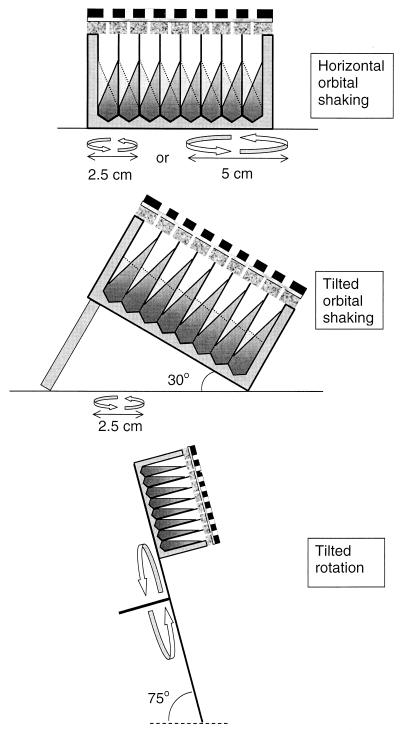
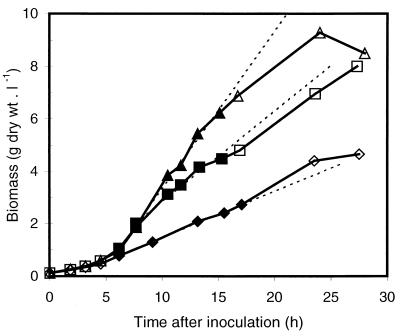
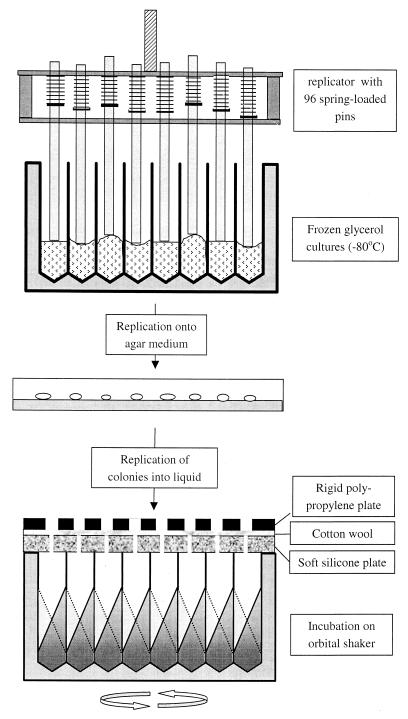
Miniaturized growth systems for heterogeneous culture collections are not only attractive in reducing demands for incubation space and medium but also in making the parallel handling of large numbers of strains more practicable. We report here on the optimization of oxygen transfer rates in deep-well microtiter plates and the development of a replication system allowing the simultaneous and reproducible sampling of 96 frozen glycerol stock cultures while the remaining culture volume remains frozen. Oxygen transfer rates were derived from growth curves of Pseudomonas putida and from rates of oxygen disappearance due to the cobalt-catalyzed oxidation of sulfite. Maximum oxygen transfer rates (38 mmol liter(-1) h(-1), corresponding to a mass transfer coefficient of 188 h(-1)) were measured during orbital shaking at 300 rpm at a shaking diameter of 5 cm and a culture volume of 0.5 ml. A shaking diameter of 2.5 cm resulted in threefold-lower values. These high oxygen transfer rates allowed P. putida to reach a cell density of approximately 9 g (dry weight) liter(-1) during growth on a glucose mineral medium at culture volumes of up to 1 ml. The growth-and-replication system was evaluated for a culture collection consisting of aerobic strains, mainly from the genera Pseudomonas, Rhodococcus, and Alcaligenes, using mineral media and rich media. Cross-contamination and excessive evaporation during vigorous aeration were adequately prevented by the use of a sandwich cover of spongy silicone and cotton wool on top of the microtiter plates.
Figures
References
-
- Akita K. Diffusivities of gases in aqueous electrolyte solutions. Ind Eng Chem Fundam. 1981;20:89–94.
-
- Arnold F H, Volkov A A. Directed evolution of biocatalysts. Curr Opin Chem Biol. 1999;3:54–59. - PubMed
-
- Becker R F, Burton L P J, Amos S E. Additives. In: Moore E P Jr, editor. Polypropylene handbook. Cincinnati, Ohio: Hanser-Gardner; 1996. pp. 177–210.
-
- Büchs J, Maier U, Milbradt C, Zoels B. Power consumption in shaking flasks on rotary shaking machines, part II: non-dimensional description of the specific power consumption and flow-regimes in unbaffled flasks at elevated liquid viscosity. Biotechnol Bioeng. 2000;68:594–601. - PubMed
MeSH terms
Substances
LinkOut - more resources
Full Text Sources
Other Literature Sources
