The completeness of medication histories in hospital medical records of patients admitted to general internal medicine wards
- PMID: 10848724
- PMCID: PMC2015045
- DOI: 10.1046/j.1365-2125.2000.00204.x
The completeness of medication histories in hospital medical records of patients admitted to general internal medicine wards
Abstract
Aims: Accurate recording of medication histories in hospital medical records (HMR) is important when patients are admitted to the hospital. Lack of registration of drugs can lead to unintended discontinuation of drugs and failure to detect drug related problems. We investigated the comprehensiveness of medication histories in HMR with regard to prescription drugs by comparing the registration of drugs in HMR with computerized pharmacy records obtained from the community pharmacy.
Methods: Patients admitted to the general ward of two acute care hospitals were included in the study after obtaining informed consent. We conducted an interview on drugs used just prior to hospitalization and extracted the medication history from the HMR. Pharmacy records were collected from the community pharmacists over a 1 year period before the admission. Drugs in the pharmacy records were defined as possibly used (PU-drugs) when they were dispensed before the admission date and had a theoretical enddate of 7 days before the admission date or later. If any PU-drug was not recorded in the HMR, we asked the patient whether they were using that drug or not.
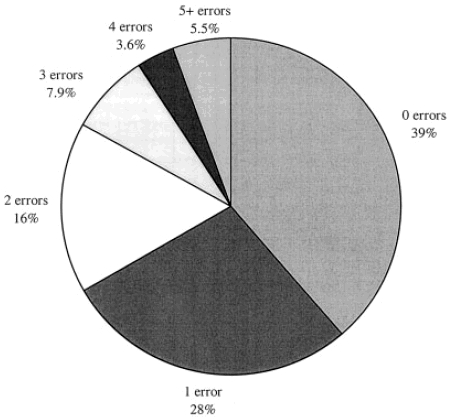
Results: Data were obtained from 304 patients who had an average age of 71 (range 40-92) years. The total number of drugs according to the HMR was 1239, 43 of which were not used. When compared with the pharmacy records we found an extra 518 drugs that were not recorded in the HMR but were possibly in use. After verification with the patients, 410 of these were indeed in use bringing the total number of drugs in use to 1606. The type of drugs in use but not recorded in the HMR covered a broad spectrum and included many drugs considered to be important such as cardiovascular drugs (n = 67) and NSAIDs (n = 31). The percentages of patients with 0, 1, 2, 3, 4, 5-11 drugs not recorded in the HMR were 39, 28, 16, 8, 3.6 and 5.5, respectively. Of the 1606 drugs in use according to information from all sources, only 38 (2.4%) were not retrievable in the pharmacy records when the complete year prior to hospitalization was evaluated.
Conclusions: The medication history in the hospital medical record is often incomplete, as 25% of the prescription drugs in use is not recorded and 61% of all patients has one of more drugs not registered. Pharmacy records from the community pharmacist can be used to obtain more complete information on the medication history of patients admitted to the hospital.
Figures
References
-
- Schwarz A, Faber U, Borner K, Keller F, Offermann G, Molzahn M. Reliability of drug history in analgesic users. Lancet. 1984;2:1163–1164. - PubMed
-
- Beers MH, Munekata M, Storrie M. The accuracy of medication histories in the hospital medical records of elderly persons. J Am Geriatr Soc. 1990;38:1183–1187. - PubMed
-
- Strom BL, Carson JL, Halpern AC. Using a claims database to investigate drug-induced Stevens–Johnson syndrome. Statistics Med. 1991;10:565–576. - PubMed
-
- Guess HA, West R, Strand LM, Helston D, Lydick EG, Bergman U, Wolski K. Fatal upper gastrointestinal hemorrhage or perforation among users and nonusers of nonsteroidal anti-inflammatory drugs in Saskatchewan, Canada 1983. J Clin Epidemiol. 1988;41:35–45. - PubMed
MeSH terms
Substances
LinkOut - more resources
Full Text Sources
Medical