


Pectin engineering: modification of potato pectin by in vivo expression of an endo-1,4-beta-D-galactanase
- PMID: 10852969
- PMCID: PMC16598
- DOI: 10.1073/pnas.130568297
Pectin engineering: modification of potato pectin by in vivo expression of an endo-1,4-beta-D-galactanase
Abstract
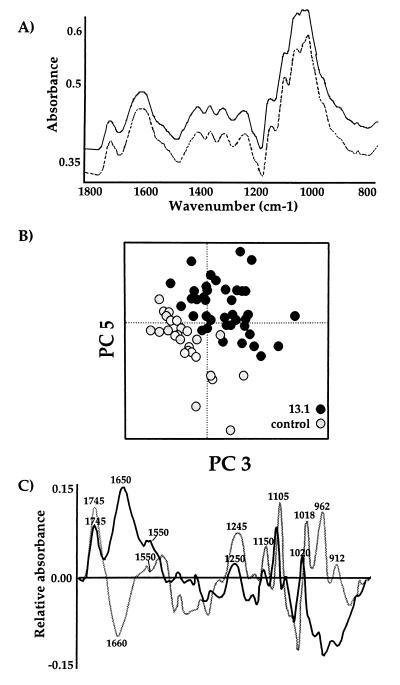
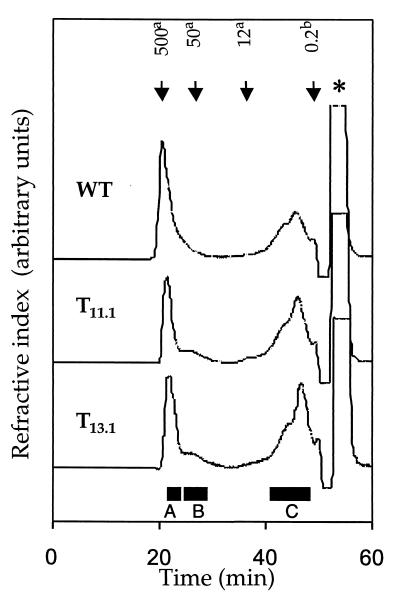
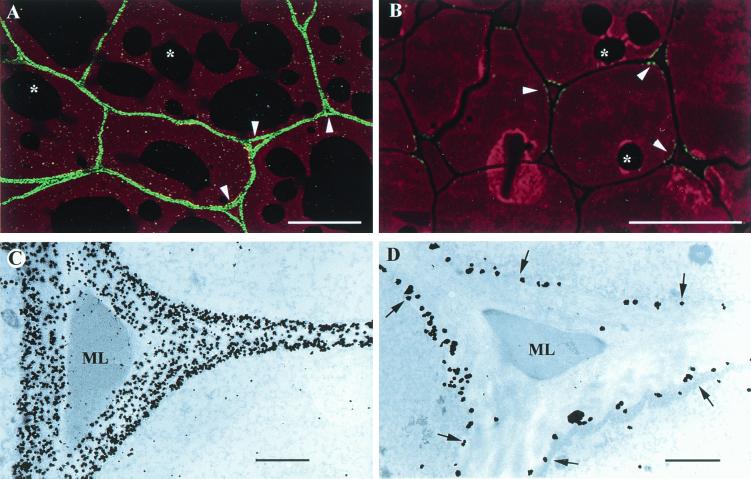
Potato tuber pectin is rich in galactan (oligomer of beta-1,4-linked galactosyl residues). We have expressed a fungal endo-galactanase cDNA in potato under control of the granule bound starch synthase promoter to obtain expression of the enzyme in tubers during growth. The transgenic plants displayed no altered phenotype compared with the wild type. Fungal endo-galactanase activity was quantified in the transgenic tubers, and its expression was verified by Western blot analysis. The effect of the endo-galactanase activity on potato tuber pectin was studied by Fourier transform infrared microspectroscopy, immuno-gold labeling, and sugar analysis. All analyses revealed alterations in pectin composition. Monosaccharide composition of total cell walls and isolated rhamnogalacturonan I fragments showed a reduction in galactosyl content to 30% in the transformants compared with the wild type. Increased solubility of pectin from transgenic cell walls by endo-polygalacturonase/pectin methylesterase digestion points to other changes in wall architecture.
Figures
References
-
- Carpita N C, Gibeaut D M. Plant J. 1993;3:1–30. - PubMed
-
- Voragen A G J, Pilnik W, Thibault J-F, Axelos M A V, Renard C M G C. In: Food Polysaccharides and Their Applications. Stephen A M, editor. New York: Dekker; 1995. pp. 287–339.
-
- Lau J M, McNeil M, Darvill A G, Albersheim P. Carbohydr Res. 1985;137:111–125.
-
- O'Neill M A, Warrenfeltz D, Kates K, Pellerin P, Doco T, Darvill A G, Albersheim P. J Biol Chem. 1996;271:22923–22930. - PubMed
-
- McCann M C, Roberts K. J Exp Bot. 1994;45:1683–1691.
Publication types
MeSH terms
Substances
LinkOut - more resources
Full Text Sources
Other Literature Sources
