DNA microsatellite instability and mismatch repair protein loss in adenomas presenting in hereditary non-polyposis colorectal cancer
- PMID: 10861262
- PMCID: PMC1727981
- DOI: 10.1136/gut.47.1.37
DNA microsatellite instability and mismatch repair protein loss in adenomas presenting in hereditary non-polyposis colorectal cancer
Abstract
Background and aim: Hereditary non-polyposis colorectal cancer (HNPCC), as its name implies, is associated with few adenomas, and the early evolution of colorectal neoplasia is poorly understood. In this study our aim was to clarify the genetic profiles of benign polyps in subjects with HNPCC using a combined molecular and immunohistochemical approach.
Methods: Thirty adenomas and 17 hyperplastic polyps were obtained from 24 affected HNPCC subjects. DNA was extracted from paraffin embedded tissue by microdissection and analysed for the presence of microsatellite instability (MSI) and mutations in five genes known to be targets in mismatch repair deficiency (TGFbetaRII, IGF2R, BAX, hMSH3, and hMSH6). Serial sections were stained by immunohistochemistry for hMLH1 and hMSH2.
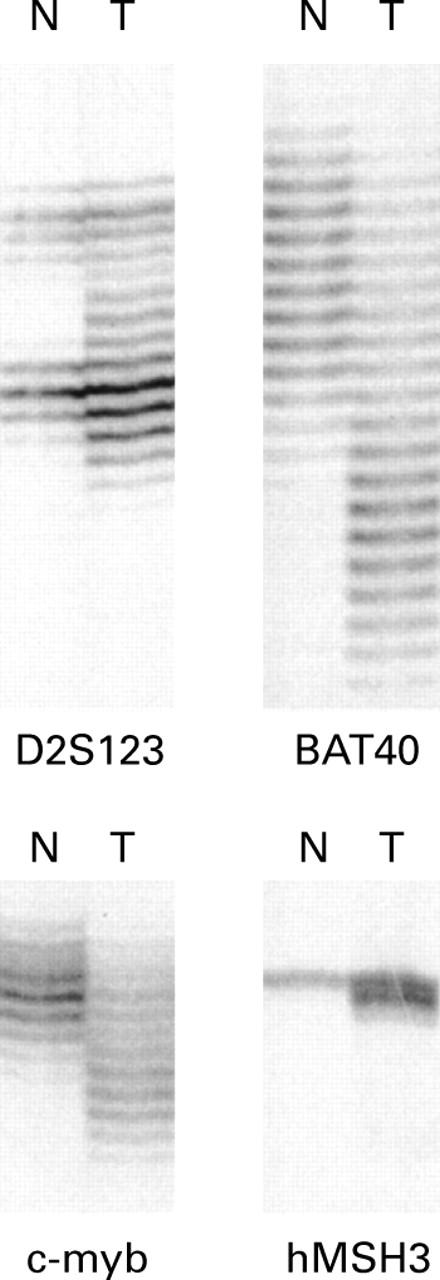
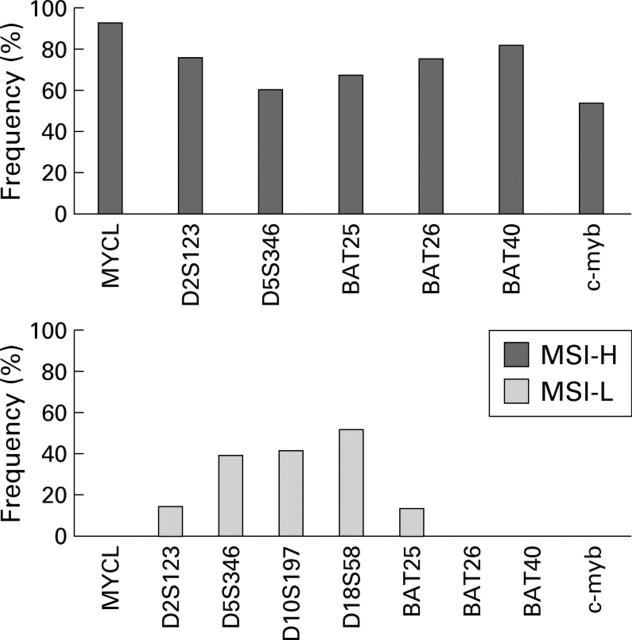
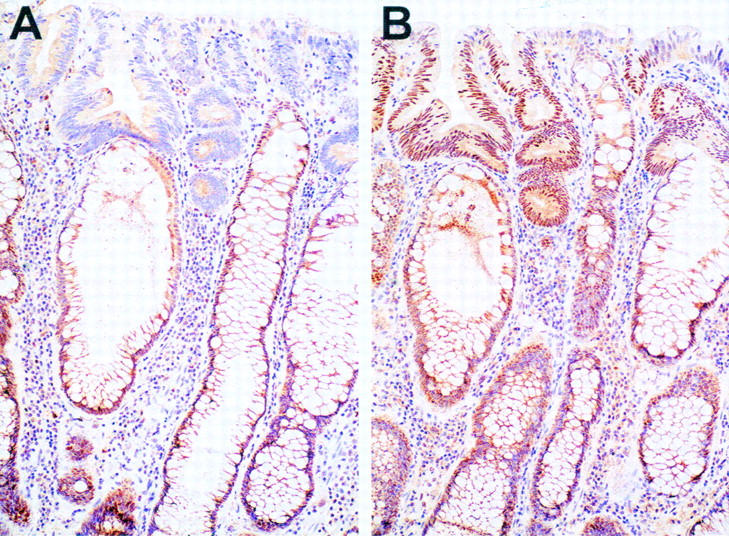
Results: Twenty four (80%) of 30 adenomas showed MSI. Of MSI positive adenomas, 66.7% showed MSI at more than 40% of markers (high level of MSI (MSI-H)). Two of 17 hyperplastic polyps revealed MSI at one marker (low level of MSI (MSI-L)). A significant association was found between MSI-H and high grade dysplasia in adenomas (p=0.004). Eight of nine adenomas with mutations of coding sequences revealed high grade dysplasia and all nine were MSI-H. Four of the nine ranged in size from 2 to 5 mm. The presence of the hMSH6 mutation was significantly correlated with high levels of MSI (80% of markers) (p<0.02). Twenty four adenomas gave evaluable results with immunohistochemistry. One of six (17%) microsatellite stable, six of seven (86%) MSI-L, and 11 of 11 (100%) MSI-H adenomas showed loss of either hMLH1 or hMSH2.
Conclusions: Most adenomas in subjects with a definite diagnosis of HNPCC show MSI (80%). The finding of MSI-L is usually associated with loss of expression of hMLH1 or hMSH2, unlike the situation in MSI-L sporadic colorectal cancer. The transition from MSI-L to MSI-H correlated with the finding of high grade dysplasia and mutation of coding sequences and may be driven by mutation of secondary mutators such as hMSH3 and hMSH6. Advanced genetic changes may be present in adenomas of minute size.
Figures
References
Publication types
MeSH terms
Substances
Grants and funding
LinkOut - more resources
Full Text Sources
Other Literature Sources
Research Materials
Miscellaneous