


Increased small bowel epithelial turnover in interleukin-1 receptor knockout mice
- PMID: 10862193
- PMCID: PMC1421106
- DOI: 10.1097/00000658-200007000-00006
Increased small bowel epithelial turnover in interleukin-1 receptor knockout mice
Abstract
Objective: To determine whether interleukin-1 (IL-1) affects the cellular homeostasis of small bowel mucosa, the authors studied apoptosis and proliferation in small bowel epithelium in two groups of C57 mice: an IL-1 receptor knockout group, and a control wild-type group.
Summary background data: Gut mucosal integrity is maintained by a balance of cell proliferation and cell death. Recent reports suggest that IL-1, a proinflammatory cytokine, increases cell death by apoptosis in some epithelial cells.
Methods: Twenty-four male C57BL6 IL-1 receptor (type I) knockout mice were killed, and small bowel was removed for study. Twenty-four wild-type mice (C57-BL6) served as controls. Body weights, bowel length, and mucosal morphology were examined for phenotypic differences. Apoptosis was quantified by terminal deoxyuridine nick-end labeling (TUNEL) immunohistochemical staining and cellular proliferation by proliferation cell nuclear antigen staining. Whole mucosal protein was analyzed for nuclear factor-kappaB expression. Groups were analyzed by t test.
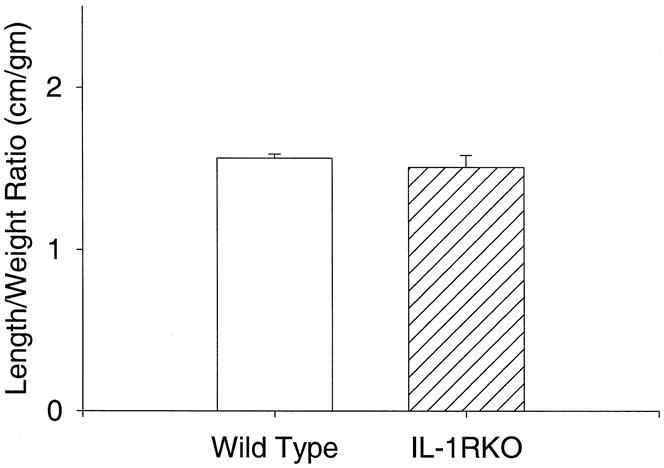
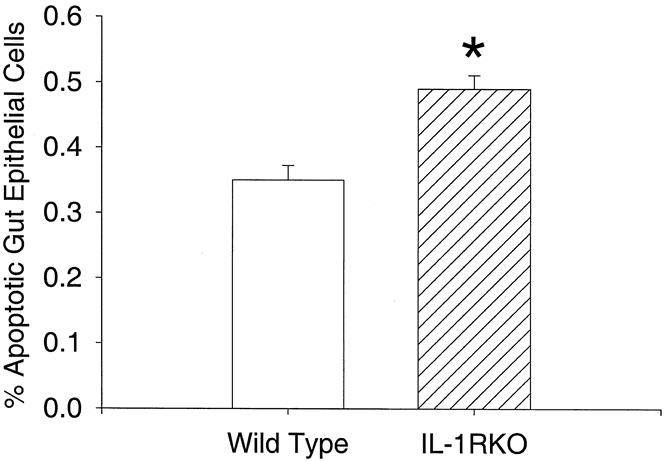
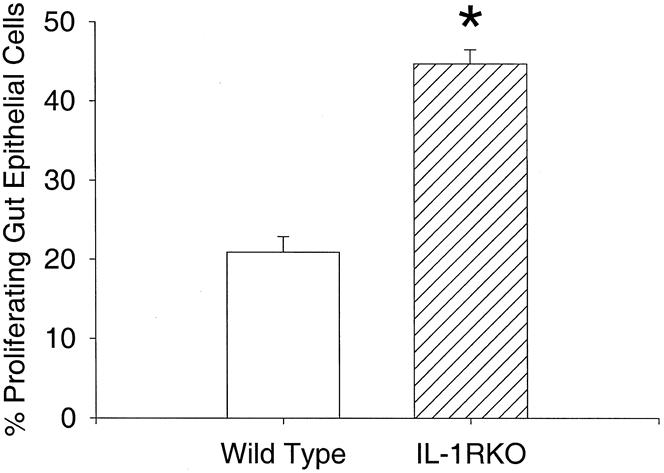
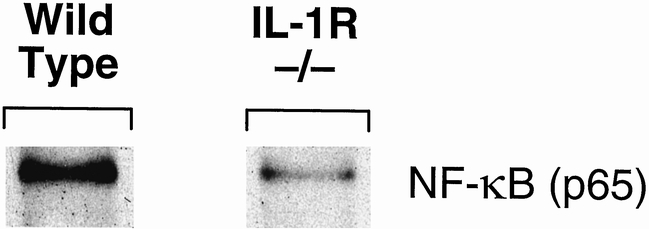
Results: The absence of IL-1 type I receptor in knockout mice was verified by reverse transcriptase-polymerase chain reaction. IL-1 receptor null mice were larger than wild-type controls, with a longer small bowel; however, the index of small bowel length to total body weight did not differ between groups. The percentage of apoptotic cells was higher in IL-1 receptor null mice than in wild-type mice; the proliferation index also increased. Mucosal height and other measures of mucosal morphology were not different. Genotypic absence of IL-1 receptors was associated with decreased expression of nuclear factor-kappaB in whole mucosal protein extracts.
Conclusions: Both apoptosis and proliferation increased in gut epithelial cells of mice without IL-1 receptors, suggesting increased cell turnover with no change in net balance. This model represents an opportunity to examine potential mechanisms of gut epithelial turnover in vivo, under both normal conditions and in conditions of mucosal proliferation and atrophy.
Figures
References
-
- Chung DH, Evers BM, Townsend CM Jr, et al. Burn-induced transcriptional regulation of small intestinal ornithine decarboxylase. Am J Surg 1992; 163:157–163. - PubMed
-
- Huang KF, Chung DH, Herndon DN. Insulin-like growth factor reduces gut atrophy and bacterial translocation after severe burn injury. Arch Surg 1993; 128:47–54. - PubMed
-
- Chung DH, Evers BM, Townsend CM Jr, et al. Role of polyamine synthesis during gut mucosal adaptation after burn injury. Am J Surg 1993; 165:144–149. - PubMed
-
- Wolf SE, Ikeda H, Matin S, et al. Cutaneous burn increases apoptosis in the gut epithelium of mice. J Am Coll Surg 1999; 188:10–16. - PubMed
-
- Vindenes HA, Ulvestad E, Bjerknes R. Concentrations of cytokines in plasma of patients with large burns: their relation to time after injury, burn size, inflammatory variables, infection, and outcome. Eur J Surg 1998; 164:647–656. - PubMed
Publication types
MeSH terms
Substances
Grants and funding
LinkOut - more resources
Full Text Sources
