In vitro antibiotic resistance in bacterial keratitis in London
- PMID: 10873974
- PMCID: PMC1723533
- DOI: 10.1136/bjo.84.7.687
In vitro antibiotic resistance in bacterial keratitis in London
Abstract
Aim: To document changes in the profile of bacterial isolates from cases of keratitis and changes in their susceptibility to first line antibiotic therapies.
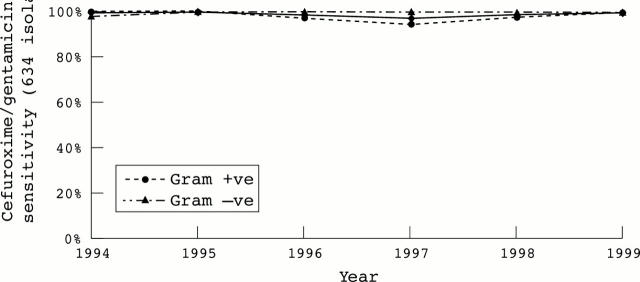
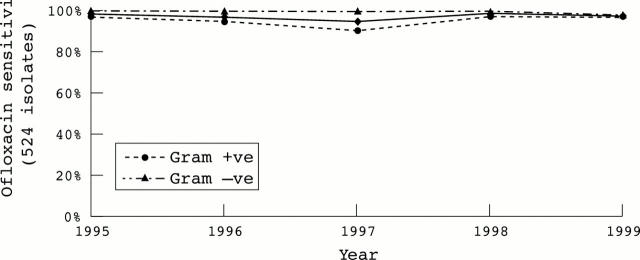
Methods: A retrospective review was performed of all bacterial isolates from cases of keratitis seen between 1984 and 1999. In vitro laboratory susceptibilities to antibiotics were determined by the Kirby-Bauer disc diffusion method. The number of isolates, changes in the proportion of bacterial types, and the number that were fully resistant to monotherapy (ofloxacin), dual therapy (gentamicin and cefuroxime), and prophylactic treatment (chloramphenicol) were calculated.
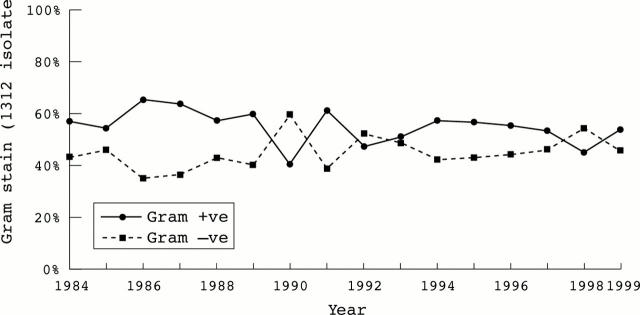
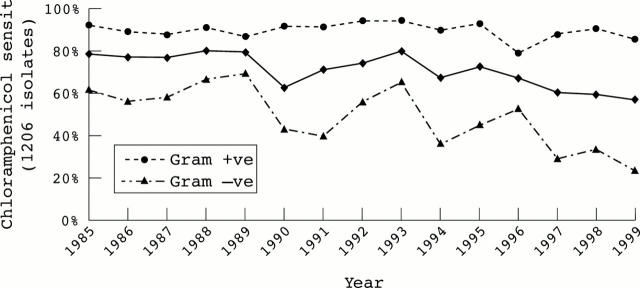
Results: There were 1312 bacterial isolates over 16 years. Gram positive bacteria accounted for 54.7% of isolates and Staphylococcus species (33.4%) were the most frequently isolated organisms. During the study period there has been an increase in the proportion of Pseudomonas species isolates but no overall increase in the proportion of Gram negative isolates. There has not been an increase in the proportion of isolates resistant to ofloxacin since 1995 or an increase in resistance to the combination of gentamicin and cefuroxime. However, since 1984 there has been a significant increase in proportion of Gram negative organisms resistant to chloramphenicol (p=0.0019).
Conclusions: An increase in the in vitro resistance of organisms to first line therapies for bacterial keratitis has not been observed. An increased resistance to chloramphenicol indicates that this drug is unlikely to provide prophylactic cover when Gram negative infection is a risk. Continued monitoring for the emergence of antibiotic resistance is recommended.
Figures
References
MeSH terms
LinkOut - more resources
Full Text Sources
Medical