


18S ribosomal DNA-based PCR for diagnosis of Trichomonas vaginalis
- PMID: 10878064
- PMCID: PMC86998
- DOI: 10.1128/JCM.38.7.2683-2687.2000
18S ribosomal DNA-based PCR for diagnosis of Trichomonas vaginalis
Abstract
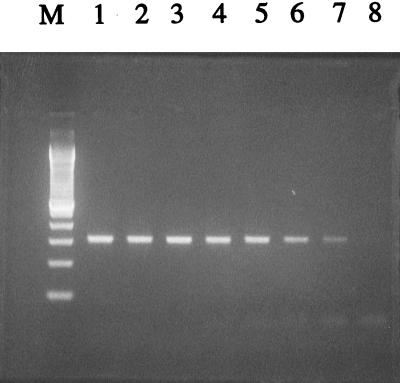
Trichomonas vaginalis remains the most common sexually transmitted parasite in the world and is considered a major risk factor in the transmission of the human immunodeficiency virus. A PCR technique using primers targeting a specific region of the 18S rRNA gene of T. vaginalis was developed. The PCR test was standardized using 15 reference strains, giving a single product of 312 bp in all strains. No amplification was observed when DNA from related organisms or human DNA was used as a target. The test was evaluated on 372 vaginal swab specimens and 361 urine samples from women attending infertility and obstetric clinics at two separate hospitals in Lima, Peru. Compared to T. vaginalis culture, the overall sensitivity and specificity of PCR of vaginal swab samples was 100% and 98%, respectively. The PCR of urine samples was 100% sensitive and 99.7% specific compared to culture of vaginal swab, but the sensitivity drops to 83.3% when compared to PCR of vaginal swabs. All culture-positive samples were found to be positive by PCR in either urine or vaginal secretion. None of the PCR-negative samples were positive by culture. The origin of the amplification was confirmed by digestion of PCR products with HaeIII. This PCR assay, which is easy to perform and has a high sensitivity and specificity, should be useful for routine diagnosis of T. vaginalis infection.
Figures

References
-
- DeMeo L R, Draper D L, McGregor J A, Moore D F, Peter C R, Kapernick P S, McCormack W M. Evaluation of a desoxyribonucleic acid probe for the detection of Trichomonas vaginalis in vaginal secretions. Am J Obstet Gynecol. 1996;174:1339–1342. - PubMed
-
- Felleisen R. Comparative sequence analysis of 5.8S rRNA genes and internal transcribed spacers (ITS) regions of trichomonadid protozoa. Parasitology. 1997;115:111–119. - PubMed
-
- Foust A C, Kraus S J. Trichomonas vaginalis: reevaluation of its clinical presentation and laboratory diagnosis. J Infect Dis. 1980;141:137–143. - PubMed
-
- Graves A, Gardner W A. Pathogenicity of Trichomonas vaginalis. Clin Obstet Gynecol. 1993;36:145–152. - PubMed
Publication types
MeSH terms
Substances
LinkOut - more resources
Full Text Sources
Other Literature Sources
Medical
Molecular Biology Databases
