


Sister chromatid gene conversion is a prominent double-strand break repair pathway in mammalian cells
- PMID: 10880452
- PMCID: PMC313931
- DOI: 10.1093/emboj/19.13.3398
Sister chromatid gene conversion is a prominent double-strand break repair pathway in mammalian cells
Abstract
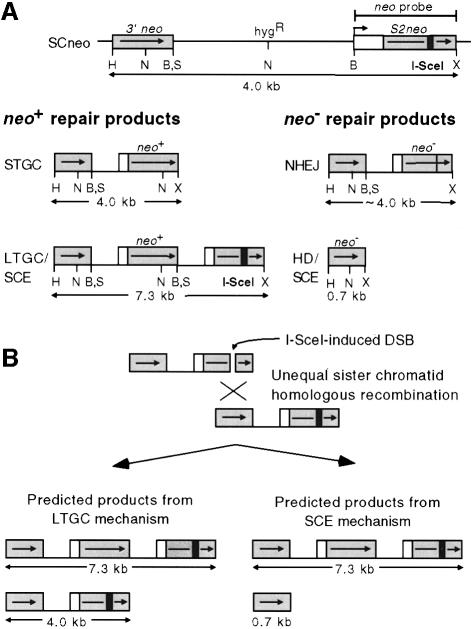
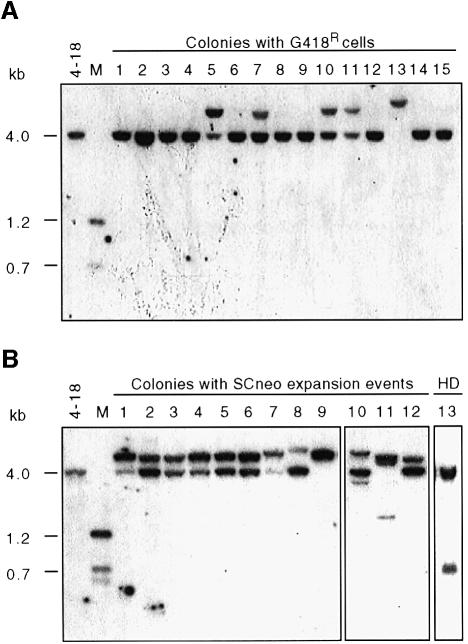
In mammalian cells, repair of DNA double-strand breaks (DSBs) occurs by both homologous and non-homologous mechanisms. By definition, homologous recombination requires a template with sufficient sequence identity to the damaged molecule in order to direct repair. We now show that the sister chromatid acts as a repair template in a substantial proportion of DSB repair events. The outcome of sister chromatid repair is primarily gene conversion unassociated with reciprocal exchange. This contrasts with expectations from the classical DSB repair model originally proposed for yeast meiotic recombination, but is consistent with models in which recombination is coupled intimately with replication. These results may explain why cytologically observable sister chromatid exchanges are induced only weakly by DNA-damaging agents that cause strand breaks, since most homologous repair events would not be observed. A preference for non-crossover events between sister chromatids suggests that crossovers, although genetically silent, may be disfavored for other reasons. Possibly, a general bias against crossing over in mitotic cells exists to reduce the potential for genome alterations when other homologous repair templates are utilized.
Figures

References
-
- Carrano A.V., Thompson,L.H., Lindl,P.A. and Minkler,J.L. (1978) Sister chromatid exchange as an indicator of mutagenesis. Nature, 271, 551–553. - PubMed
Publication types
MeSH terms
Grants and funding
LinkOut - more resources
Full Text Sources
Other Literature Sources
