. 1999;23(1):40-54.

Alcohol and medication interactions

Affiliations

Alcohol and medication interactions

R Weathermon et al. Alcohol Res Health. 1999.

Abstract

Many medications can interact with alcohol, thereby altering the metabolism or effects of alcohol and/or the medication. Some of these interactions can occur even at moderate drinking levels and result in adverse health effects for the drinker. Two types of alcohol-medication interactions exist: (1) pharmacokinetic interactions, in which alcohol interferes with the metabolism of the medication, and (2) pharmacodynamic interactions, in which alcohol enhances the effects of the medication, particularly in the central nervous system (e.g., sedation). Pharmacokinetic interactions generally occur in the liver, where both alcohol and many medications are metabolized, frequently by the same enzymes. Numerous classes of prescription medications can interact with alcohol, including antibiotics, antidepressants, antihistamines, barbiturates, benzodiazepines, histamine H2 receptor antagonists, muscle relaxants, nonnarcotic pain medications and anti-inflammatory agents, opioids, and warfarin. In addition, many over-the-counter and herbal medications can cause negative effects when taken with alcohol.


Figures
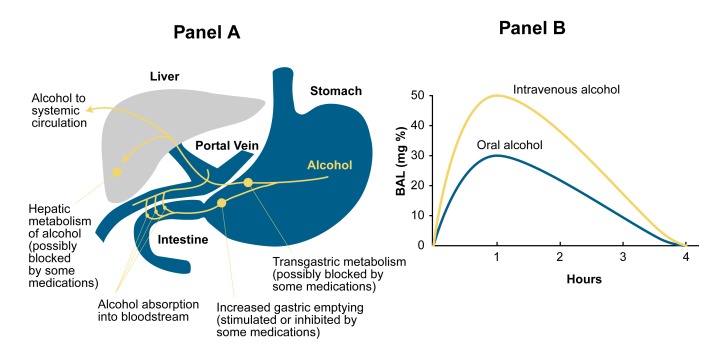
Figure 1
Figure 1
Schematic representation of first-pass metabolism. (A) Alcohol ingested through the mouth reaches the stomach, where a portion is metabolized by the enzyme alcohol dehydrogenase (ADH). The remaining alcohol enters the intestine, where most of the remainder is absorbed into the bloodstream and enters the portal vein that leads to the liver. In the liver, part of the alcohol is metabolized by ADH or cytochrome P450. The remaining alcohol enters the general (i.e., systemic) circulation and eventually is transported back to the liver and metabolized there. The metabolism of alcohol in the stomach or during the first passage through the liver after absorption from the intestine is called first-pass metabolism. (B) Changes in blood alcohol levels (BALs) after oral alcohol ingestion and after intravenous administration of the same alcohol dose. The difference in BALs achieved with both administration routes (i.e., the amount by which the BAL is lower after oral ingestion) represents that portion of the ingested alcohol that has been broken down by first-pass metabolism before reaching the systemic circulation.
Figure 2
Figure 2
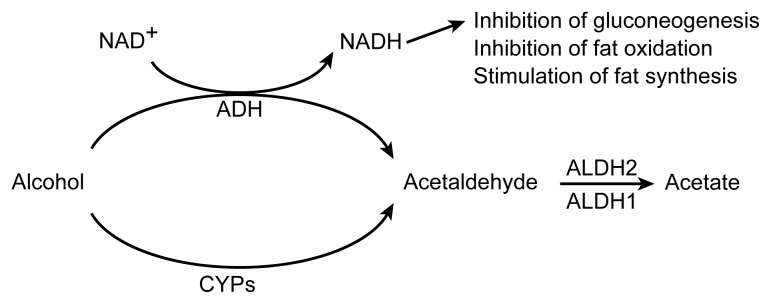
Alcohol metabolism in the liver. Alcohol is broken down to acetaldehyde either by alcohol dehydrogenase (ADH) or cytochrome P450 (CYP). The acetaldehyde then is broken down to acetic acid and water by two variants of the enzyme aldehyde dehydrogenase (ALDH). Alcohol metabolism by ADH generates a byproduct called reduced nicotinamide adenine dinucleotide (NADH). Excessive NADH levels can inhibit glucose production (i.e., gluconeogenesis) and breakdown (i.e., oxidation) of fat molecules as well as stimulate production of fat molecules.
Figure 3
Figure 3
Potential alcohol-medication interactions involving cytochrome P450 enzymes (CYP) in the liver.

References

    1. Beilin LJ. Alcohol and hypertension. Clinical and Experimental Pharmacology and Physiology. 1995;22:185–188. - PubMed
    1. Emanuele NV, Swade TF, Emanuele MA. Consequences of alcohol use in diabetics. Alcohol Health & Research World. 1998;22(3):211–219. - PMC - PubMed
    1. Adams WL. Interactions between alcohol and other drugs. International Journal of Addictions. 1995;30:1903–1923. - PubMed
    1. American Pharmaceutical Association. Navigating the Medication Marketplace: How Consumers Choose. Washington, DC: the Association; 1997.
    1. Bode JC, Bode C, Thiele D. Alcohol metabolism in man: Effect of intravenous fructose infusion on blood ethanol elimination rate following stimulation by phenobarbital treatment or chronic alcohol consumption. Klinische Wochenschrift. 1979;57:125–130. - PubMed

LinkOut - more resources