


Alfalfa root nodule invasion efficiency is dependent on Sinorhizobium meliloti polysaccharides
- PMID: 10894742
- PMCID: PMC101948
- DOI: 10.1128/JB.182.15.4310-4318.2000
Alfalfa root nodule invasion efficiency is dependent on Sinorhizobium meliloti polysaccharides
Abstract
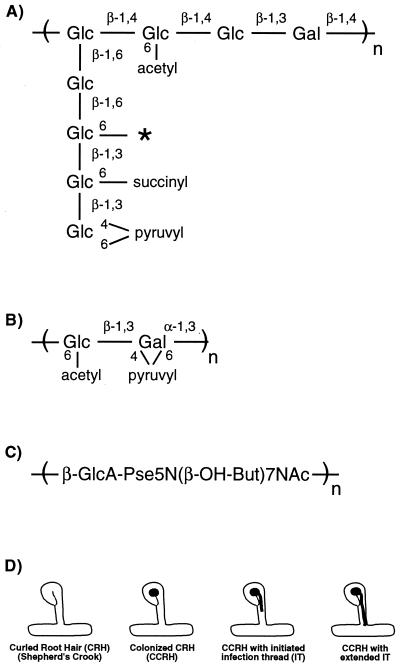
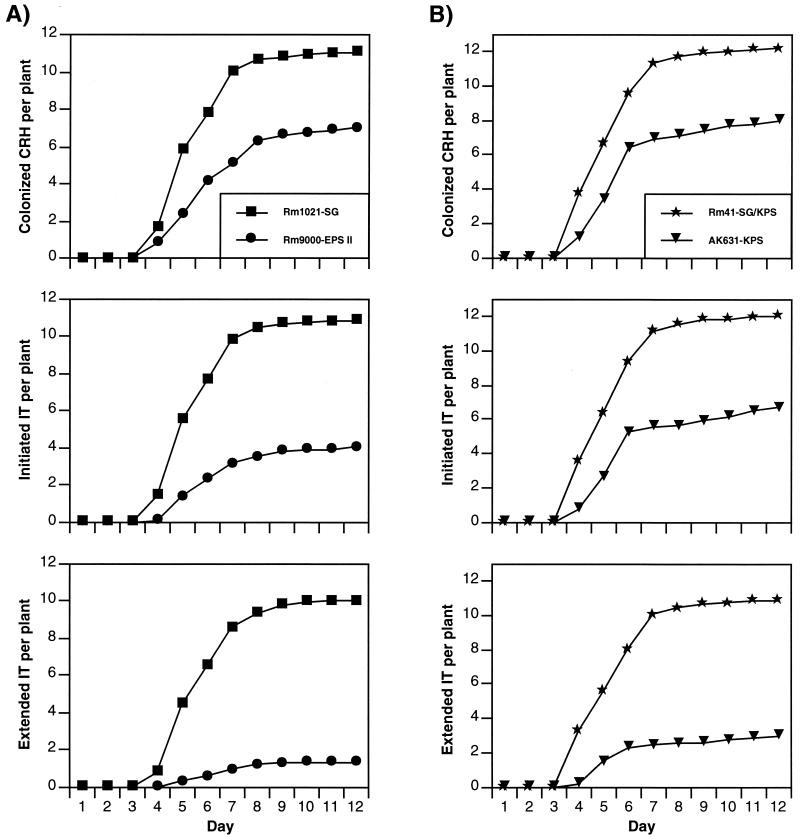
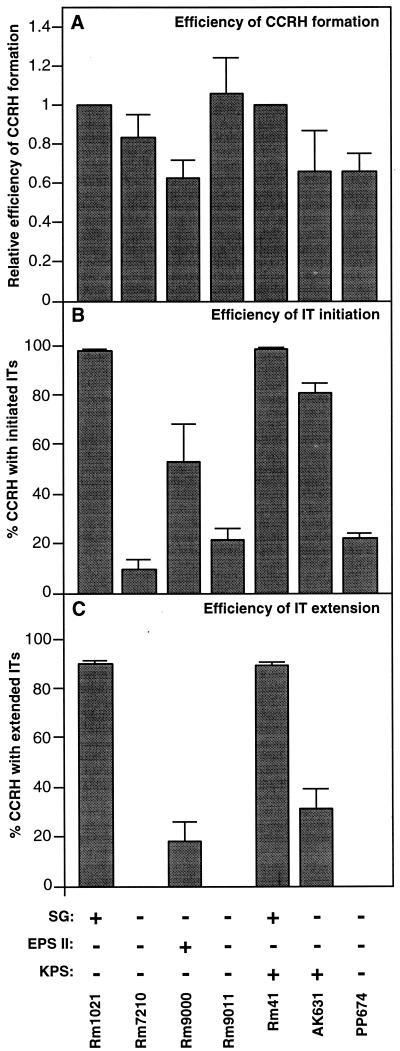
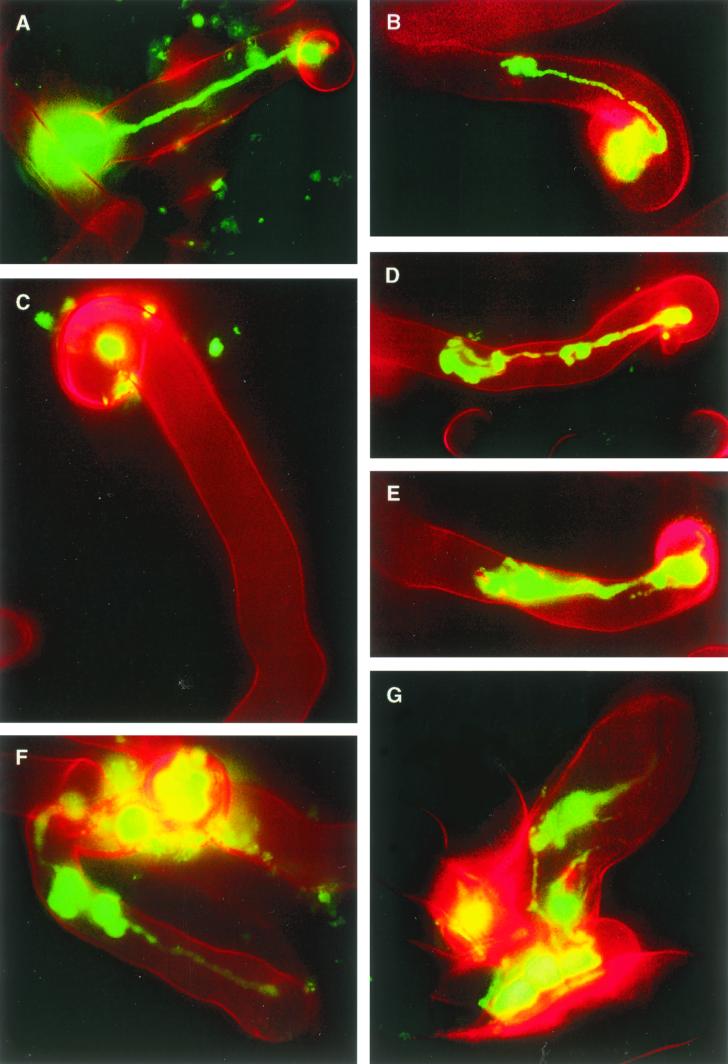
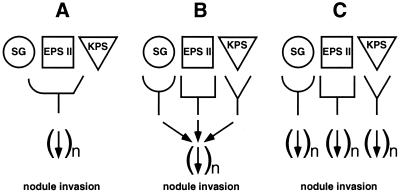
The soil bacterium Sinorhizobium meliloti is capable of entering into a nitrogen-fixing symbiosis with Medicago sativa (alfalfa). Particular low-molecular-weight forms of certain polysaccharides produced by S. meliloti are crucial for establishing this symbiosis. Alfalfa nodule invasion by S. meliloti can be mediated by any one of three symbiotically important polysaccharides: succinoglycan, EPS II, or K antigen (also referred to as KPS). Using green fluorescent protein-labeled S. meliloti cells, we have shown that there are significant differences in the details and efficiencies of nodule invasion mediated by these polysaccharides. Succinoglycan is highly efficient in mediating both infection thread initiation and extension. However, EPS II is significantly less efficient than succinoglycan at mediating both invasion steps, and K antigen is significantly less efficient than succinoglycan at mediating infection thread extension. In the case of EPS II-mediated symbioses, the reduction in invasion efficiency results in stunted host plant growth relative to plants inoculated with succinoglycan or K-antigen-producing strains. Additionally, EPS II- and K-antigen-mediated infection threads are 8 to 10 times more likely to have aberrant morphologies than those mediated by succinoglycan. These data have important implications for understanding how S. meliloti polysaccharides are functioning in the plant-bacterium interaction, and models are discussed.
Figures
References
-
- Aman P, McNeil M, Franzen L-E, Darvill A G, Albersheim P. Structural elucidation, using HPLC-MS and GLC-MS, of the acidic exopolysaccharide secreted by Rhizobium meliloti strain Rm1021. Carbohydr Res. 1981;95:263–282.
-
- An J, Carlson R W, Glushka J, Streeter J G. The structure of a novel polysaccharide produced by Bradyrhizobium species within soybean nodules. Carbohydr Res. 1995;269:303–317. - PubMed
-
- Banfalvi Z, Sakanyan V, Koncz C, Kiss A, Dusha I, Kondorosi A. Location of nodulation and nitrogen fixation genes on a high molecular weight plasmid of Rhizobium meliloti. Mol Gen Genet. 1981;184:318–325. - PubMed
-
- Becker A, Rüberg S, Küster H, Roxlau A A, Keller M, Ivashina T, Cheng H, Walker G C, Pühler A. The 32-kilobase exp gene cluster of Rhizobium meliloti directing the biosynthesis of galactoglucan: genetic organization and properties of the encoded gene products. J Bacteriol. 1997;179:1375–1384. - PMC - PubMed
Publication types
MeSH terms
Substances
Grants and funding
LinkOut - more resources
Full Text Sources
Other Literature Sources
Molecular Biology Databases
