


Effect of endotoxin on opossum gallbladder motility: a model of acalculous cholecystitis
- PMID: 10903598
- PMCID: PMC1421131
- DOI: 10.1097/00000658-200008000-00009
Effect of endotoxin on opossum gallbladder motility: a model of acalculous cholecystitis
Abstract
Objective: To determine whether endotoxin causes histologic changes in the gallbladder consistent with acalculous cholecystitis, and to determine the effects of endotoxin on gallbladder motility.
Summary background data: Acute acalculous cholecystitis is frequently seen in critically ill, septic patients, after prolonged fasting and gallbladder stasis. The pathogenesis of acalculous cholecystitis is unknown; however, previous studies have suggested that ischemia may play a role.
Methods: Adult opossums received Escherichia coli lipopolysaccharide. The gallbladder was removed for histologic examination or for physiologic studies 4 hours to 2 weeks later. For histologic examination, gallbladder strips underwent standard hematoxylin-and-eosin processing. For physiologic studies, they were mounted in a tissue bath to determine responses to cholecystokinin octapeptide or electrical field stimulation.
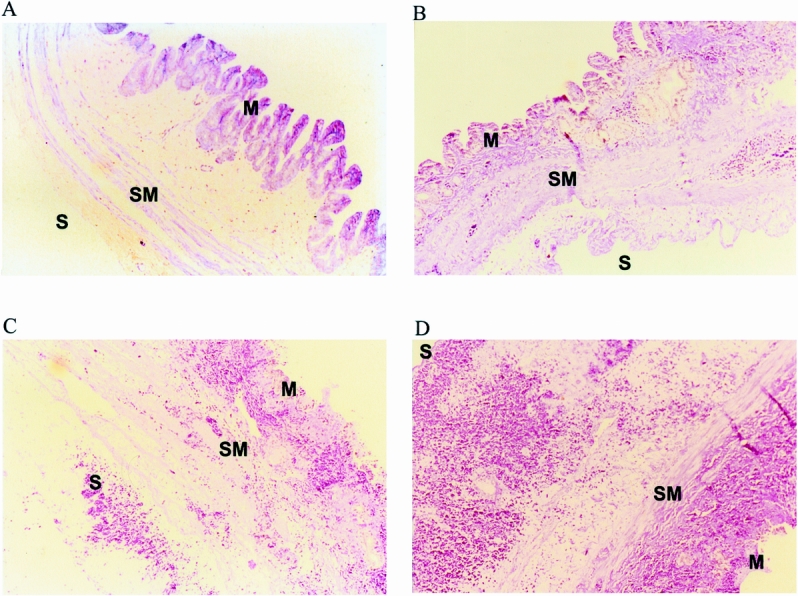
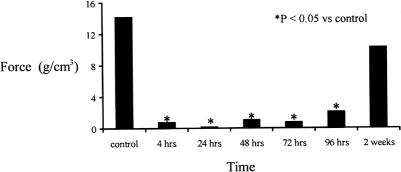
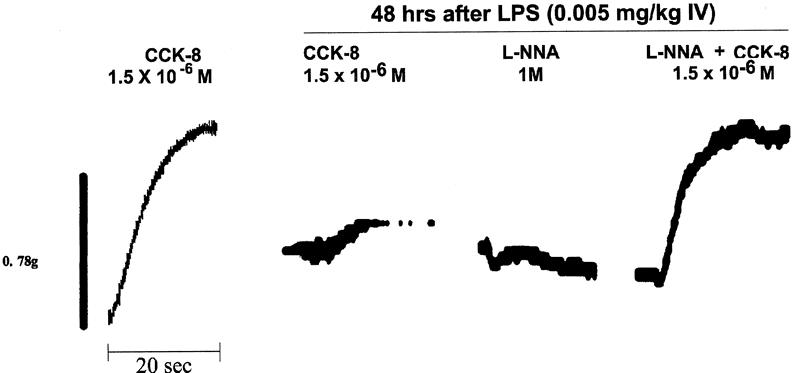
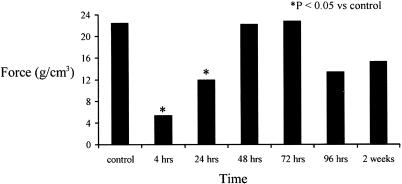
Results: Intravenous endotoxin at a dose of 0.005 mg/kg resulted in disrupted mucosal surfaces and areas of hemorrhage; higher doses of endotoxin resulted in coagulation necrosis, hemorrhage, areas of fibrin deposition, and extensive mucosal loss, consistent with an acute ischemic insult. Endotoxin abolished the contractile response to cholecystokinin octapeptide in gallbladder strips 4 hours after endotoxin administration. The 0.005-mg/kg dose of endotoxin decreased the contractile response to cholecystokinin octapeptide for up to 96 hours after endotoxin administration and decreased the contractile response to electrical field stimulation for 48 hours after administration. Inhibition of nitric oxide synthase reversed the decreased contractile response to cholecystokinin octapeptide.
Conclusions: Endotoxin causes an ischemic insult to the gallbladder similar to that seen in acalculous cholecystitis. Also, endotoxin may lead to gallbladder stasis by decreasing gallbladder contractile responses to hormonal and neural stimuli.
Figures
References
-
- Carrico CJ, Meakins JL, Marshall JC. Multiple organ failure syndrome. Arch Surg 1986; 121: 196–208. - PubMed
-
- Bolder U, Ton-Nu H, Schteingart CD, et al. Hepatocyte transport of bile acids and organic anions in endotoxemic rats: impaired uptake and secretion. Gastroenterology 1997; 112: 214–225. - PubMed
-
- Moore FA, Moore EE, Jones TN, et al. TEN versus TPN following major abdominal trauma—reduced septic morbidity. J Trauma 1989; 29: 916–923. - PubMed
-
- Pitt HA, King W, Mann LL, et al. Increased risk of cholelithiasis with prolonged total parenteral nutrition. Am J Surg 1983; 145: 106–112. - PubMed
Publication types
MeSH terms
Substances
LinkOut - more resources
Full Text Sources
