


Review
doi: 10.1083/jcb.150.2.f63.
Flying through the drosophila cytoskeletal genome
Affiliations
- PMID: 10908588
- PMCID: PMC2180230
- DOI: 10.1083/jcb.150.2.f63
Item in Clipboard
Review
Flying through the drosophila cytoskeletal genome
J Cell Biol.
.
No abstract available
Figures
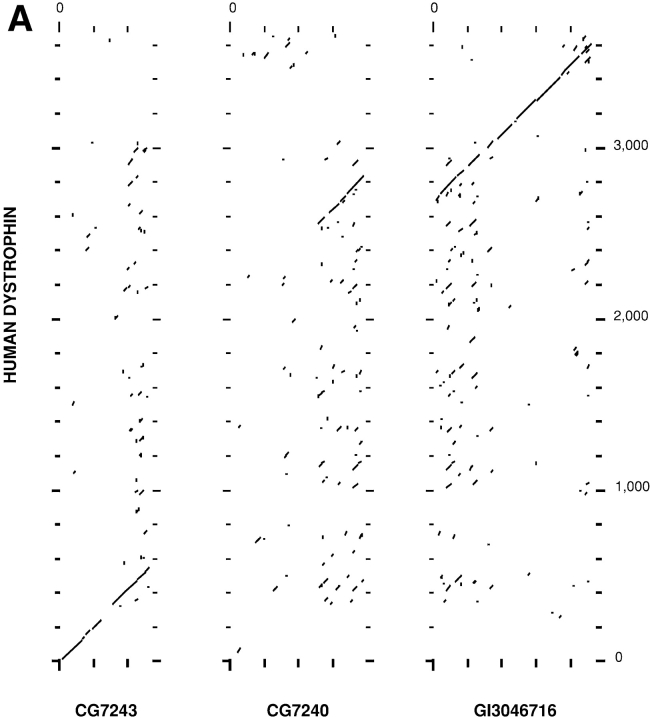
Dot matrix analysis of Drosophila homologues of dystrophin and dystrobrevin. (A) Comparison of human dystrophin (gi30846) with three sequences from Drosophila that make up portions of a likely dystrophin homologue. These three sequences are currently not properly assembled in the genome database. Note the significant homology both in the NH2-terminal actin-binding domain, but also in the COOH-terminal domain unique to dystrophins and utrophins. (B) Comparison of mouse β-dystrobrevin (gi3702159) and a Drosophila homologue. Comparisons in this and the other figures was done using the COMPARE and DOTPLOT algorithms in the UWGCG package; Window = 30, Stringency = 15 for all except A and Fig. 5 where Stringency = 25.
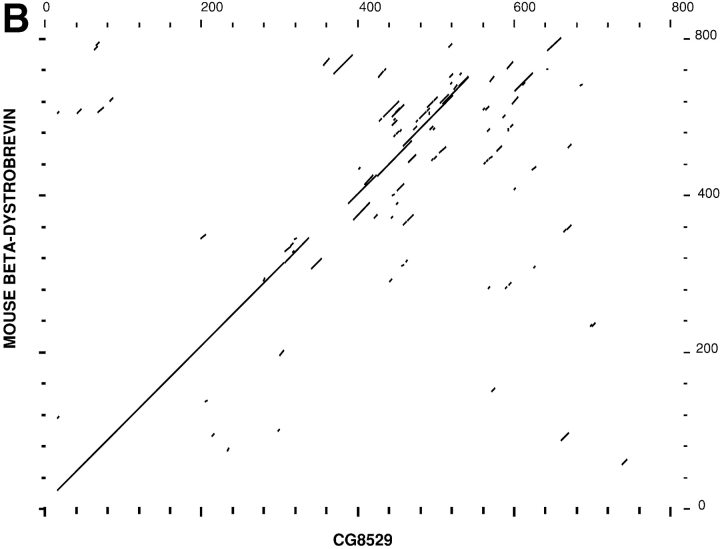
Dot matrix analysis of Drosophila homologues of dystrophin and dystrobrevin. (A) Comparison of human dystrophin (gi30846) with three sequences from Drosophila that make up portions of a likely dystrophin homologue. These three sequences are currently not properly assembled in the genome database. Note the significant homology both in the NH2-terminal actin-binding domain, but also in the COOH-terminal domain unique to dystrophins and utrophins. (B) Comparison of mouse β-dystrobrevin (gi3702159) and a Drosophila homologue. Comparisons in this and the other figures was done using the COMPARE and DOTPLOT algorithms in the UWGCG package; Window = 30, Stringency = 15 for all except A and Fig. 5 where Stringency = 25.
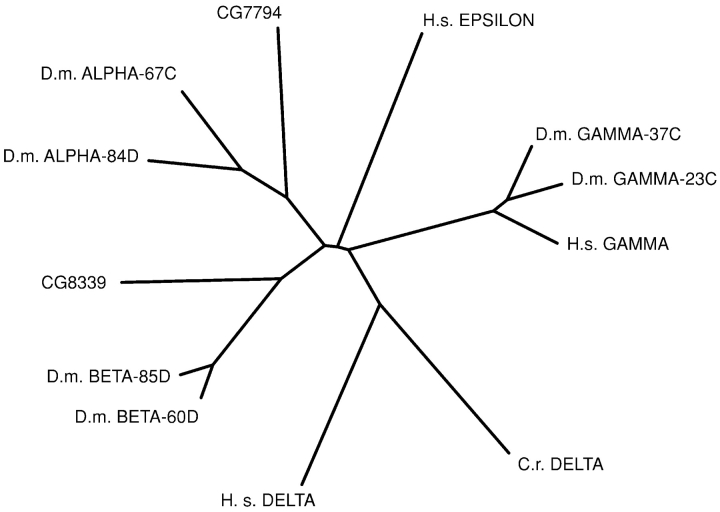
Unrooted tree showing relationships of new Drosophila tubulin genes. The tree was generated using DrawTree with a ClustalW alignment of representative tubulin family members.
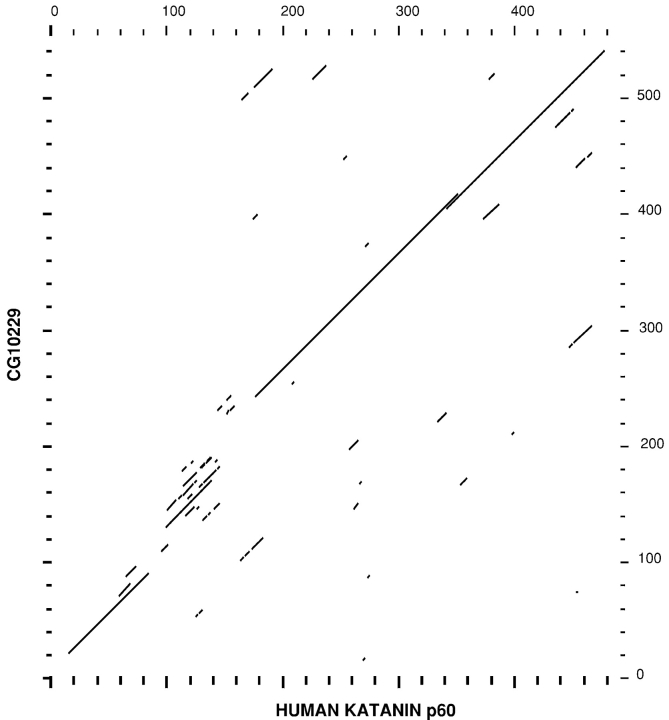
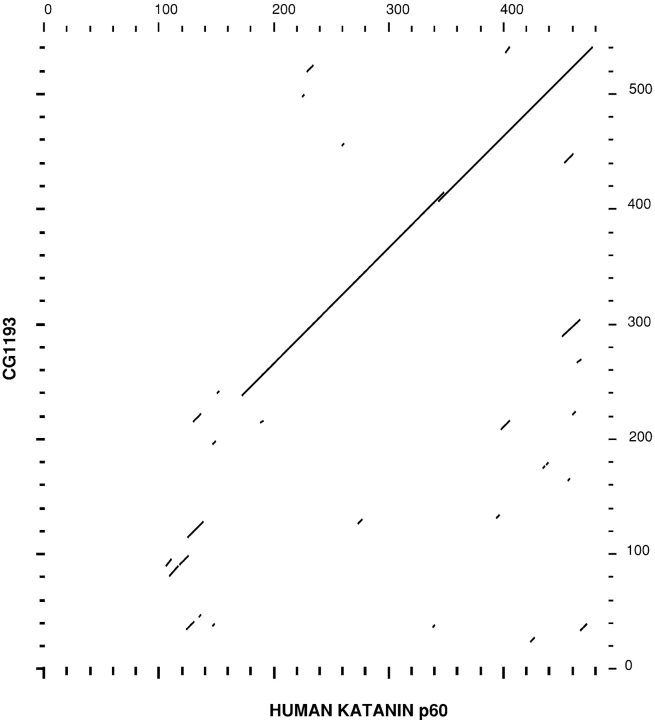
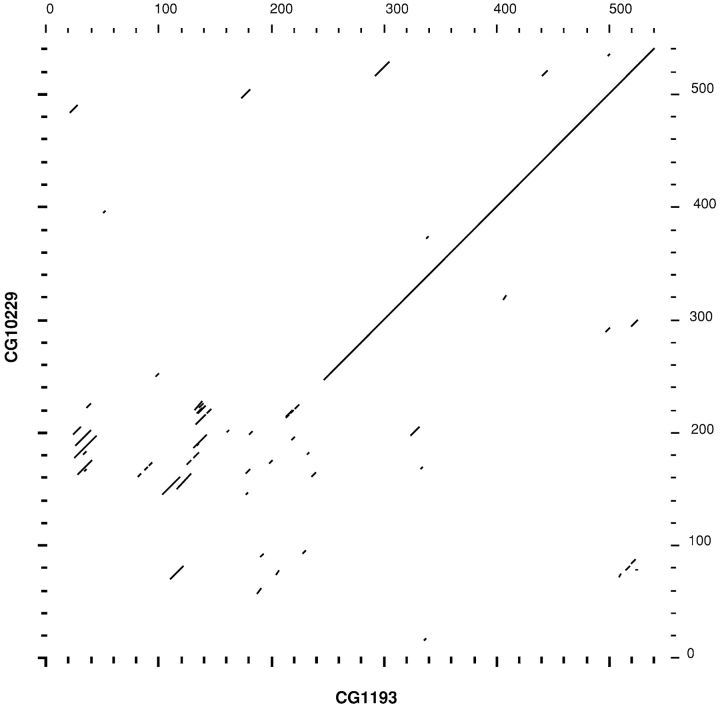
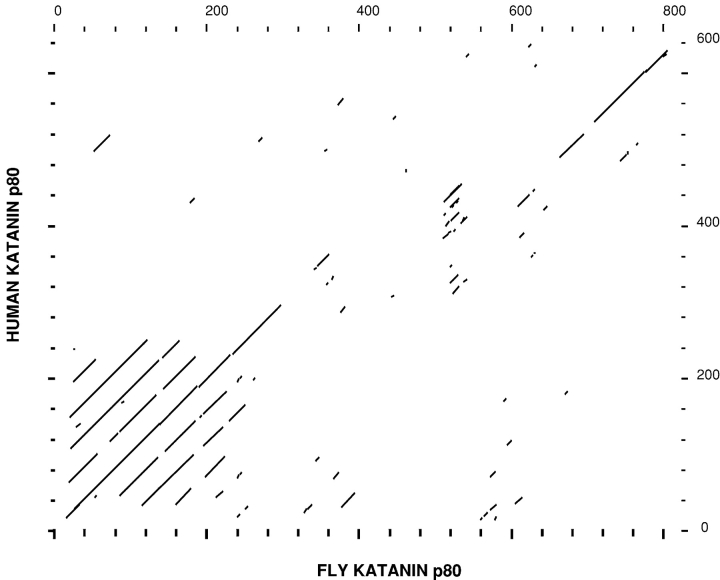
Dot matrix comparison of fly and human katanin subunits. Human katanin p60 (gi3283072) has two clear homologues in fly. There appears to be some variability in the NH2-terminal domains (or CG1193 may have an assembly error). Human katanin p80 (gi3005599) also has a clear homologue in the fly, CG9910, that is currently truncated. A complete sequence in the GenBank database (gi6979998) was used instead.
Dot matrix comparison of fly and human katanin subunits. Human katanin p60 (gi3283072) has two clear homologues in fly. There appears to be some variability in the NH2-terminal domains (or CG1193 may have an assembly error). Human katanin p80 (gi3005599) also has a clear homologue in the fly, CG9910, that is currently truncated. A complete sequence in the GenBank database (gi6979998) was used instead.
Dot matrix comparison of fly and human katanin subunits. Human katanin p60 (gi3283072) has two clear homologues in fly. There appears to be some variability in the NH2-terminal domains (or CG1193 may have an assembly error). Human katanin p80 (gi3005599) also has a clear homologue in the fly, CG9910, that is currently truncated. A complete sequence in the GenBank database (gi6979998) was used instead.
Dot matrix comparison of fly and human katanin subunits. Human katanin p60 (gi3283072) has two clear homologues in fly. There appears to be some variability in the NH2-terminal domains (or CG1193 may have an assembly error). Human katanin p80 (gi3005599) also has a clear homologue in the fly, CG9910, that is currently truncated. A complete sequence in the GenBank database (gi6979998) was used instead.
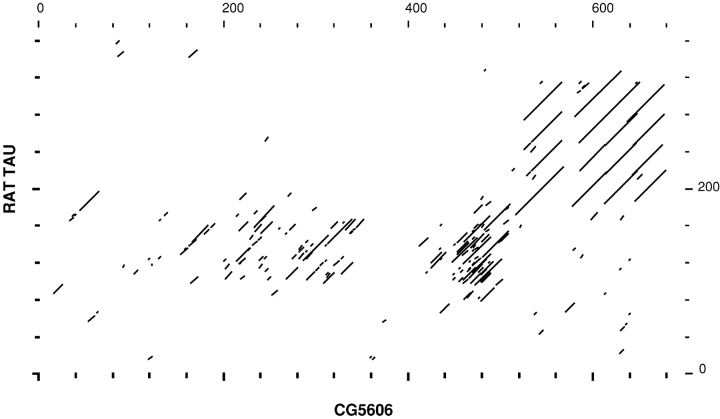
Dot matrix comparison of tau relatives from fly, worm (gi1698712), and rat (gi517394). Note the characteristic conserved repeats in the COOH termini of each protein; fly and worm show evidence of a novel additional duplicated motif that may be shared with mammalian tau. Further work is needed to evaluate this potential homology.
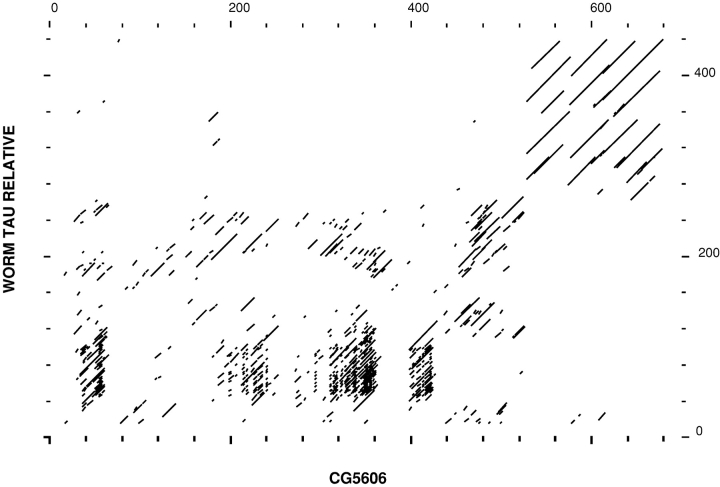
Dot matrix comparison of tau relatives from fly, worm (gi1698712), and rat (gi517394). Note the characteristic conserved repeats in the COOH termini of each protein; fly and worm show evidence of a novel additional duplicated motif that may be shared with mammalian tau. Further work is needed to evaluate this potential homology.
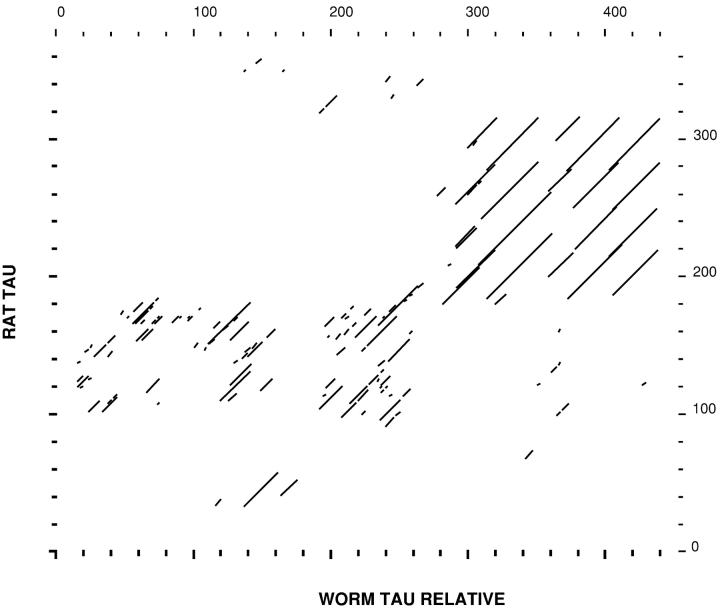
Dot matrix comparison of tau relatives from fly, worm (gi1698712), and rat (gi517394). Note the characteristic conserved repeats in the COOH termini of each protein; fly and worm show evidence of a novel additional duplicated motif that may be shared with mammalian tau. Further work is needed to evaluate this potential homology.
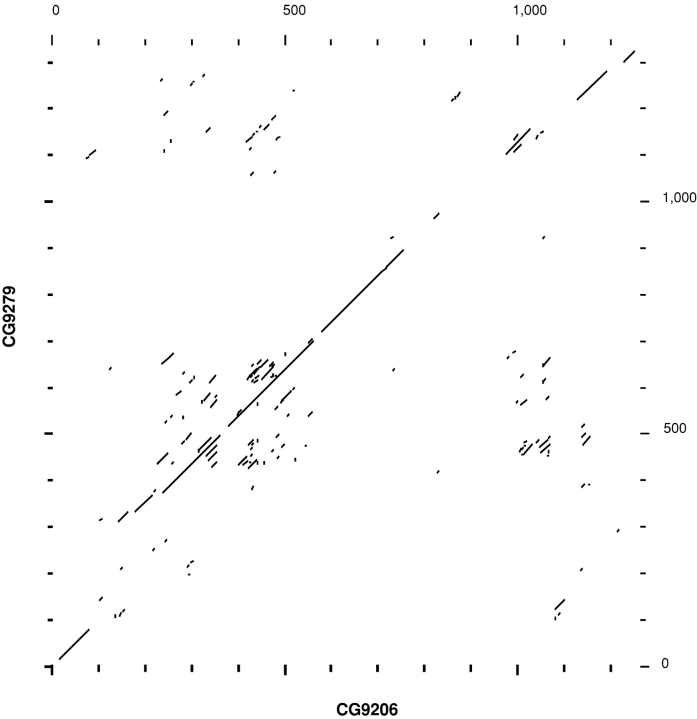
Dot matrix comparison of the known p150 Glued gene with a new potential homologue.
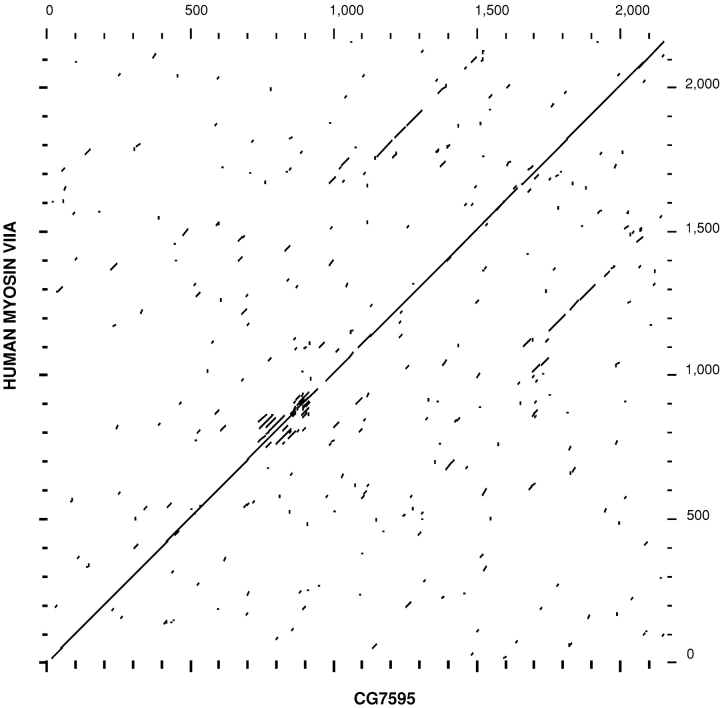
Dot matrix comparison of myosin VIIA homologues. Two fly homologues were compared with human myosin VIIA (gi1613788). CG7595 corresponds to the previously recognized ck gene.
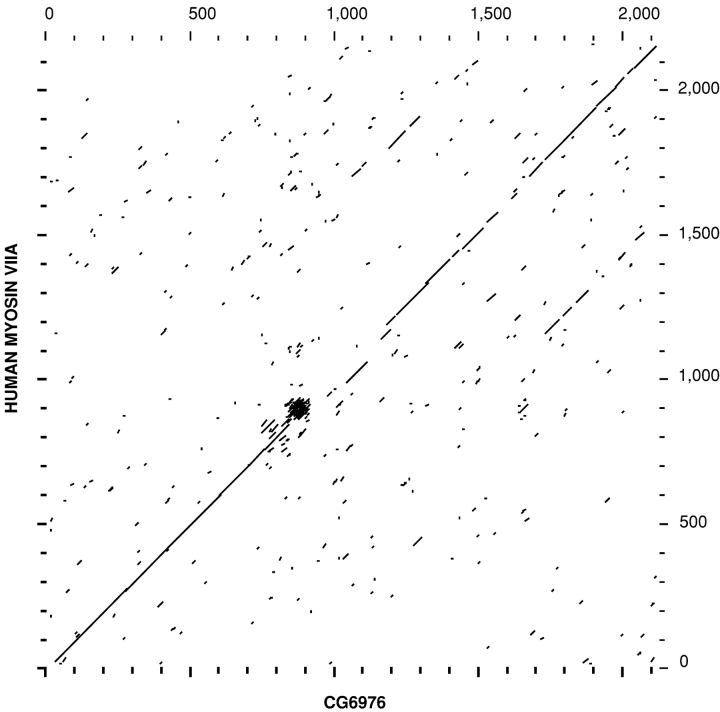
Dot matrix comparison of myosin VIIA homologues. Two fly homologues were compared with human myosin VIIA (gi1613788). CG7595 corresponds to the previously recognized ck gene.
References
-
- Adams M.D., Celniker S.E., Holt R.A., Evans C.A., Gocayne J.D., Amanatide P.G., Scherer S.E., Li P.W., Hoskins R.A., Galle R.F. The genome sequence of Drosophila melanogaster . Science. 2000;287:2185–2195. - PubMed
-
- Cambiazo V., Gonzales M., Maccioni R.B. DMAP-85a tau-like protein from Drosophila melanogaster larvae. J. Neorochem. 1995;64:1288–1297. - PubMed
-
- Chang P., Stearns T. Delta-Tubulin and epsilon-tubulintwo new human centrosomal tubulins reveal new aspects of centrosome structure and function. Nat. Cell. Biol. 2000;2:30–35. - PubMed
-
- Desai A., Verma S., Mitchison T.J., Walczak C.E. Kin I kinesins are microtubule-destabilizing enzymes. Cell. 1999;96:69–78. - PubMed
Publication types
MeSH terms
LinkOut - more resources
Full Text Sources
Molecular Biology Databases
