


Long-lasting inhibitory synaptic depression is age- and calcium-dependent
- PMID: 10908623
- PMCID: PMC6772535
- DOI: 10.1523/JNEUROSCI.20-15-05820.2000
Long-lasting inhibitory synaptic depression is age- and calcium-dependent
Abstract
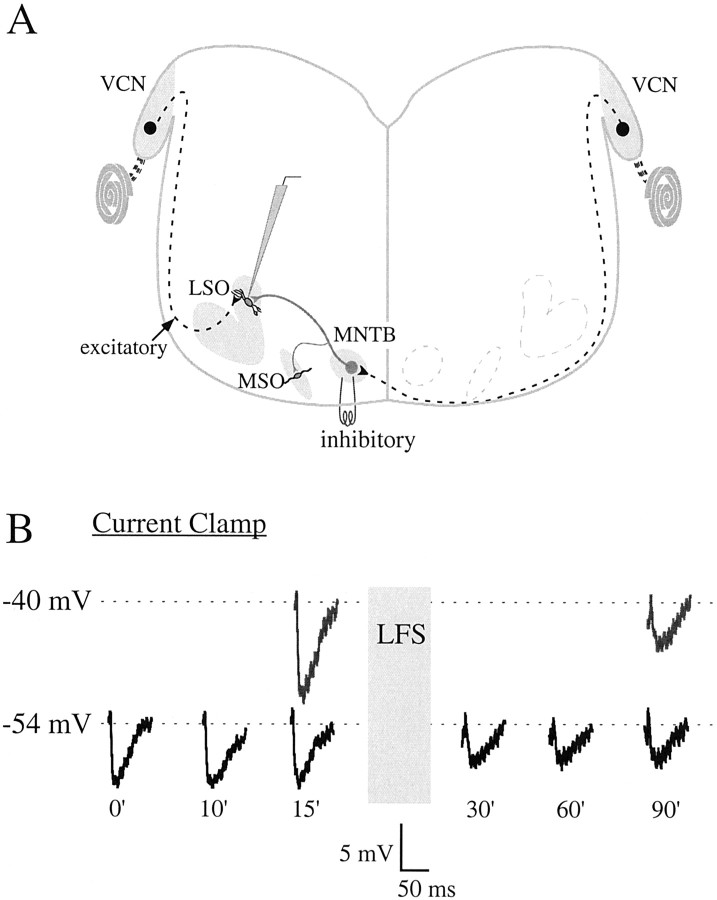
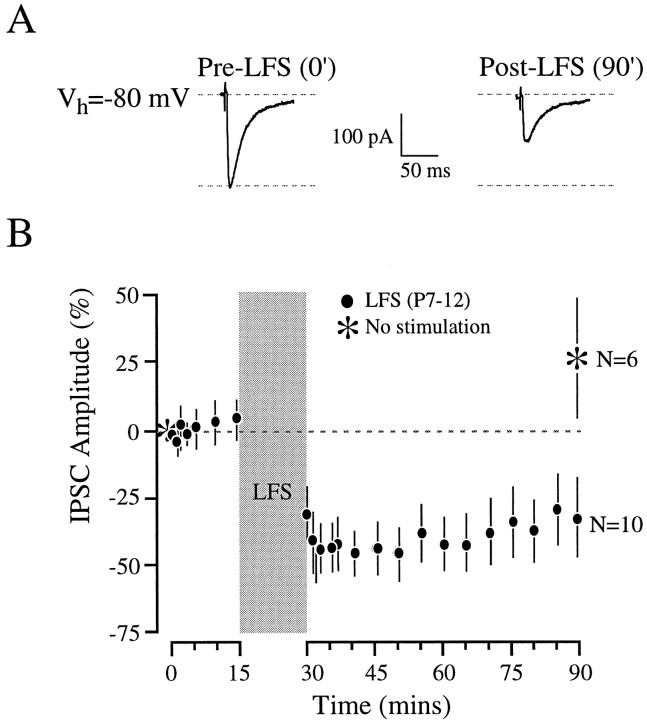
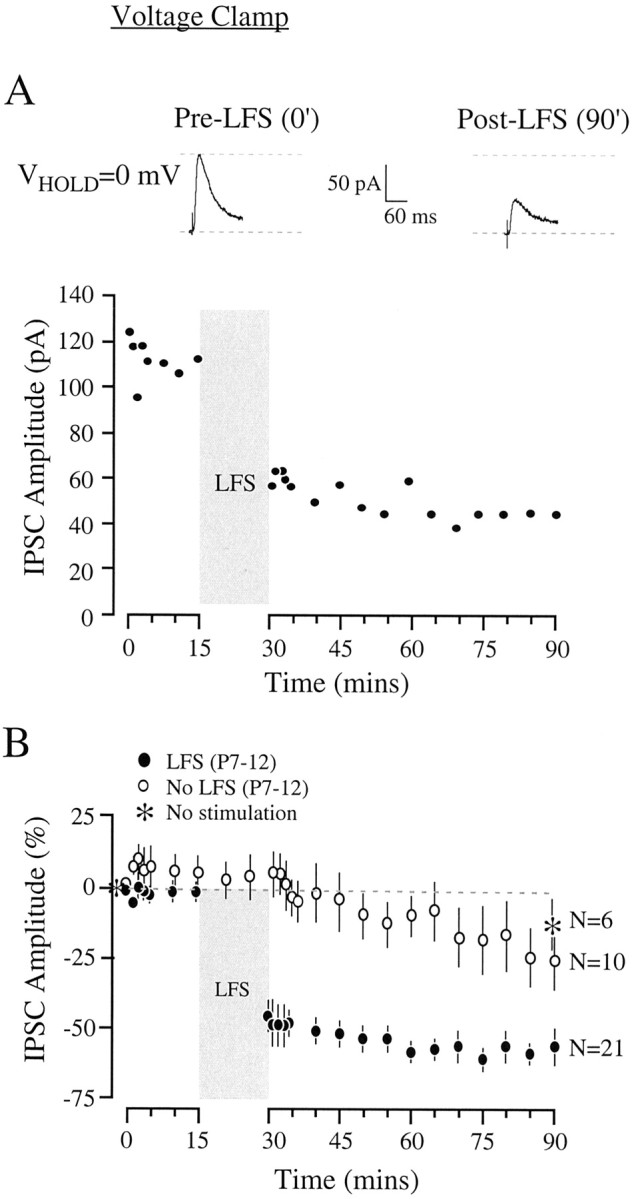
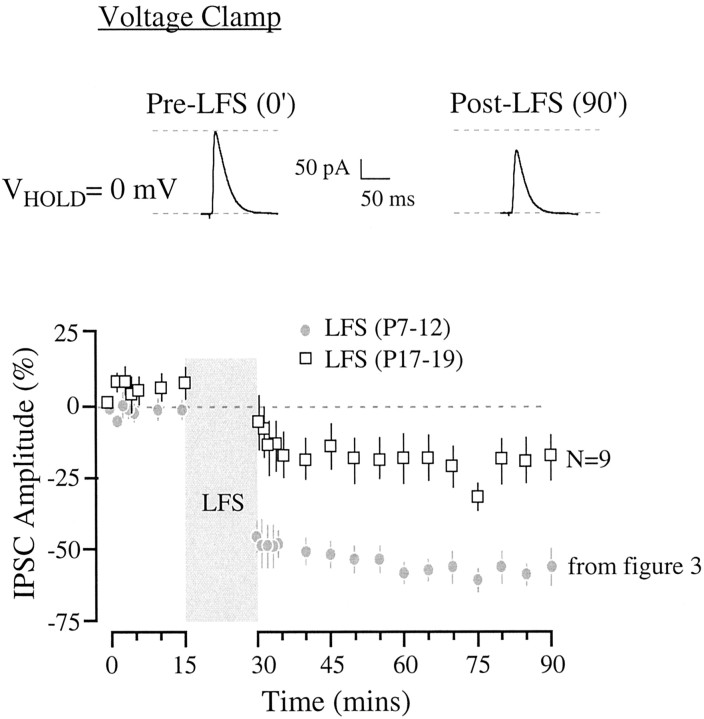
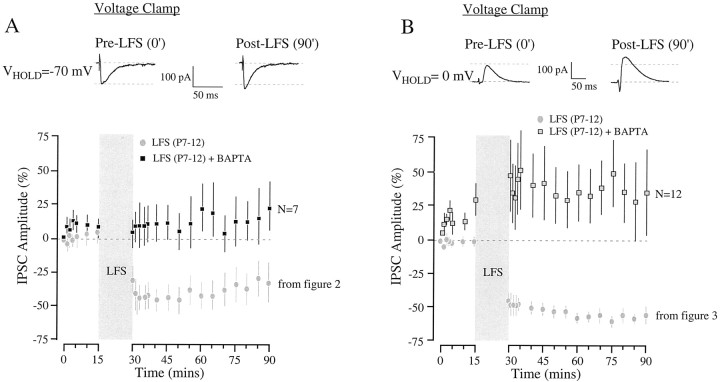
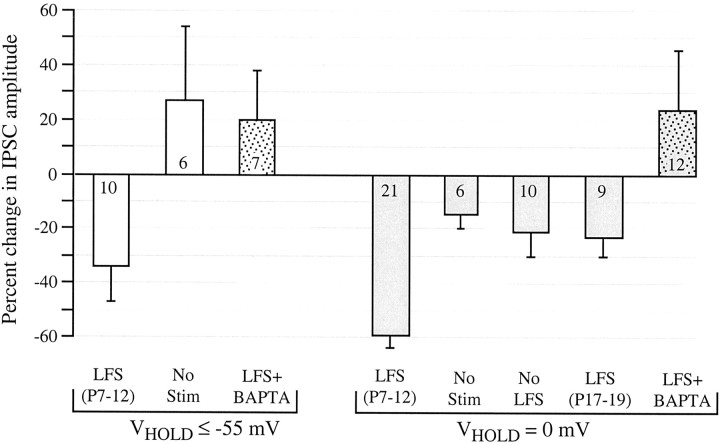
The developmental refinement of excitatory synapses is often influenced by neuronal activity, and underlying synaptic mechanisms have been suggested. In contrast, few studies have asked whether inhibitory synapses are reorganized during development and whether this is accompanied by use-dependent changes of inhibitory synaptic strength. The topographic inhibitory projection from the medial nucleus of the trapezoid body (MNTB) to the lateral superior olive (LSO) undergoes synapse elimination during development (Sanes and Takács, 1993). To determine whether there is an associated period of synaptic plasticity, whole-cell recordings were obtained from developing LSO neurons of gerbils in a brain slice preparation. In current-clamp recordings, low-frequency stimulation of the MNTB led to a decline in IPSP amplitude by 43%. In voltage-clamp recordings, hyperpolarized LSO neurons also exhibited a long-lasting depression of MNTB-evoked inhibitory synaptic currents (34%) after low-frequency stimulation. When LSO neurons were depolarized, low-frequency stimulation of the MNTB produced a significantly larger inhibitory synaptic depression (59%). This synaptic plasticity declined dramatically by postnatal days 17-19. Similar to well studied forms of excitatory synaptic plasticity, inhibitory depression depended on postsynaptic calcium. We propose that such activity-dependent synaptic depression may support the developmental rearrangement of inhibitory terminals as they compete with neighboring excitatory and/or inhibitory inputs.
Figures
References
-
- Balice-Gordon RJ, Lichtman JW. Long-term synapse loss induced by focal blockade of postsynaptic receptors. Nature. 1994;372:519–524. - PubMed
-
- Battistin T, Cherubini E. Developmental shift from long-term potentiation at the mossy fibre synapses in the rat hippocampus. Eur J Neurosci. 1994;6:1750–1755. - PubMed
Publication types
MeSH terms
Substances
Grants and funding
LinkOut - more resources
Full Text Sources
