The cognitive impact of past behavior: influences on beliefs, attitudes, and future behavioral decisions
- PMID: 10909874
- PMCID: PMC4807731
- DOI: 10.1037//0022-3514.79.1.5
The cognitive impact of past behavior: influences on beliefs, attitudes, and future behavioral decisions
Abstract
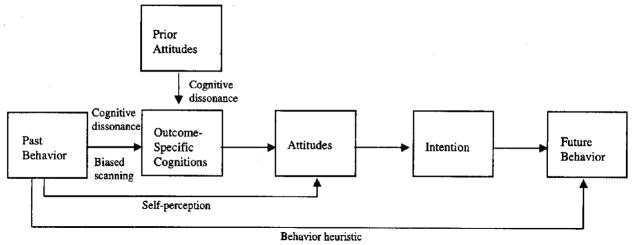
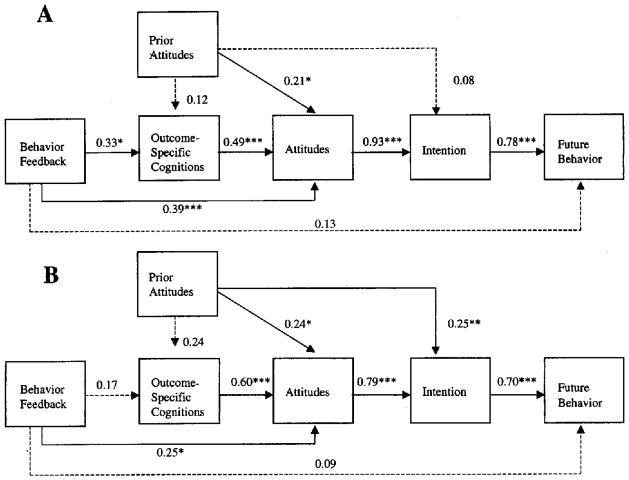
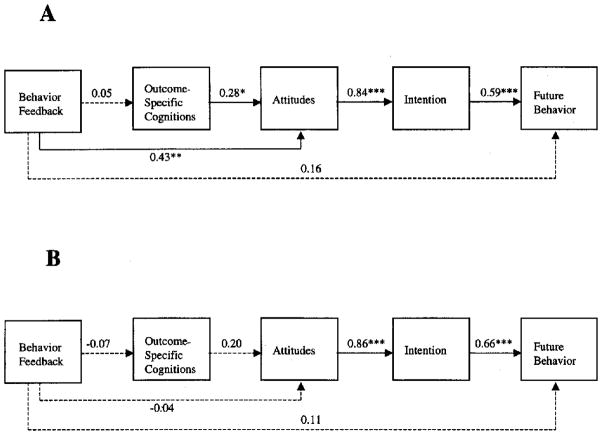
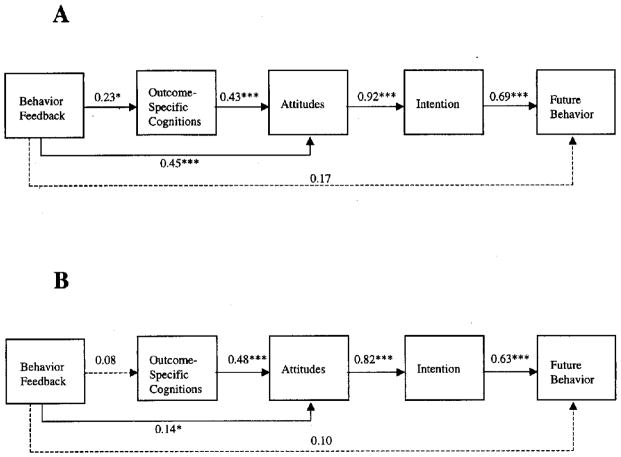
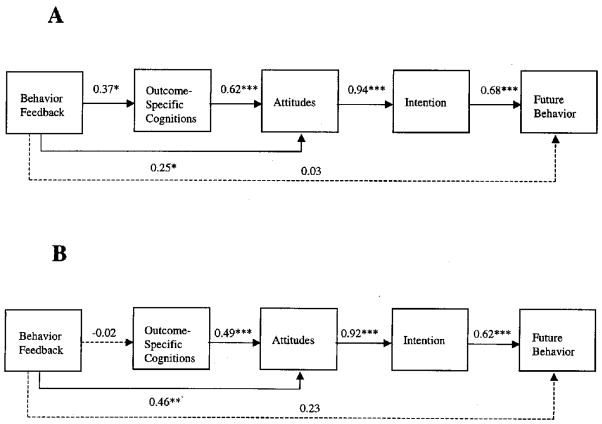
To study the processes by which past behavior influences future behavior, participants were led to believe that without being aware of it, they had expressed either support for or opposition to the institution of comprehensive exams. Judgment and response time data suggested that participants' perceptions of their past behavior often influenced their decisions to repeat the behavior. This influence was partly the result of cognitive activity that influenced participants' cognitions about specific behavioral consequences and the attitude they based on these cognitions. More generally, however, feedback about past behavior had a direct effect on participants' attitudes and ultimate behavioral decisions that was independent of the outcome-specific cognitions. Results are discussed in terms of their implications for biased scanning of memory, dissonance reduction, self-perception, and the use of behavior as a heuristic.
Figures
References
-
- Ajzen I, Fishbein M. Understanding attitudes and predicting social behavior. Englewood Cliffs, NJ: Prentice-Hall; 1980.
-
- Albarracin D. Unpublished doctoral dissertation. University of Illinois; 1997. Elaborative and nonelaborative processing of a behavior-related communication.
-
- Bargh JA. The automaticity of everyday life. In: Wyer RS, editor. Advances in social cognition. Vol. 10. Mahwah, NJ: Erlbaum; 1997. pp. 1–62.
-
- Bem DJ. An experimental analysis of self-persuasion. Journal of Experimental Social Psychology. 1965;1:199–218.
-
- Bem DJ. Self-perception: An alternative interpretation of cognitive dissonance phenomena. Psychological Review. 1967;74:183–200. - PubMed
Publication types
MeSH terms
Grants and funding
LinkOut - more resources
Full Text Sources
Miscellaneous