


Microbial life beneath a high arctic glacier
- PMID: 10919772
- PMCID: PMC92136
- DOI: 10.1128/AEM.66.8.3214-3220.2000
Microbial life beneath a high arctic glacier
Abstract
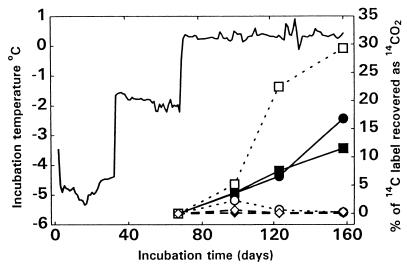
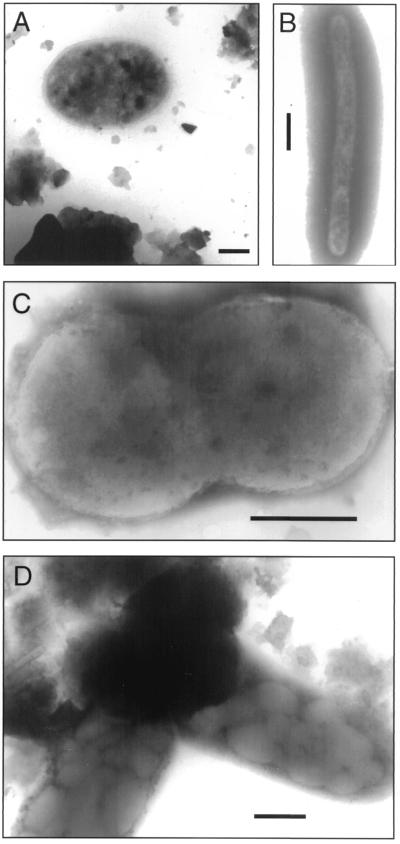
The debris-rich basal ice layers of a high Arctic glacier were shown to contain metabolically diverse microbes that could be cultured oligotrophically at low temperatures (0.3 to 4 degrees C). These organisms included aerobic chemoheterotrophs and anaerobic nitrate reducers, sulfate reducers, and methanogens. Colonies purified from subglacial samples at 4 degrees C appeared to be predominantly psychrophilic. Aerobic chemoheterotrophs were metabolically active in unfrozen basal sediments when they were cultured at 0.3 degrees C in the dark (to simulate nearly in situ conditions), producing (14)CO(2) from radiolabeled sodium acetate with minimal organic amendment (> or =38 microM C). In contrast, no activity was observed when samples were cultured at subfreezing temperatures (< or =-1.8 degrees C) for 66 days. Electron microscopy of thawed basal ice samples revealed various cell morphologies, including dividing cells. This suggests that the subglacial environment beneath a polythermal glacier provides a viable habitat for life and that microbes may be widespread where the basal ice is temperate and water is present at the base of the glacier and where organic carbon from glacially overridden soils is present. Our observations raise the possibility that in situ microbial production of CO(2) and CH(4) beneath ice masses (e.g., the Northern Hemisphere ice sheets) is an important factor in carbon cycling during glacial periods. Moreover, this terrestrial environment may provide a model for viable habitats for life on Mars, since similar conditions may exist or may have existed in the basal sediments beneath the Martian north polar ice cap.
Figures
References
-
- Adams J M, Faure H, Faure-Denard L, McGlade J M, Woodward F I. Increases in the terrestrial carbon storage from the Last Glacial Maximum to the present. Nature. 1990;348:711–714.
-
- Alley R B, Cuffey K M, Evenson E B, Strasser J C, Lawson D E, Larson G J. How glaciers entrain and transport basal sediment: physical constraints. Quat Sci Rev. 1997;16:1017–1038.
-
- Andersen D T, Pollard W H, McKay C T, Omelon C. Perennial springs in the Canadian High Arctic, analogs of past Martian liquid water habitats. Eos Trans. 1998;79(45):59.
-
- Arendt A. M. S. thesis. Alberta, Edmonton, Canada: University of Alberta; 1997.
-
- Atlas R M. Handbook of microbiological media for environmental microbiology. Boca Raton, Fla: CRC Press; 1995.
Publication types
MeSH terms
Substances
LinkOut - more resources
Full Text Sources
Miscellaneous
