


Postmenopausal estrogen therapy and depressive symptoms in older women
- PMID: 10940144
- PMCID: PMC1495584
- DOI: 10.1046/j.1525-1497.2000.04029.x
Postmenopausal estrogen therapy and depressive symptoms in older women
Abstract
Background: Evidence regarding the effect of postmenopausal estrogen therapy on mood is limited.
Methods: To determine whether postmenopausal estrogen therapy is associated with fewer depressive symptoms in elderly women, we conducted a cross-sectional study of 6, 602 white women ages 71 years or older who were recruited from population-based listings in Baltimore, Md; Minneapolis, Minn; Portland, Ore; and the Monongahela Valley, Pa. Use of estrogen and progestin was determined by interview. Participants completed the Geriatric Depression Scale short form (GDS) and were considered depressed if they reported 6 or more of 15 possible symptoms of depression.
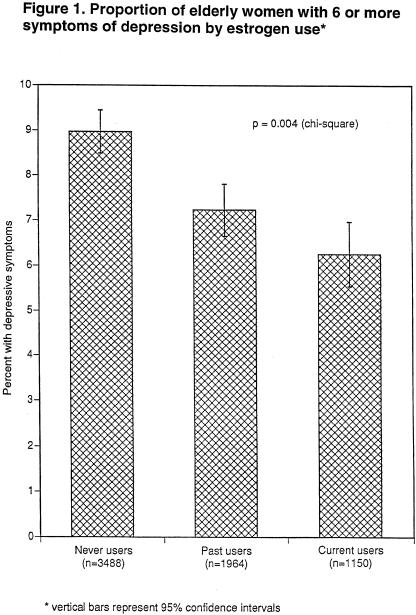
Results: A total of 6.3% (72/1,150) of current estrogen users, 7.2% (142/1,964) of past estrogen users, and 9.0% (313/3,488) of never users reported 6 or more symptoms of depression (P =.004). Current estrogen users had a decreased risk of reporting 6 or more depressive symptoms, compared with not current (past or never) users of estrogen (odds ratio [OR], 0.7; 95% CI, 0.5 to 0.9; P =.01], adjusted for living alone, bilateral oophorectomy, current smoking, physical activity, social network, self-perceived health, cognitive function, functional status, and antidepressant use. However, excluding women who use estrogen or progestin alone, we were unable to find an association between current use of combined estrogen plus progestin therapy and depressive symptoms (adjusted OR, 0.8; 95% CI, 0.5 to 1.4; P =.5).
Conclusions: This cross-sectional study found that current use of unopposed estrogen was associated with a decreased risk of depressive symptoms in older women. Additional studies are needed to understand the effect of combined estrogen and progestin therapy on the prevalence of depressive symptoms in older women.
Figures
References
-
- Depression Guideline Panel. Depression in Primary Care. Vol 1: Detection and Diagnosis. Clinical Practice Guideline. Washington, DC: U.S. Dept. of Health and Human Services, Public Health Service, Agency for Health Care Policy and Research; 1993. AHCPR 93–0550.
-
- Joffe H, Cohen LS. Estrogen, serotonin, and mood disturbance: where is the therapeutic bridge? Biol Psychiatry. 1998;44:798–811. - PubMed
-
- Jensvold MF, Halbreich U, Hamilton JA. Psychopharmacology and Women: Sex, Gender and Hormones. Washington, DC: American Psychiatric Press; 1996. eds.
-
- Stahl SM. Basic psychopharmacology of antidepressants, part 2: estrogen as an adjunct to antidepressant treatment. J Clin Psychiatry. 1998;4:15–24. - PubMed
-
- Dennerstein L, Burrows GD, Hyman GJ, Sharpe K. Hormone therapy and affect. Maturitas. 1979;1:247–59. - PubMed
Publication types
MeSH terms
Substances
Grants and funding
LinkOut - more resources
Full Text Sources
Medical
Miscellaneous