


The ATPase cycle of Hsp90 drives a molecular 'clamp' via transient dimerization of the N-terminal domains
- PMID: 10944121
- PMCID: PMC302038
- DOI: 10.1093/emboj/19.16.4383
The ATPase cycle of Hsp90 drives a molecular 'clamp' via transient dimerization of the N-terminal domains
Abstract
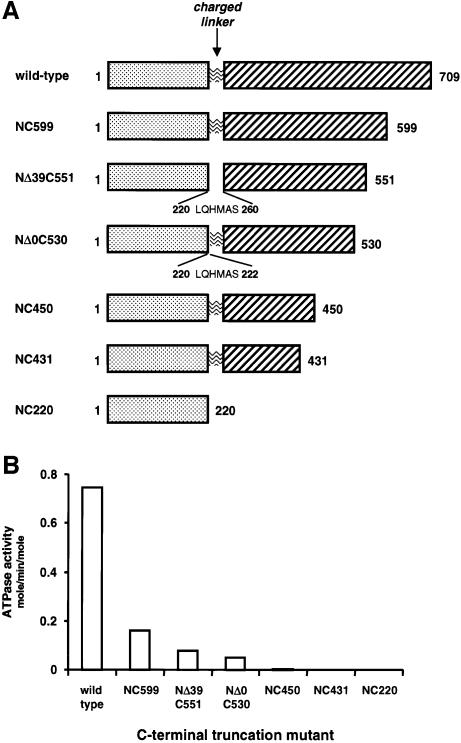
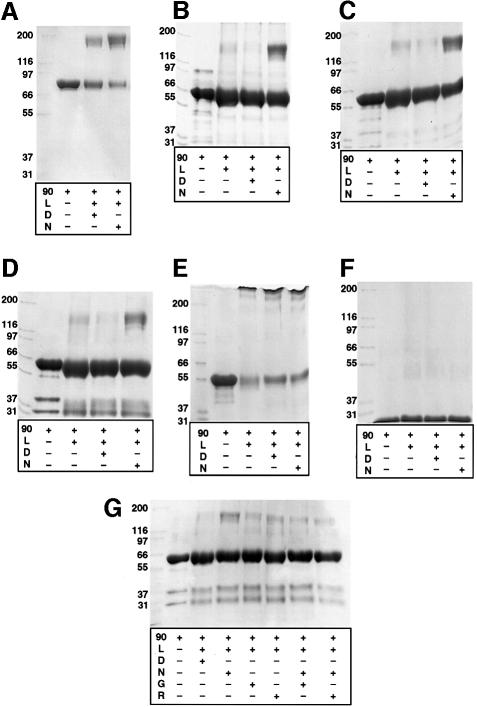
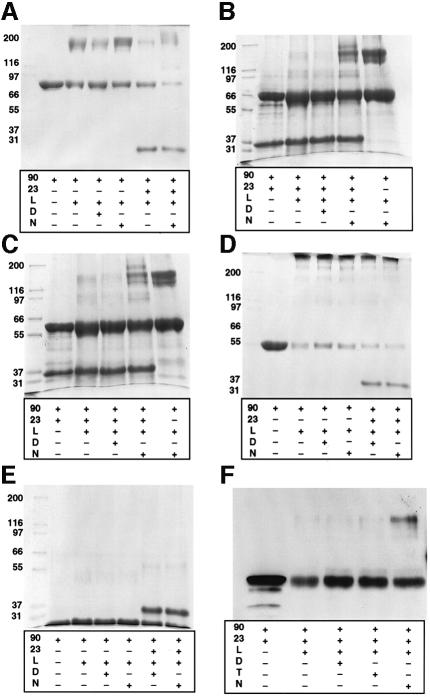
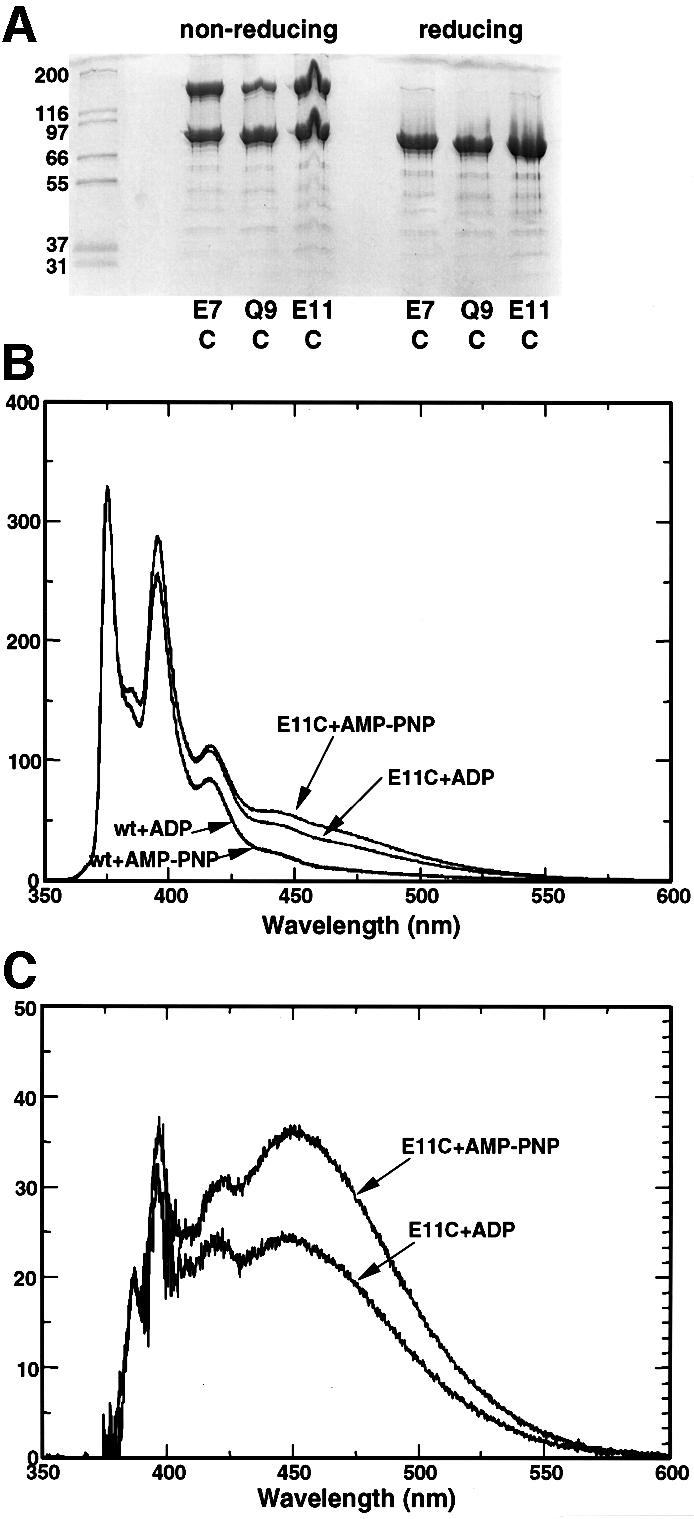
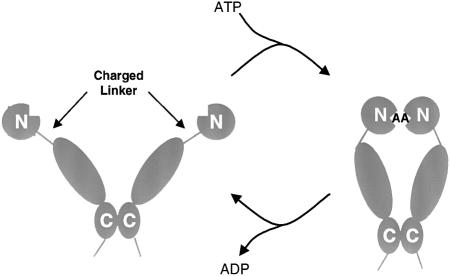
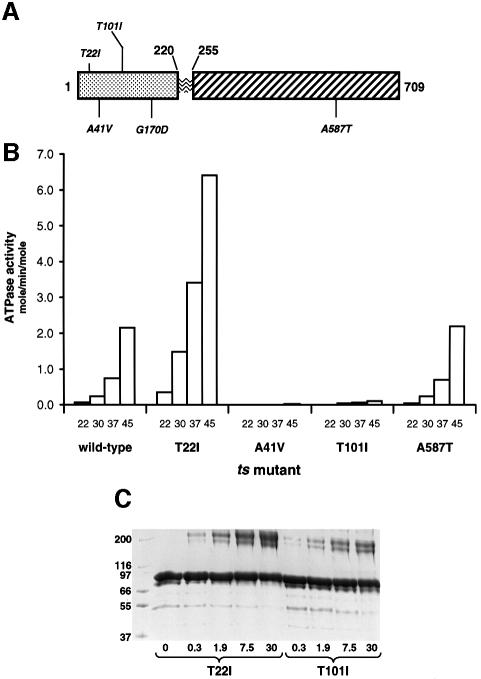
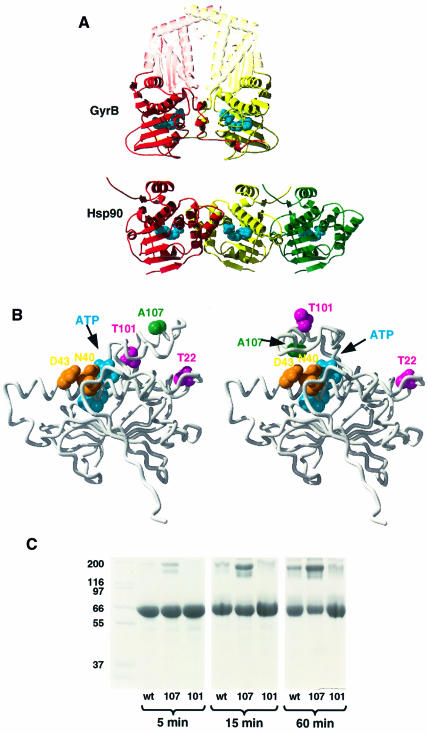
How the ATPase activity of Heat shock protein 90 (Hsp90) is coupled to client protein activation remains obscure. Using truncation and missense mutants of Hsp90, we analysed the structural implications of its ATPase cycle. C-terminal truncation mutants lacking inherent dimerization displayed reduced ATPase activity, but dimerized in the presence of 5'-adenylamido-diphosphate (AMP-PNP), and AMP-PNP- promoted association of N-termini in intact Hsp90 dimers was demonstrated. Recruitment of p23/Sba1 to C-terminal truncation mutants also required AMP-PNP-dependent dimerization. The temperature- sensitive (ts) mutant T101I had normal ATP affinity but reduced ATPase activity and AMP-PNP-dependent N-terminal association, whereas the ts mutant T22I displayed enhanced ATPase activity and AMP-PNP-dependent N-terminal dimerization, indicating a close correlation between these properties. The locations of these residues suggest that the conformation of the 'lid' segment (residues 100-121) couples ATP binding to N-terminal association. Consistent with this, a mutation designed to favour 'lid' closure (A107N) substantially enhanced ATPase activity and N-terminal dimerization. These data show that Hsp90 has a molecular 'clamp' mechanism, similar to DNA gyrase and MutL, whose opening and closing by transient N-terminal dimerization are directly coupled to the ATPase cycle.
Figures
References
-
- Ban C., Junop,M. and Yang,W. (1999) Transformation of MutL by ATP binding and hydrolysis: a switch in DNA mismatch repair. Cell, 97, 85–97. - PubMed
-
- Bilwes A.M., Alex,L.A., Crane,B.R. and Simon,M.I. (1999) Structure of CheA, a signal-transducing histidine kinase. Cell, 96, 131–141. - PubMed
-
- Bukau B. and Horwich,A.L. (1998) The Hsp70 and Hsp60 chaperone machines. Cell, 92, 351–366. - PubMed
-
- Carrello A., Ingley,E., Minchin,R.F., Tsai,S. and Ratajczak,T. (1999) The common tetratricopeptide repeat acceptor site for steroid receptor associated immunophilins and hop is located in the dimerization domain of Hsp90. J. Biol. Chem., 274, 2682–2689. - PubMed
Publication types
MeSH terms
Substances
LinkOut - more resources
Full Text Sources
Other Literature Sources
Molecular Biology Databases
Miscellaneous
