


Intercodon dinucleotides affect codon choice in plant genes
- PMID: 10954603
- PMCID: PMC110687
- DOI: 10.1093/nar/28.17.3339
Intercodon dinucleotides affect codon choice in plant genes
Abstract
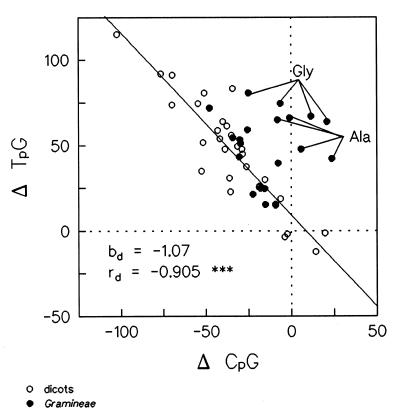
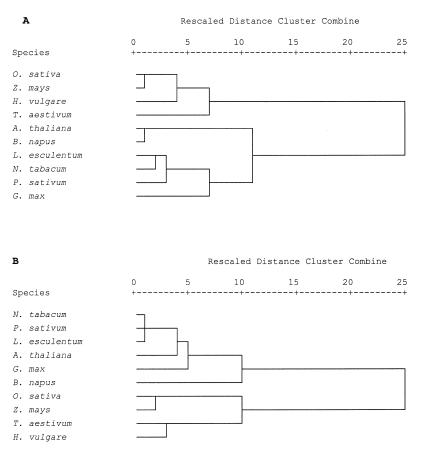
In this work, 710 CDSs corresponding to over 290 000 codons equally distributed between Brassica napus, Arabidopsis thaliana, Lycopersicon esculentum, Nicotiana tabacum, Pisum sativum, Glycine max, Oryza sativa, Triticum aestivum, Hordeum vulgare and Zea mays were considered. For each amino acid, synonymous codon choice was determined in the presence of A, G, C or T as the initial nucleotide of the subsequent triplet; data were statistically analysed under the hypothesis of an independent assortment of codons. In 33.4% of cases, a frequency significantly (P: = 0.01) different from that expected was recorded. This was mainly due to a pervasive intercodon TpA and CpG deficiency. As a general rule, intercodon TpAs and CpGs were preferably replaced by CpAs and TpGs, respectively. In several instances, codon frequencies were also modified to avoid homotetramer and homotrimer formation, to reduce intercodon ApCs downstream (1,2) GG or AG dinucleotides, as well as to increase GpA or ApG intercodons under certain contexts. Since TpA, CpG and homotetra(tri)mer deficiency directly or indirectly accounted for 77% of significant variation in the codon frequency, it can be concluded that codon usage mirrors precise needs at the DNA structure level. Plant species exhibited a phylogenetically-related adaptation to structural constraints. Codon usage flexibility was reflected in strikingly different arrays of optimum codons for probe design.
Figures
References
Publication types
MeSH terms
Substances
LinkOut - more resources
Full Text Sources
Other Literature Sources
Miscellaneous
