


Plant genome complexity may be a factor limiting in situ the transfer of transgenic plant genes to the phytopathogen Ralstonia solanacearum
- PMID: 10966449
- PMCID: PMC92279
- DOI: 10.1128/AEM.66.9.4161-4167.2000
Plant genome complexity may be a factor limiting in situ the transfer of transgenic plant genes to the phytopathogen Ralstonia solanacearum
Abstract
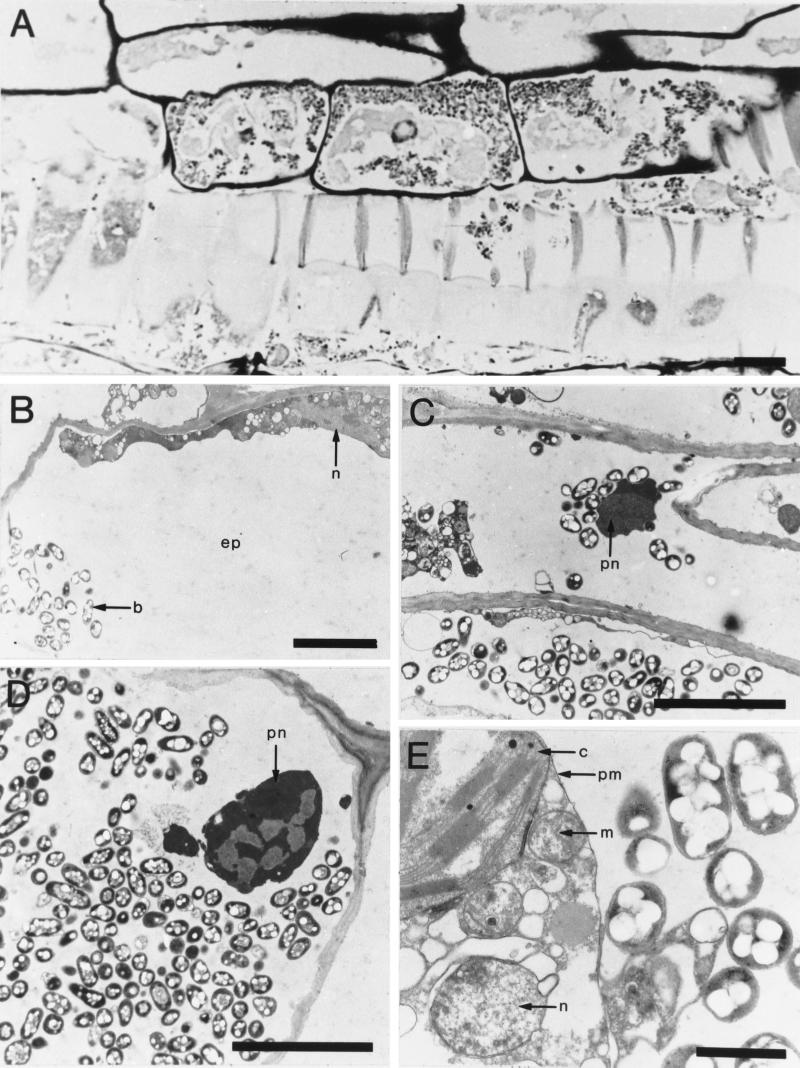
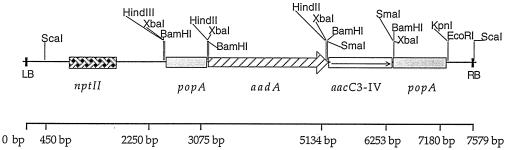
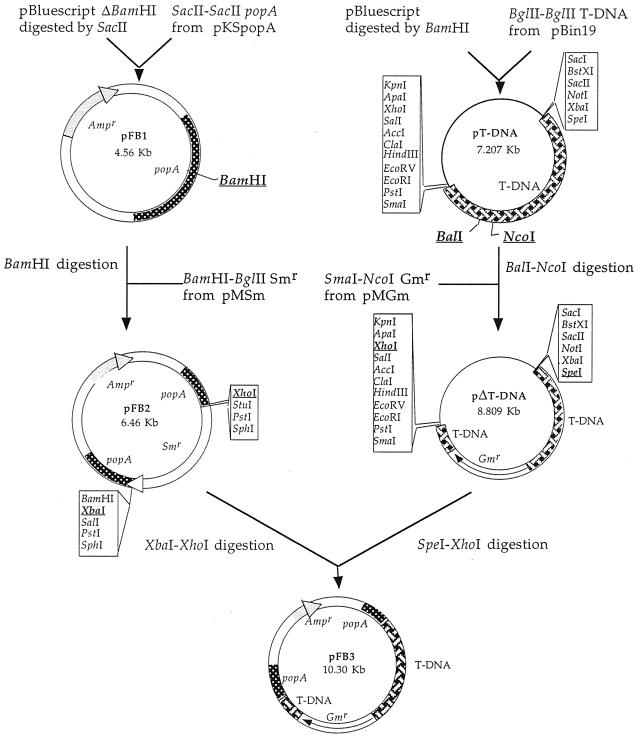
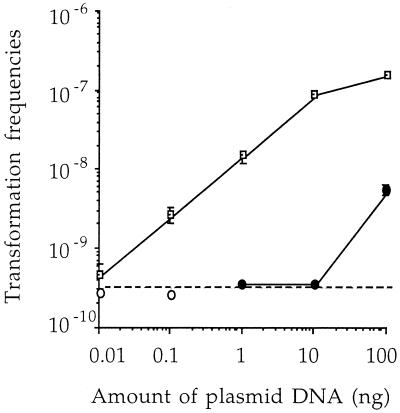
The development of natural competence by bacteria in situ is considered one of the main factors limiting transformation-mediated gene exchanges in the environment. Ralstonia solanacearum is a plant pathogen that is also a naturally transformable bacterium that can develop the competence state during infection of its host. We have attempted to determine whether this bacterium could become the recipient of plant genes. We initially demonstrated that plant DNA was released close to the infecting bacteria. We constructed and tested various combinations of transgenic plants and recipient bacteria to show that the effectiveness of such transfers was directly related to the ratio of the complexity of the plant genome to the number of copies of the transgene.
Figures
References
-
- Béclin C, Charlot F, Botton E, Jouanin L, Doré C. Potential use of the aux2 gene from Agrobacterium rhizogenes as a conditional negative marker in transgenic cabbage. Transgenic Res. 1993;2:48–55.
-
- Bertolla F, Brito B, Frostegard A, Nesme X, Simonet P. During infection of its host, the plant pathogen Ralstonia solanacearum naturally develops a state of competence and exchanges genetic material. Mol Plant-Microbe Interact. 1999;12:467–472.
-
- Bertolla F, Simonet P. Horizontal gene transfers in the environment: natural transformation as a putative process for gene transfers between transgenic plants and soil micro-organisms. Res Microbiol. 1999;150:1–10. - PubMed
Publication types
MeSH terms
LinkOut - more resources
Full Text Sources
