


Control of hnRNP A1 alternative splicing: an intron element represses use of the common 3' splice site
- PMID: 10982852
- PMCID: PMC86289
- DOI: 10.1128/MCB.20.19.7353-7362.2000
Control of hnRNP A1 alternative splicing: an intron element represses use of the common 3' splice site
Abstract
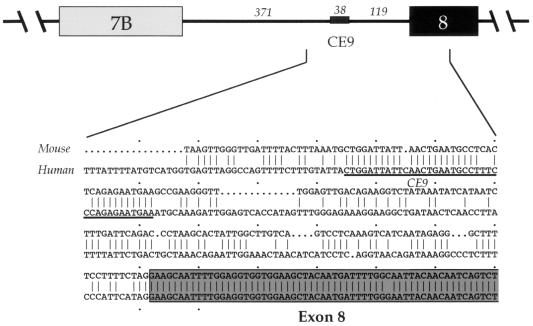
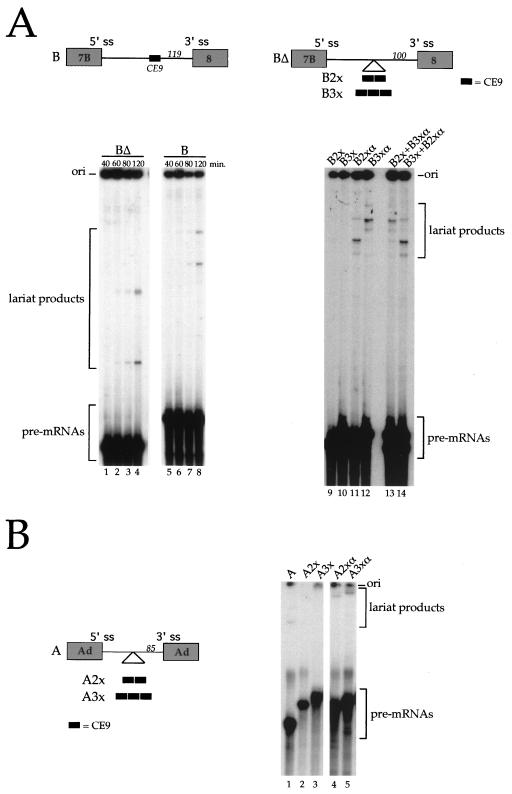
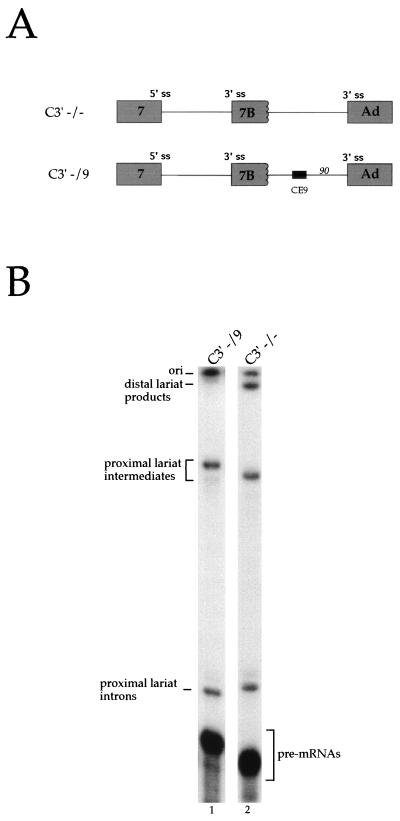
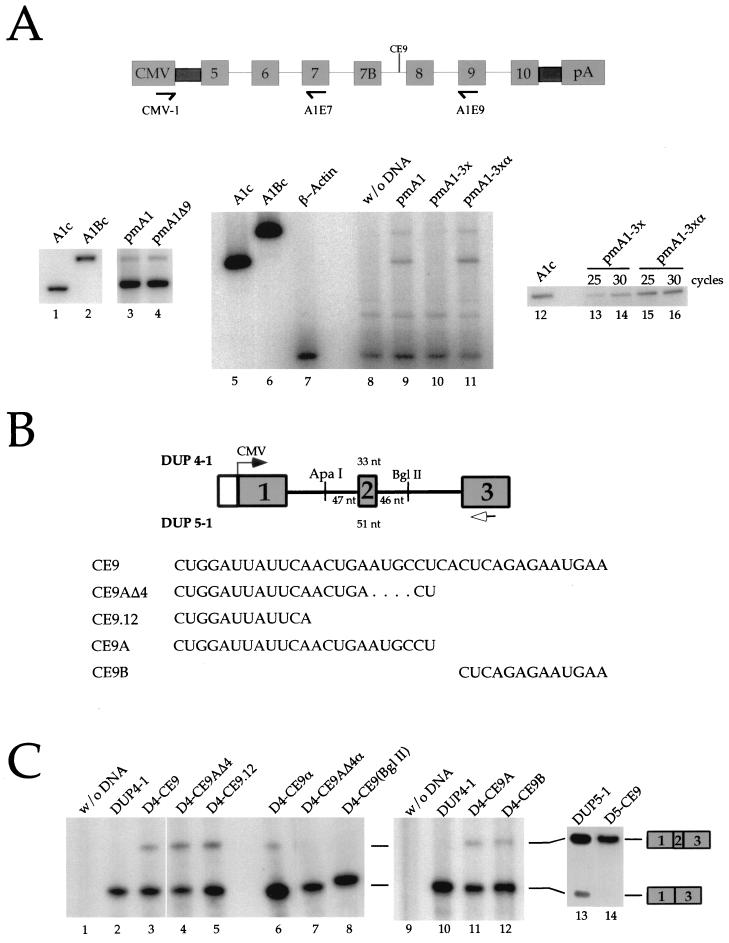
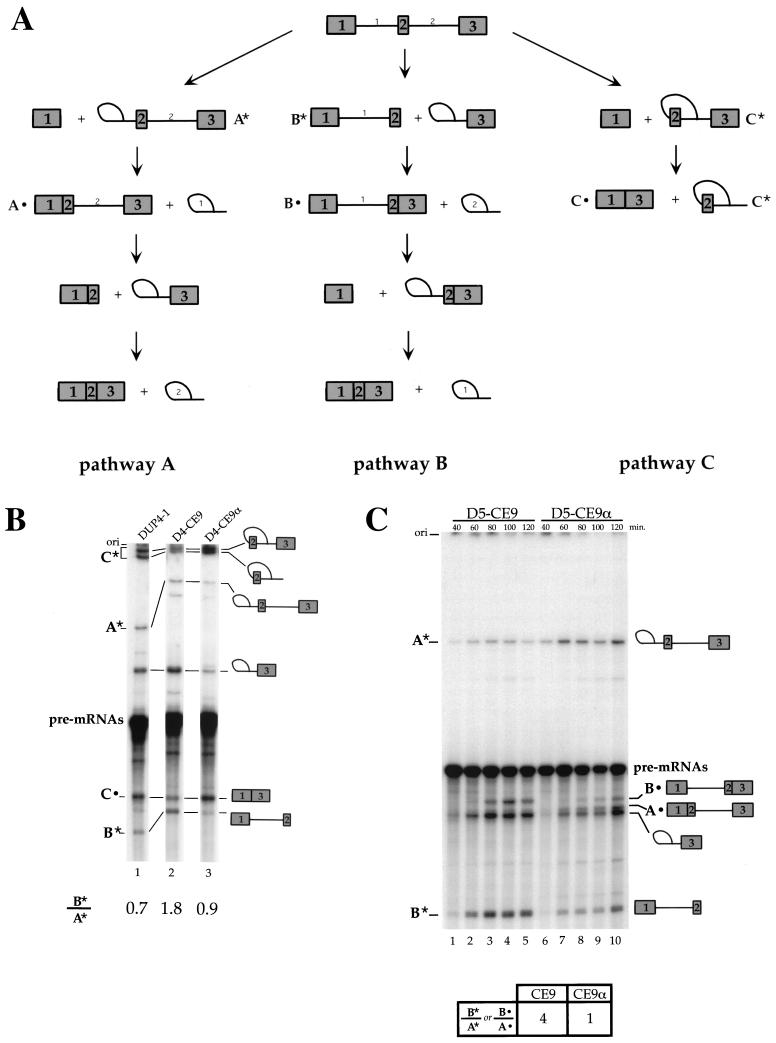
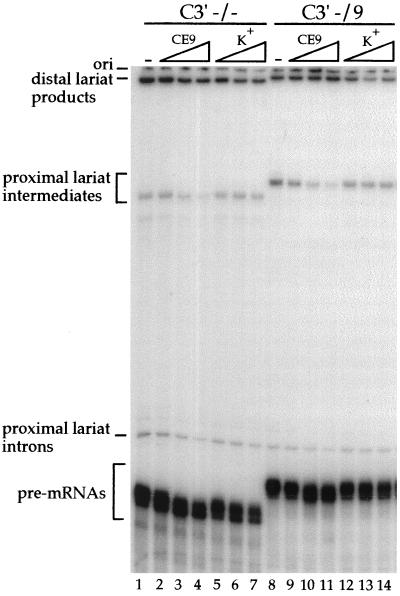
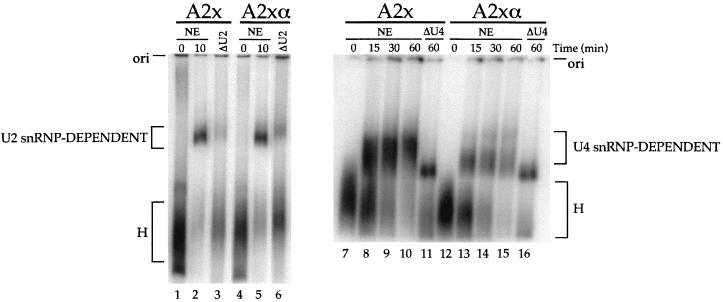
Alternative splicing of exon 7B in the hnRNP A1 pre-mRNA produces mRNAs encoding two proteins: hnRNP A1 and the less abundant A1B. We have reported the identification of several intron elements that contribute to exon 7B skipping. In this study, we report the activity of a novel element, conserved element 9 (CE9), located in the intron downstream of exon 7B. We show that multiple copies of CE9 inhibit exon 7B-exon 8 splicing in vitro. When CE9 is inserted between two competing 3' splice sites, a single copy of CE9 decreases splicing to the distal 3' splice site. Our in vivo results also support the conclusion that CE9 is a splicing modulator. First, inserting multiple copies of CE9 into an A1 minigene compromises the production of fully spliced products. Second, one copy of CE9 stimulates the inclusion of a short internal exon in a derivative of the human beta-globin gene. In this case, in vitro splicing assays suggest that CE9 decreases splicing of intron 1, an event that improves splicing of intron 2 and decreases skipping of the short internal exon. The ability of CE9 to act on heterologous substrates, combined with the results of a competition assay, suggest that the activity of CE9 is mediated by a trans-acting factor. Our results indicate that CE9 represses the use of the common 3' splice site in the hnRNP A1 alternative splicing unit.
Figures
References
-
- Black D L. Activation of c-src neuron-specific splicing by an unusual RNA element in vivo and in vitro. Cell. 1992;69:795–807. - PubMed
Publication types
MeSH terms
Substances
LinkOut - more resources
Full Text Sources
