


The D-alanine residues of Staphylococcus aureus teichoic acids alter the susceptibility to vancomycin and the activity of autolytic enzymes
- PMID: 10991869
- PMCID: PMC90160
- DOI: 10.1128/AAC.44.10.2845-2847.2000
The D-alanine residues of Staphylococcus aureus teichoic acids alter the susceptibility to vancomycin and the activity of autolytic enzymes
Abstract
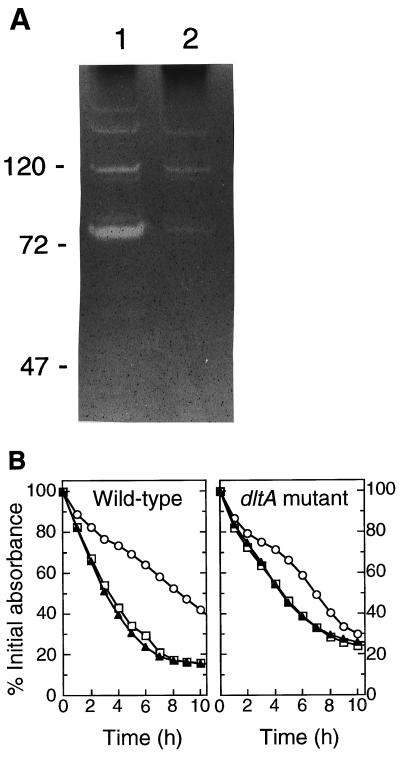
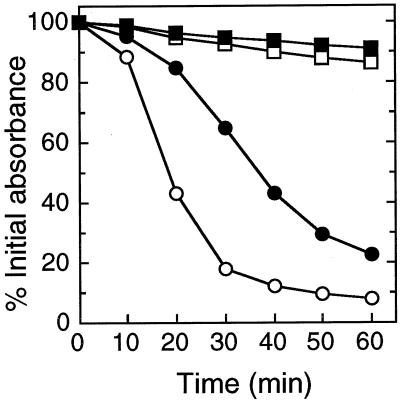
Recently, Staphylococcus aureus strains with intermediate resistance to vancomycin, the antibiotic of last resort, have been described. Multiple changes in peptidoglycan turnover and structure contribute to the resistance phenotype. Here, we describe that structural changes of teichoic acids in the cell envelope have a considerable influence on the susceptibility to vancomycin and other glycopeptides. S. aureus cells lacking D-alanine esters in teichoic acids exhibited an at least threefold-increased sensitivity to glycopeptide antibiotics. Furthermore, the autolytic activity of the D-alanine mutant was reduced compared to the wild-type, and the mutant was more susceptible to the staphylolytic enzyme lysostaphin. Vancomycin inhibited autolysis at very high concentrations but neither in the wild-type nor in the mutant was the autolytic activity influenced in the range of the MIC. Mutant cells had a considerably higher capacity to bind vancomycin.
Figures
References
-
- Arthur M, Reynolds P, Courvalin P. Glycopeptide resistance in enterococci. Trends Microbiol. 1996;4:401–407. - PubMed
-
- Fischer W. Lipoteichoic acid and teichoic acid biosynthesis. Targets of new antibiotics? In: Hakenbeck R, editor. New targets for new antimicrobial agents. Heidelberg, Germany: Spektrum Akademischer Verlag; 1997. pp. 47–50.
-
- Fischer W. Physiology of lipoteichoic acids in bacteria. Adv Microb Physiol. 1988;29:233–302. - PubMed
Publication types
MeSH terms
Substances
LinkOut - more resources
Full Text Sources
