


The presence of humic substances and DNA in RNA extracts affects hybridization results
- PMID: 11010915
- PMCID: PMC92341
- DOI: 10.1128/AEM.66.10.4547-4554.2000
The presence of humic substances and DNA in RNA extracts affects hybridization results
Abstract
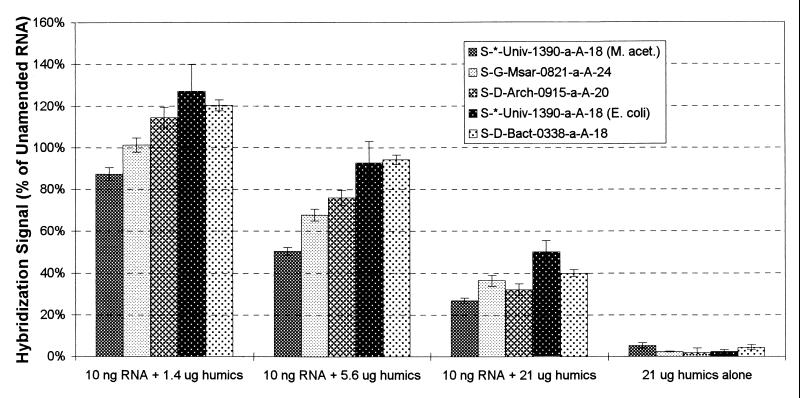
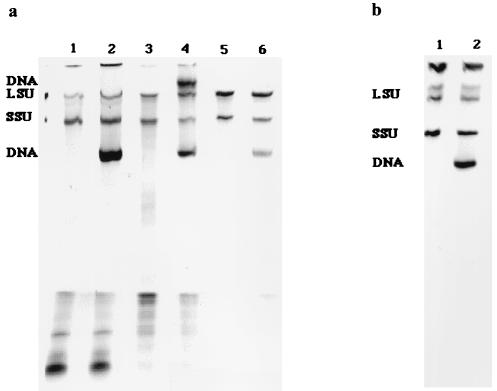
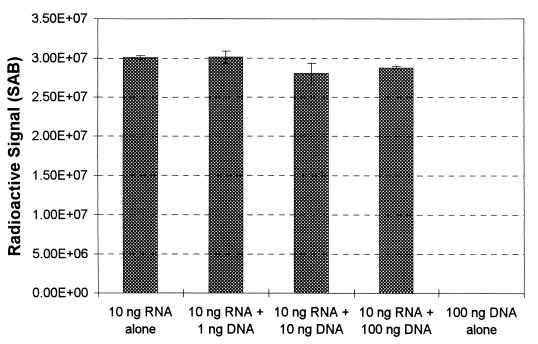
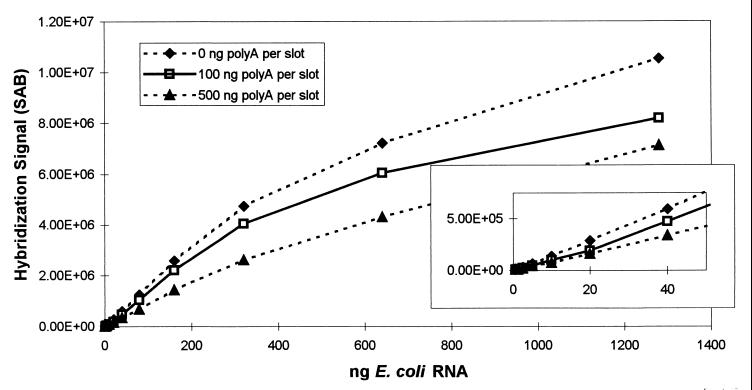
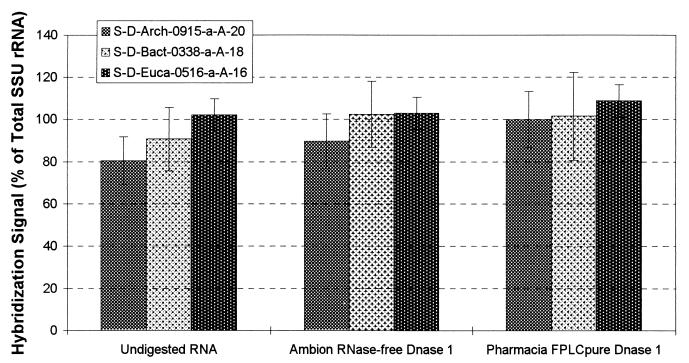
RNA extracts obtained from environmental samples are frequently contaminated with coextracted humic substances and DNA. It was demonstrated that the response in rRNA-targeted oligonucleotide probe hybridizations decreased as the concentrations of humic substances and DNA in RNA extracts increased. The decrease in hybridization signal in the presence of humic substances appeared to be due to saturation of the hybridization membrane with humic substances, resulting in a lower amount of target rRNA bound to the membrane. The decrease in hybridization response in the presence of low amounts of DNA may be the result of reduced rRNA target accessibility. The presence of high amounts of DNA in RNA extracts resulted in membrane saturation. Consistent with the observations for DNA contamination, the addition of poly(A) to RNA extracts, a common practice used to prepare RNA dilutions for membrane blotting, also reduced hybridization signals, likely because of reduced target accessibility and membrane saturation effects.
Figures



References
-
- Aiken G R, McKnight D M, Wershaw R L, MacCarthy P. Humic substances in soil, sediment, and water. New York, N.Y: John Wiley & Sons; 1985. Appendix A.
-
- Alm E W, Stahl D A. Critical factors influencing the recovery and integrity of rRNA extracted from environmental samples: use of an optimized protocol to measure depth-related biomass distribution in freshwater sediments. J Microbiol Methods. 2000;40:153–162. - PubMed
Publication types
MeSH terms
Substances
LinkOut - more resources
Full Text Sources
