


Genetic characterization of rebounding HIV-1 after cessation of highly active antiretroviral therapy
- PMID: 11018071
- PMCID: PMC517816
- DOI: 10.1172/JCI10565
Genetic characterization of rebounding HIV-1 after cessation of highly active antiretroviral therapy
Abstract
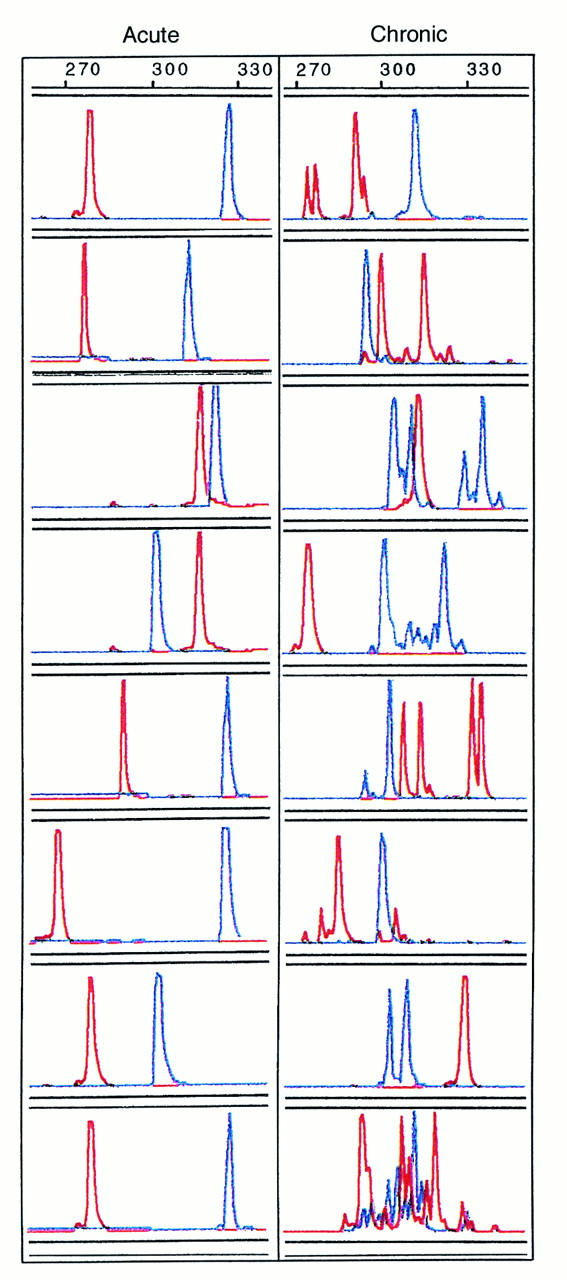
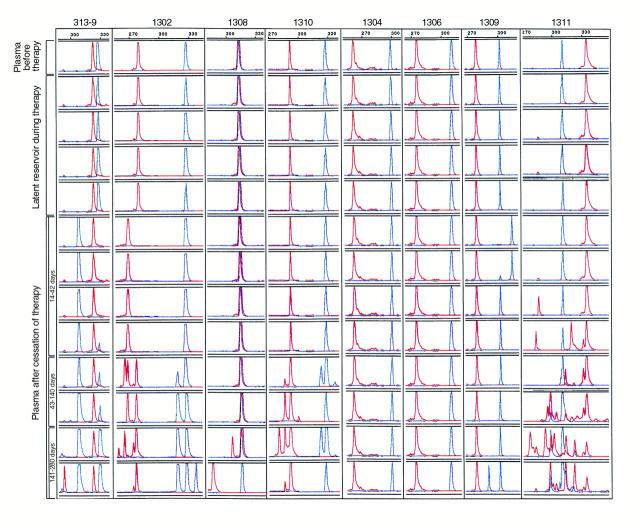
Despite prolonged treatment with highly active antiretroviral therapy (HAART), infectious HIV-1 continues to replicate and to reside latently in resting memory CD4(+) T lymphocytes, creating a major obstacle to HIV-1 eradication. It is therefore not surprising to observe a prompt viral rebound after discontinuation of HAART. The nature of the rebounding virus, however, remains undefined. We now report on the genetic characterization of rebounding viruses in eight patients in whom plasma viremia was undetectable throughout about 3 years of HAART. Taking advantage of the extensive length polymorphism in HIV-1 env, we found that in five patients who did not show HIV-1 replication during treatment, the rebound virus was identical to those isolated from the latent reservoir. In three other patients, two of whom had been free of plasma viremia but had showed some residual viral replication, the rebound virus was genetically different from the latent reservoir virus, corresponding instead to minor viral variants detected during the course of treatment in lymphoid tissues. We conclude that in cases with apparent complete HIV-1 suppression by HAART, viral rebound after cessation of therapy could have originated from the activation of virus from the latent reservoir. In patients with incomplete suppression by chemotherapy, however, the viral rebound is likely triggered by ongoing, low-level replication of HIV-1, perhaps occurring in lymphoid tissues.
Figures

Comment in
-
Latency and viral persistence in HIV-1 infection.J Clin Invest. 2000 Oct;106(7):823-5. doi: 10.1172/JCI11246. J Clin Invest. 2000. PMID: 11018068 Free PMC article. No abstract available.
References
-
- Hammer SM, et al. A controlled trial of two nucleoside analogues plus indinavir in persons with human immunodeficiency virus infection and CD4 cell counts of 200 per cubic millimeter or less. N Engl J Med. 1997;337:725–733. - PubMed
-
- Gulick RM, et al. Treatment with indinavir, zidovudine, and lamivudine in adults with human immunodeficiency virus infection and prior antiretroviral therapy. N Engl J Med. 1997;337:734–739. - PubMed
-
- Perelson AS, et al. Decay characteristics of HIV-1-infected compartments during combination therapy. Nature. 1997;387:188–191. - PubMed
-
- Markowitz M, et al. The effect of commencing combination antiretroviral therapy soon after human immunodeficiency virus type 1 infection on viral replication and antiviral immune responses. J Infect Dis. 1999;179:527–537. - PubMed
-
- Palella FJ, Jr, et al. Declining morbidity and mortality among patients with advanced human immunodeficiency virus infection. HIV Outpatient Study Investigators. N Engl J Med. 1998;338:853–860. - PubMed
Publication types
MeSH terms
Substances
Grants and funding
LinkOut - more resources
Full Text Sources
Medical
Molecular Biology Databases
Research Materials
