


Forced expression of keratin 16 alters the adhesion, differentiation, and migration of mouse skin keratinocytes
- PMID: 11029038
- PMCID: PMC14994
- DOI: 10.1091/mbc.11.10.3315
Forced expression of keratin 16 alters the adhesion, differentiation, and migration of mouse skin keratinocytes
Abstract
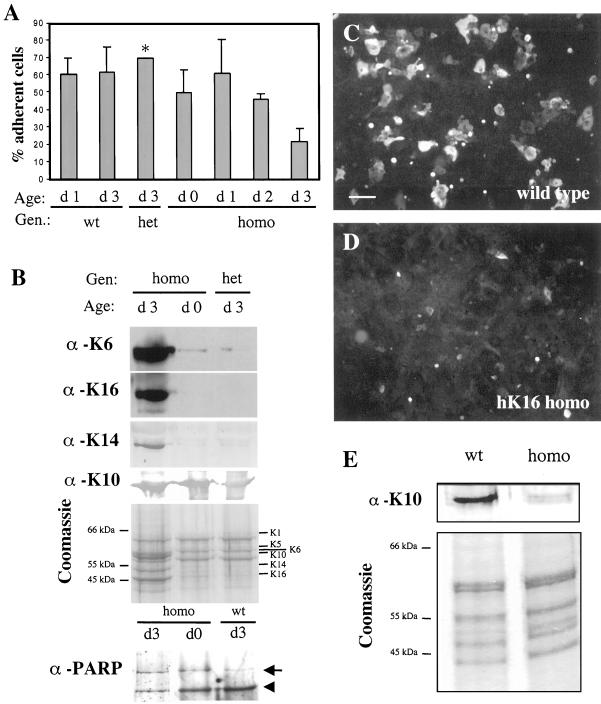
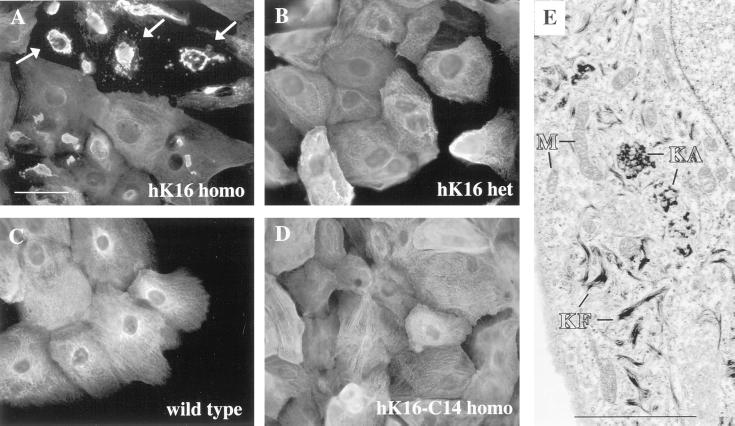
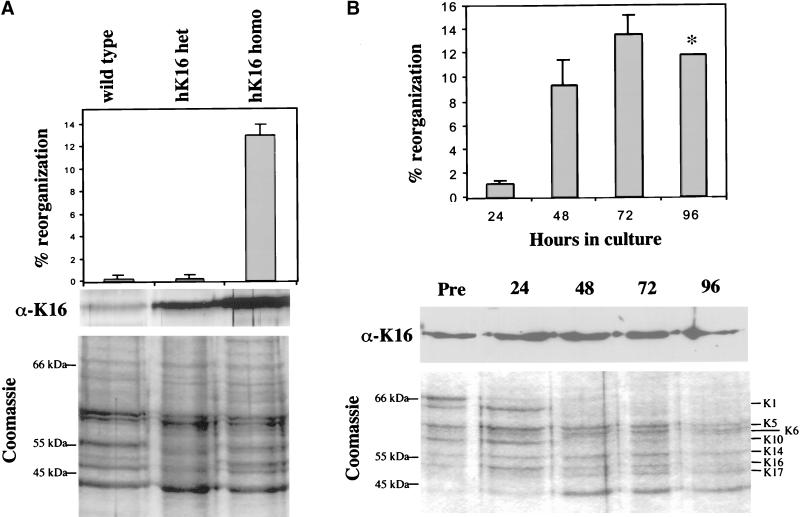
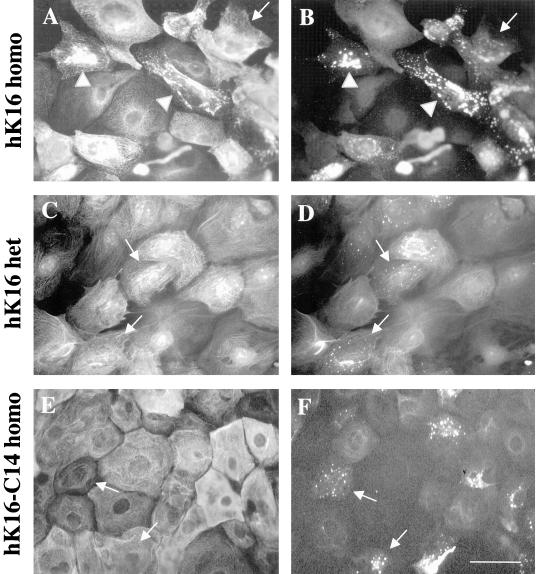
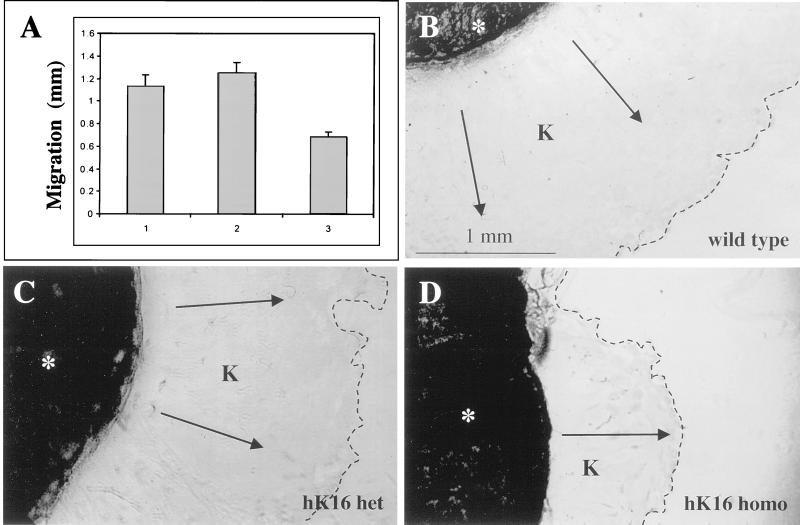
Injury to the skin results in an induction of keratins K6, K16, and K17 concomitant with activation of keratinocytes for reepithelialization. Forced expression of human K16 in skin epithelia of transgenic mice causes a phenotype that mimics several aspects of keratinocyte activation. Two types of transgenic keratinocytes, with forced expression of either human K16 or a K16-C14 chimeric cDNA, were analyzed in primary culture to assess the impact of K16 expression at a cellular level. High K16-C14-expressing and low K16-expressing transgenic keratinocytes behave similar to wild type in all aspects tested. In contrast, high K16-expressing transgenic keratinocytes show alterations in plating efficiency and calcium-induced differentiation, but proliferate normally. Migration of keratinocytes is reduced in K16 transgenic skin explants compared with controls. Finally, a subset of high K16-expressing transgenic keratinocytes develops major changes in the organization of keratin filaments in a time- and calcium concentration-dependent manner. These changes coincide with alterations in keratin content while the steady-state levels of K16 protein remain stable. We conclude that forced expression of K16 in progenitor skin keratinocytes directly impacts properties such as adhesion, differentiation, and migration, and that these effects depend upon determinants contained within its carboxy terminus.
Figures
References
-
- Carter WG, Ryan MC, Gahr PJ. Epiligrin, a new cell adhesion ligand for integrin α3-β1 in epithelial basements membranes. Cell. 1991;65:599–610. - PubMed
-
- Clark RAF. Mechanisms of cutaneous wound repair. In: Fitzpatrick TB, Eisen AZ, Wolff K, Freedberg IM, Austen, M.D MD, editors. Dermatology in General Medicine. I. New York: McGraw-Hill Book Company; 1993. pp. 473–486.
Publication types
MeSH terms
Substances
Grants and funding
LinkOut - more resources
Full Text Sources
Molecular Biology Databases
Research Materials
