Comparative Study
. 2000 Nov;182(21):6055-65.
doi: 10.1128/JB.182.21.6055-6065.2000.

Defects in D-alanyl-lipoteichoic acid synthesis in Streptococcus mutans results in acid sensitivity

Affiliations
Comparative Study

Defects in D-alanyl-lipoteichoic acid synthesis in Streptococcus mutans results in acid sensitivity

D A Boyd et al. J Bacteriol. 2000 Nov.

Abstract

In the cariogenic organism, Streptococcus mutans, low pH induces an acid tolerance response (ATR). To identify acid-regulated proteins comprising the ATR, transposon mutagenesis with the thermosensitive plasmid pGh9:ISS1 was used to produce clones that were able to grow at neutral pH, but not in medium at pH 5.0. Sequence analysis of one mutant (IS1A) indicated that transposition had created a 6.3-kb deletion, one end of which was in dltB of the dlt operon encoding four proteins (DltA-DltD) involved in the synthesis of D-alanyl-lipoteichoic acid. Inactivation of the dltC gene, encoding the D-alanyl carrier protein (Dcp), resulted in the generation of the acid-sensitive mutant, BH97LC. Compared to the wild-type strain, LT11, the mutant exhibited a threefold-longer doubling time and a 33% lower growth yield. In addition, it was unable to initiate growth below pH 6.5 and unadapted cells were unable to survive a 3-h exposure in medium buffered at pH 3.5, while a pH of 3.0 was required to kill the wild type in the same time period. Also, induction of the ATR in BH97LC, as measured by the number of survivors at a pH killing unadapted cells, was 3 to 4 orders of magnitude lower than that exhibited by the wild type. While the LTA of both strains contained a similar average number of glycerolphosphate residues, permeabilized cells of BH97LC did not incorporate D-[(14)C]alanine into this amphiphile. This defect was correlated with the deficiency of Dcp. Chemical analysis of the LTA purified from the mutant confirmed the absence of D-alanine-esters. Electron micrographs showed that BH97LC is characterized by unequal polar caps and is devoid of a fibrous extracellular matrix present on the surface of the wild-type cells. Proton permeability assays revealed that the mutant was more permeable to protons than the wild type. This observation suggests a mechanism for the loss of the characteristic acid tolerance response in S. mutans.


Figures
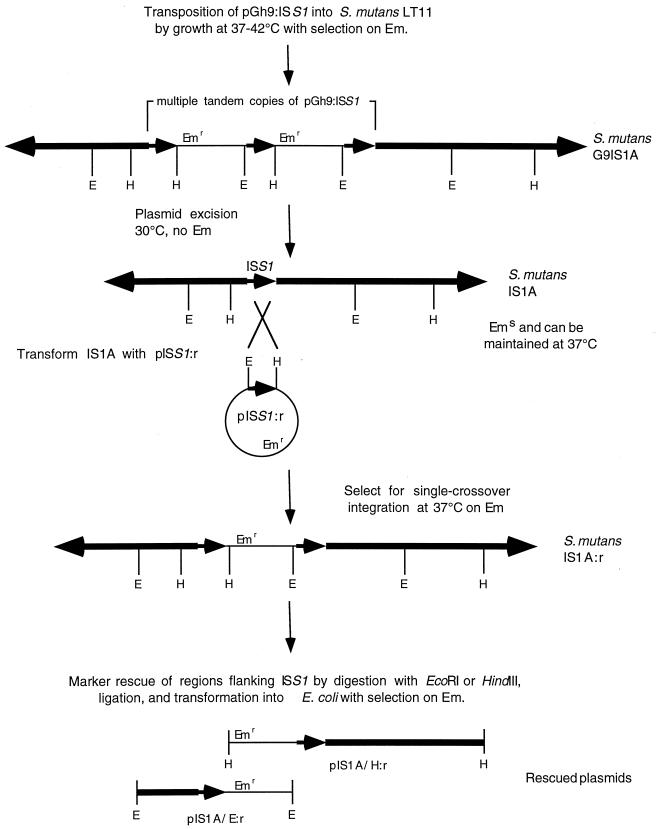
FIG. 1
FIG. 1
Construction and isolation of S. mutans G9IS1A and IS1A using pGh9:ISS1 and isolation of plasmids carrying DNA flanking the ISS1 element in IS1A. Thick lines and arrowheads represent genomic DNA, thin lines represent plasmid DNA, and small arrowheads represent ISS1 DNA. Abbreviations for restriction enzymes: E, EcoRI; H, HindIII.
FIG. 2
FIG. 2
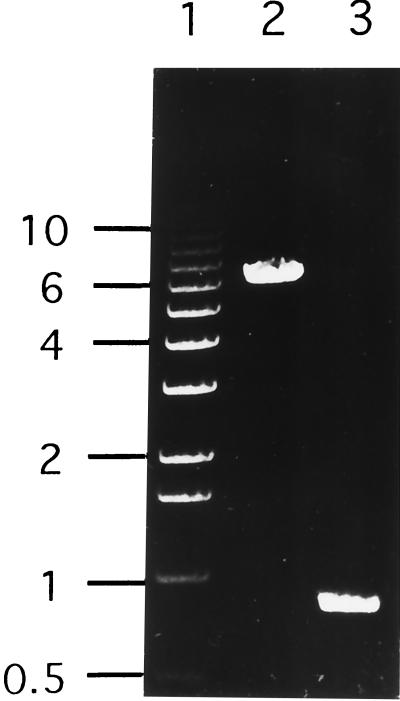
PCR products generated using S. mutans LT11 genomic DNA (lane 2), and S. mutans IS1A (lane 3) genomic DNAs as templates in reactions with primers ABC-UP and DLT-UP. Lane 1 shows the 1-kb ladder (Life Technologies) with sizes (in kilobases) shown on the left.
FIG. 3
FIG. 3
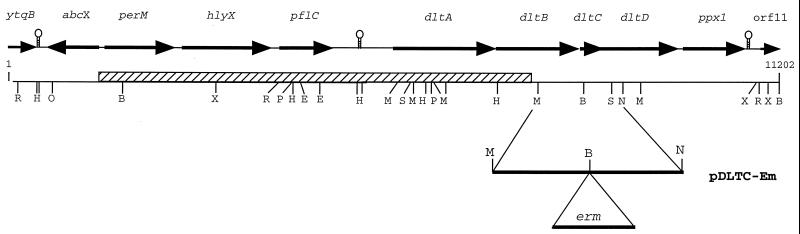
Physical map and ORF characterization of 11,202 bp of the S. mutans LT11 genome based on DNA sequence analysis of pIS1A/E:r, pIS1A/H:r (plasmids rescued from strain IS1A carrying the flanking ends of the transposon and their junction sites), and the PCR product (hatched bar) produced using primers of the adjacent S. mutans DNA. The MunI/NspV fragment that was disrupted by insertion of an Emr gene and used to construct pDLTC-Em is also shown. Hairpin structures represent putative transcriptional terminators. Genetic designations: ytqB, unknown; abcX, ABC transport protein; perM, permease; hlyX, hemolysin; pflC, pyruvate-formate lyase activase; dltABCD, genes of the dlt operon; ppx1, exopolyphosphatase. Abbreviations for restriction sites: B, BglII; E, EcoRI; H, HindIII; M, MunI; N, NspV; P, PstI, R, RcaI; S, SphI; X, XbaI.
FIG. 4
FIG. 4
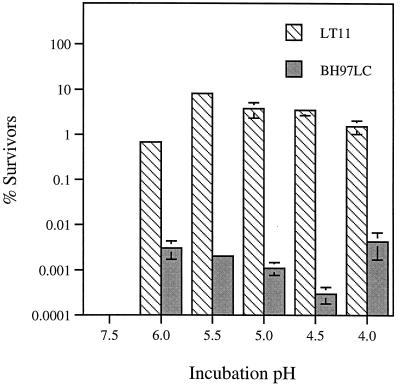
Effect of prior pH conditioning on the survival of the wild-type S. mutans LT11 and the mutant BH97LC in TYEG following a 3-h exposure to pH 3.0. Log-phase cells growing at pH 7.5 were transferred to fresh TYEG medium buffered at pH 6.0 to 3.5 and incubated at 37°C for 2 h prior to acidification to pH 3.0. The control cells (pH 7.5) were similarly treated. Error bars, standard deviations.
FIG. 5
FIG. 5
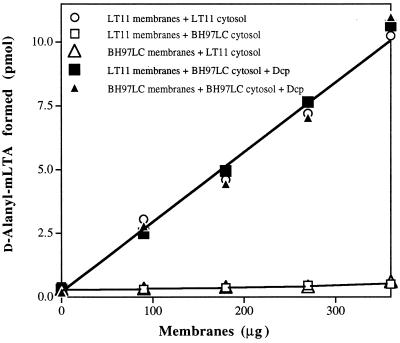
Reconstitution of the DltC-deficient cytosol fraction from BH97LC with Dcp. The d-alanine incorporation assay used was described in Materials and Methods, with the indicated amounts of membrane from either LT11 or BH97LC, cytosol (supernatant) fraction (3 μg of protein), and 12.5 nM Dcp.
FIG. 6
FIG. 6
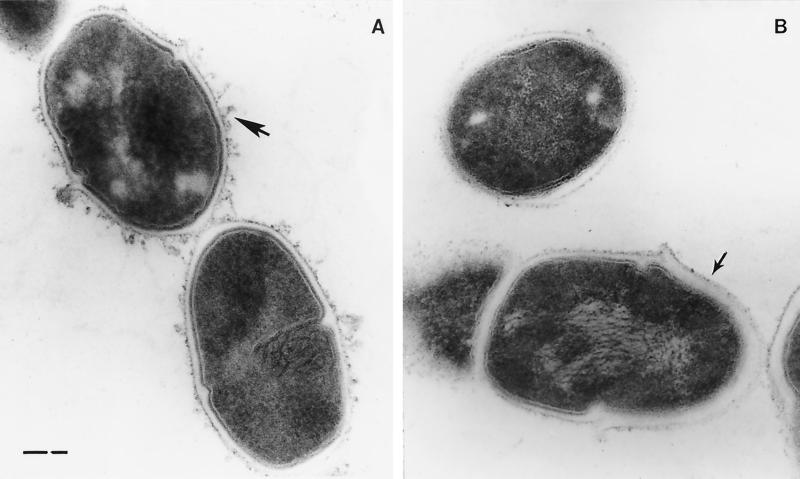
Transmission electron micrographs of thin sections of the wild-type strain, S. mutans LT11, showing cell surface structures (A) (arrow) that are absent in the dltC-defective mutant, BH97LC (B) (arrow).
FIG. 7
FIG. 7
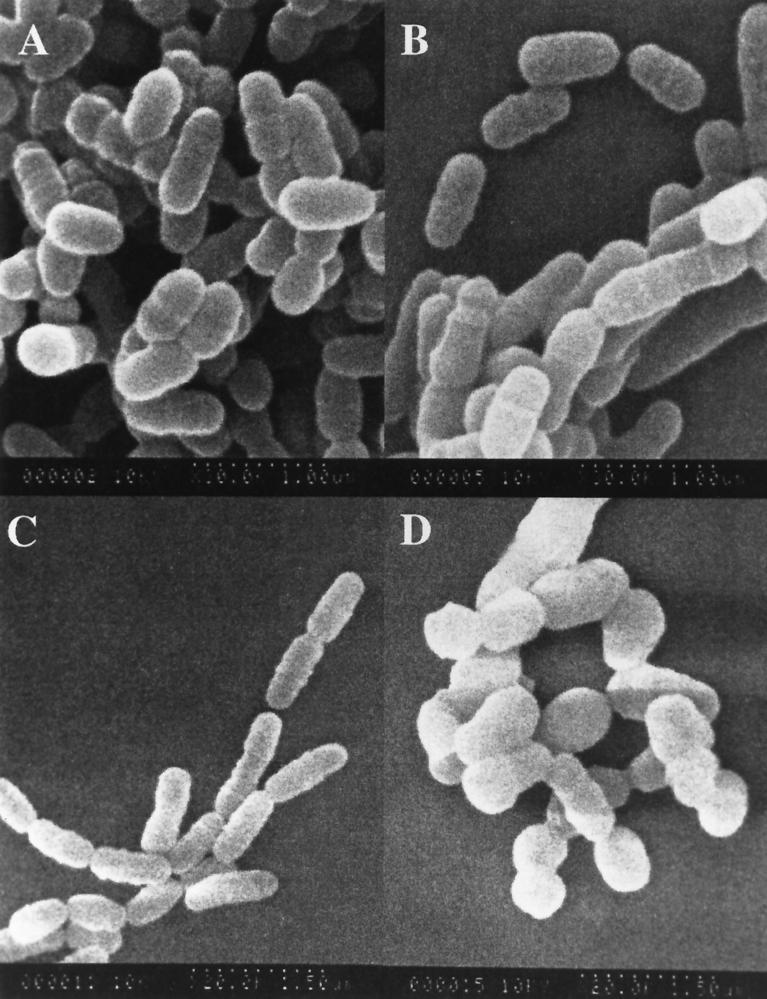
Scanning electron micrographs of log-phase cells of the wild-type strain, S. mutans LT11 (A and C), and in the dltC-defective mutant, BH97LC (B and D), grown in complex medium (TYEG) (A and B) and minimal defined medium (MM4) (C and D).
FIG. 8
FIG. 8
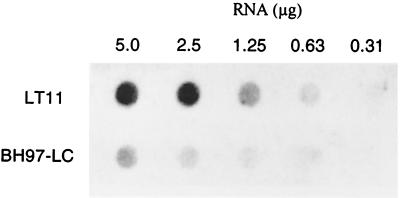
Levels of message for dltC and dltD in the wild-type strain, S. mutans LT11, and the dltC-defective mutant, BH97LC, as detected by RNA dot blotting using a DNA probe of the dltC and dltD genes on p7B/K-BgNs as the template (Table 1).
FIG. 9
FIG. 9
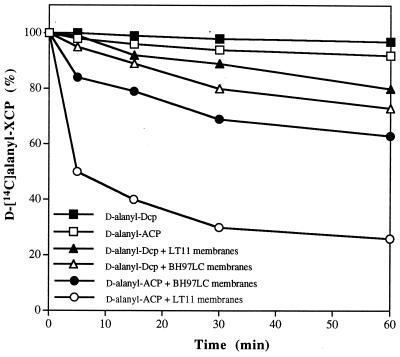
Hydrolysis of d-alanyl-acyl carrier protein (ACP) and d-alanyl-Dcp by membranes from BH97LC and from LT11. Membranes from either the parent or mutant were incubated in a reaction mixture (250 μl) containing either 6.5 nmol of d-[14C]alanyl-ACP or d-[14C]alanyl-Dcp in 10 mM bis-Tris (pH 6.5) and 30 mM MgCl2. Aliquots (50 μl) were removed from the mixtures at the indicated times, and the amount of d-[14C]alanyl-ACP or d-[14C]alanyl-Dcp remaining was measured by precipitation with 10% trichloroacetic acid according to the method of Heaton and Neuhaus (22).

References

    1. Altschul S F, Madden T L, Schaffer A A, Zhang J, Zhang Z, Miller W, Lipman D J. Gapped BLAST and PSI-BLAST: a new generation of protein database search programs. Nucleic Acids Res. 1997;25:3389–3402. - PMC - PubMed
    1. Archibald A R, Baddiley J, Heptinstall S. The alanine ester content and magnesium binding capacity of walls of Staphylococcus aureus H grown at different pH values. Biochim Biophys Acta. 1973;291:629–634. - PubMed
    1. Bender G R, Sutton S V W, Marquis R E. Acid tolerance, proton permeabilities, and membrane ATPases of oral streptococci. Infect Immun. 1986;53:331–338. - PMC - PubMed
    1. Bleiweis A S, Craig R C. A model system for the purification of amphophiles: the preparation of lipoteichoic acid using liposomes. In: Shockman G D, Wicken A J, editors. Chemistry and biological activities of bacterial surface amphophiles. New York, N.Y: Academic Press; 1981. pp. 43–49.
    1. Boyd D, Cvitkovitch D G, Hamilton I R. Sequence and expression of the HPr (ptsH) and enzyme I (ptsI) genes of the phosphoenolpyruvate-dependent phosphotransferase transport system from Streptococcus mutans. Infect Immun. 1994;62:1156–1165. - PMC - PubMed

Publication types

Associated data

LinkOut - more resources