Bisphenol A diglycidyl ether (BADGE) is a PPARgamma agonist in an ECV304 cell line
- PMID: 11030710
- PMCID: PMC1572386
- DOI: 10.1038/sj.bjp.0703628
Bisphenol A diglycidyl ether (BADGE) is a PPARgamma agonist in an ECV304 cell line
Abstract
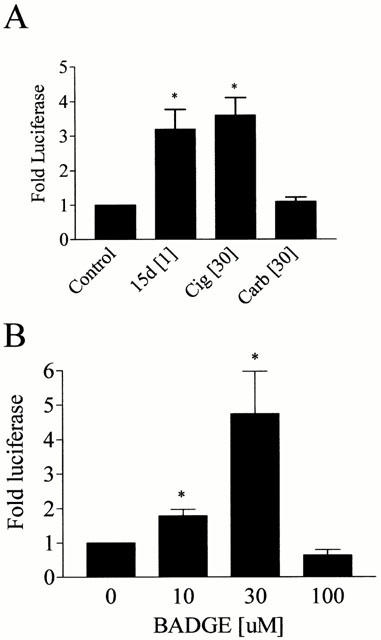
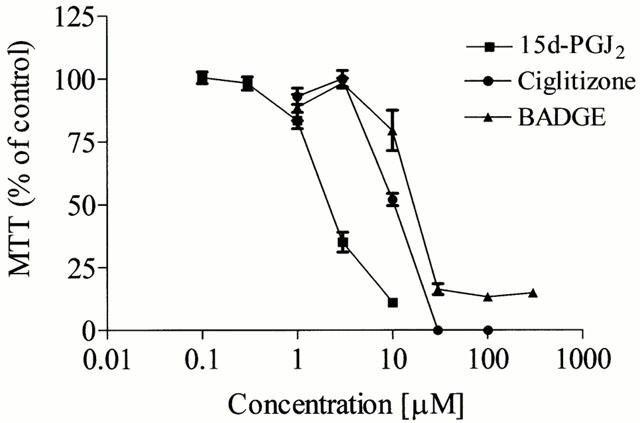
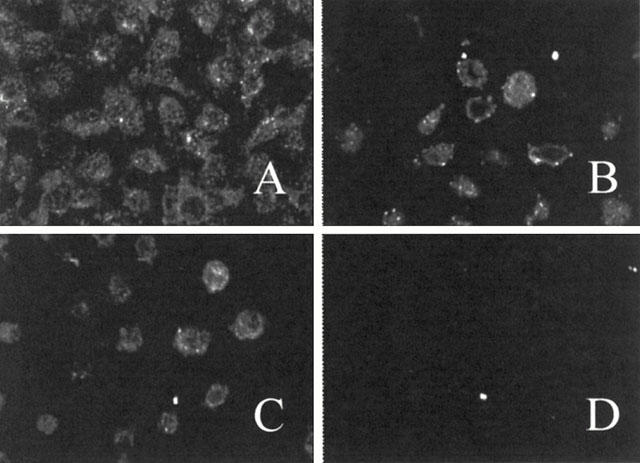
Peroxisome proliferator activated receptors (PPAR)s are nuclear transcription factors of the steroid receptor super-family. One member, PPARgamma, a critical transcription factor in adipogenesis, is expressed in ECV304 cells, and when activated participates in the induction of cell death by apoptosis. Here we describe a clone of ECV304 cells, ECV-ACO.Luc, which stably expresses a reporter gene for PPAR activation. ECV-ACO.Luc respond to the PPARgamma agonists, 15-deoxy-Delta(12,14) PGJ(2), and ciglitizone, by inducing luciferase expression. Furthermore, using ECV-ACO.Luc, we demonstrate that a newly described PPARgamma antagonist, bisphenol A diglycidyl ether (BADGE) has agonist activities. Similar to 15-deoxy-Delta(12,14) PGJ(2), BADGE induces PPARgamma activation, nuclear localization of the receptor, and induces cell death.
Figures
References
-
- BISHOP-BAILEY D., HLA T. Endothelial cell apoptosis induced by the peroxisome proliferator-activated receptor (PPAR) ligand 15-deoxy-Δ12,14 prostaglandin J2. J. Biol. Chem. 1999;274:17042–17048. - PubMed
-
- BRADFORD M.M. A rapid and sensitive method for the quantitation of microgram quantities of protein utilizing the principle of protein-dye binding. Anal. Biochem. 1976;7:248–254. - PubMed
-
- BRUN R.P., TONTONOZ P., FORMAN B.M., ELLIS R., CHEN J., EVANS R.M., SPIEGELMAN B.M. Differential activation of adipogenesis by multiple PPAR isoforms. Genes Dev. 1996;10:974–984. - PubMed
-
- FORMAN B.M., EVANS R.M. Nuclear hormone receptors activate direct, inverted, and everted repeats. Ann. N. Y. Acad. Sci. 1995;12:29–37. - PubMed
Publication types
MeSH terms
Substances
LinkOut - more resources
Full Text Sources
Molecular Biology Databases