


Role of bicarbonate and chloride in GABA- and glycine-induced depolarization and [Ca2+]i rise in fetal rat motoneurons in situ
- PMID: 11050110
- PMCID: PMC6772719
- DOI: 10.1523/JNEUROSCI.20-21-07905.2000
Role of bicarbonate and chloride in GABA- and glycine-induced depolarization and [Ca2+]i rise in fetal rat motoneurons in situ
Abstract
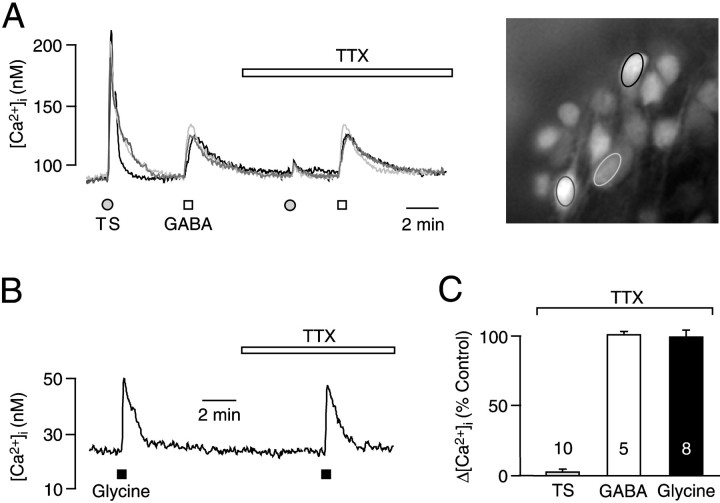
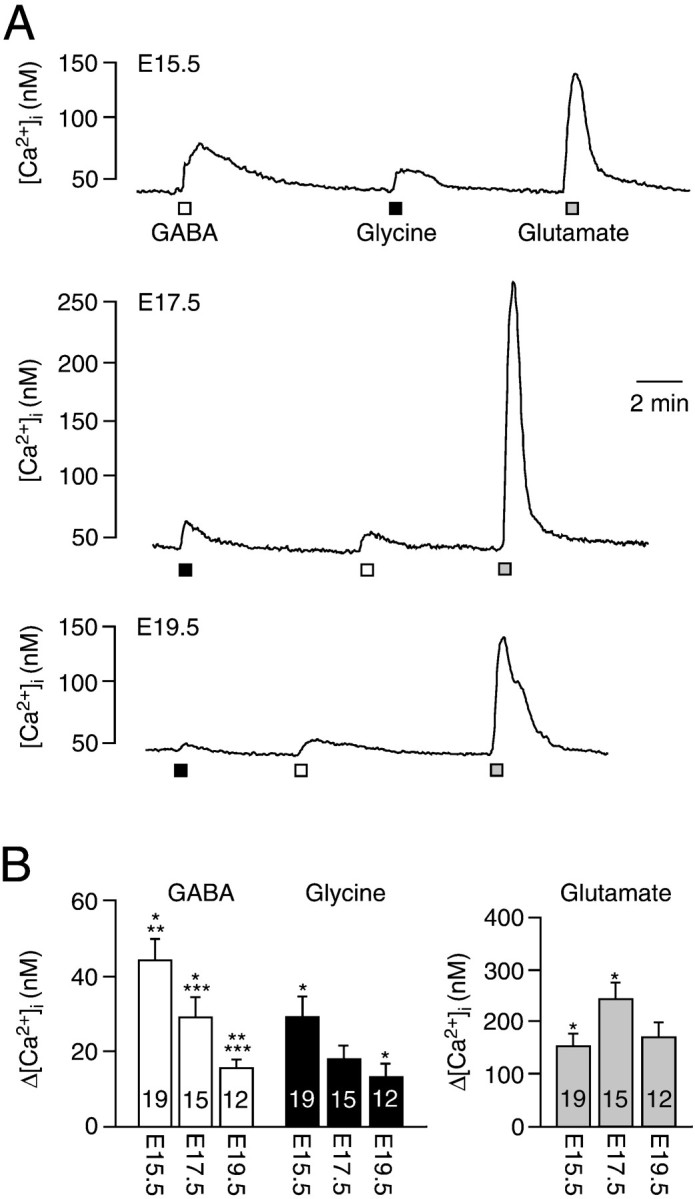
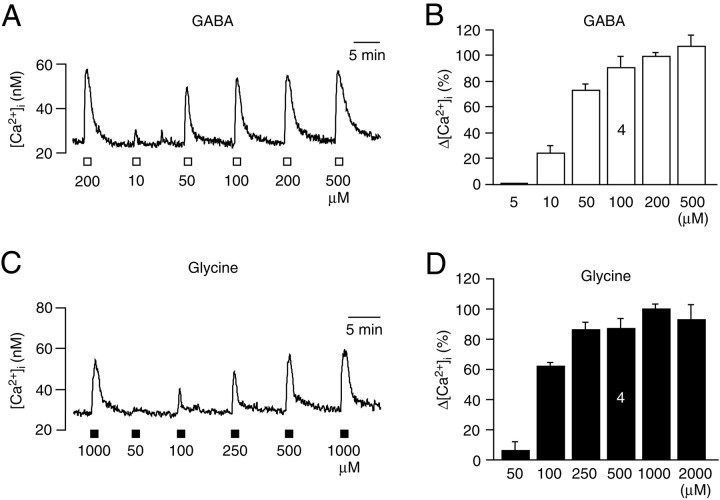
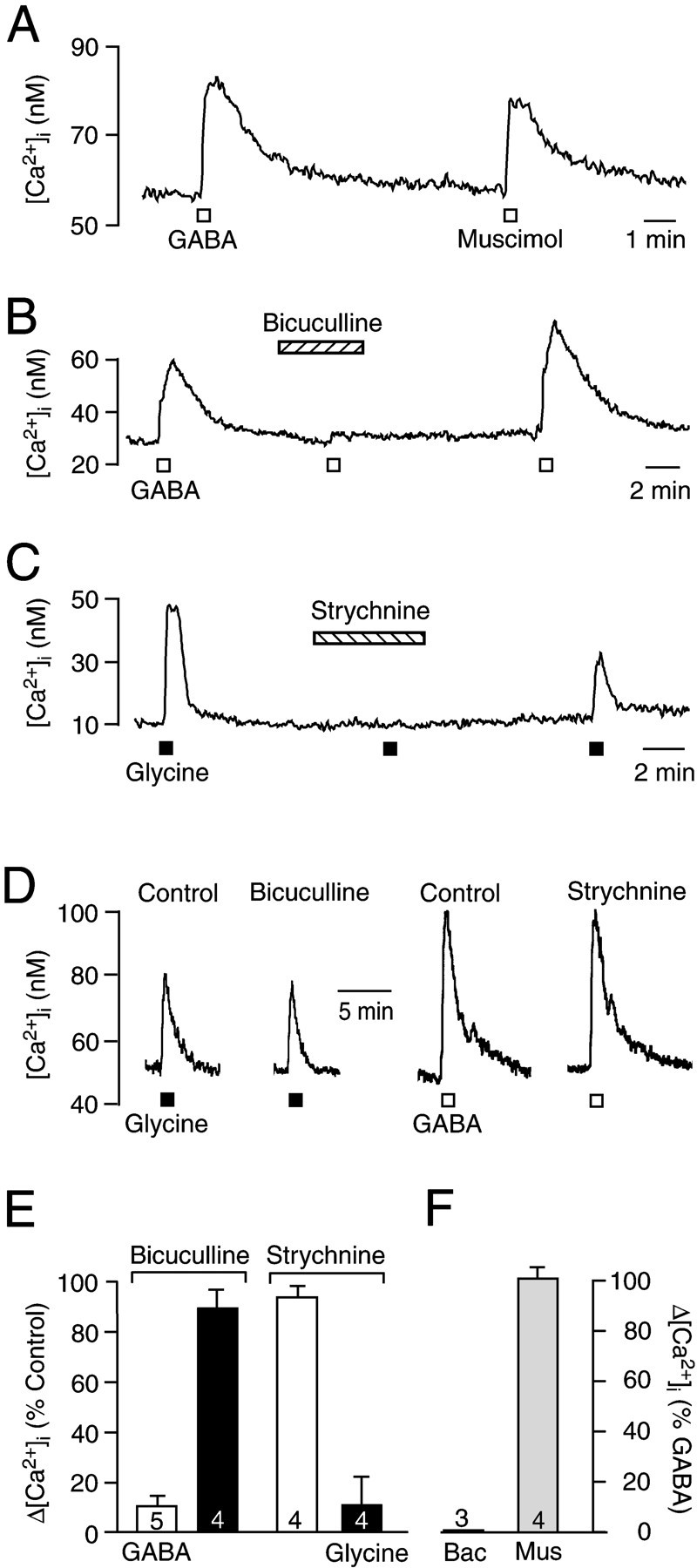
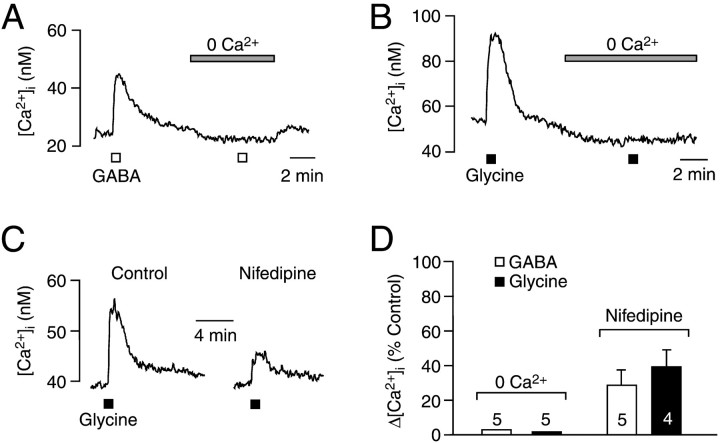
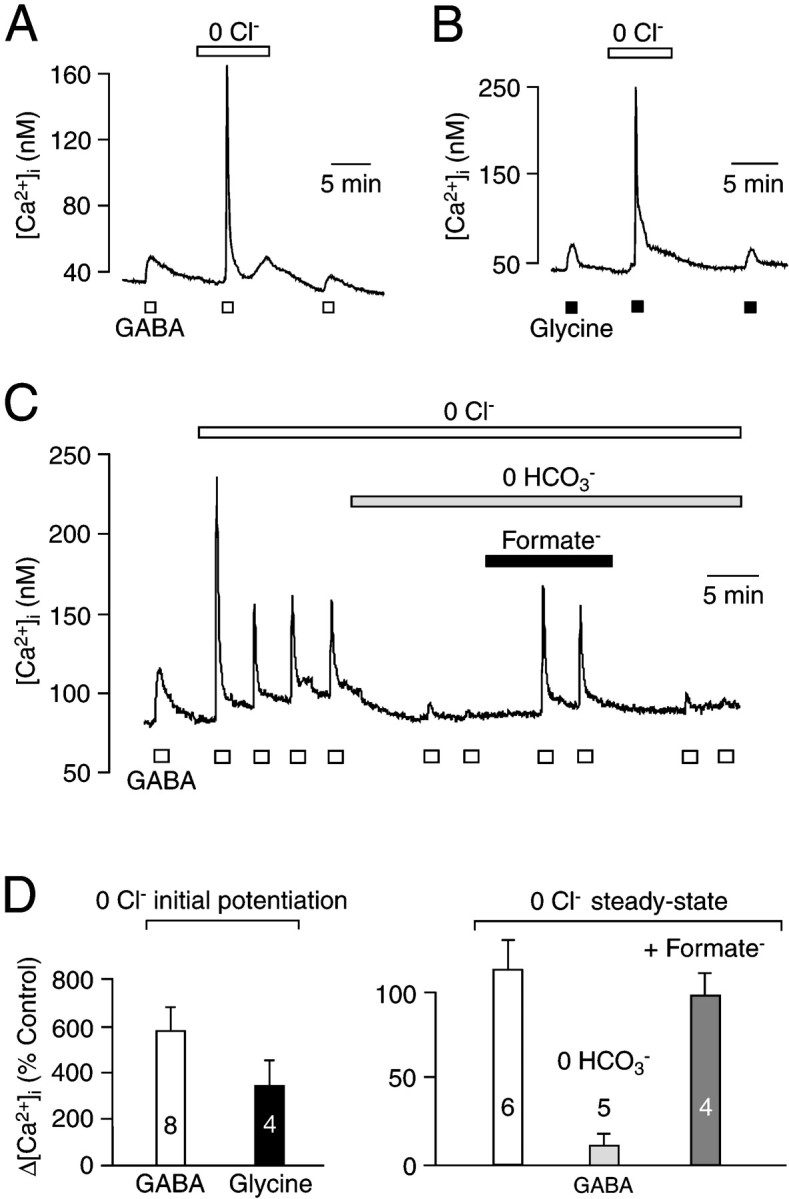
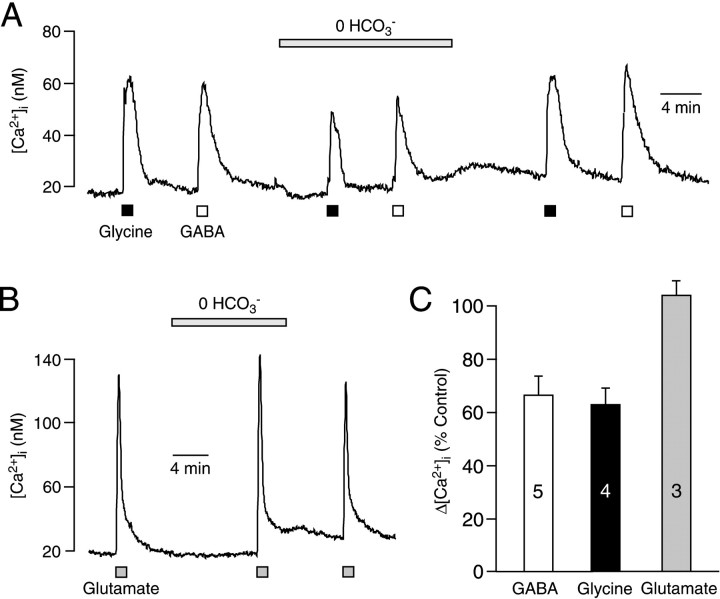
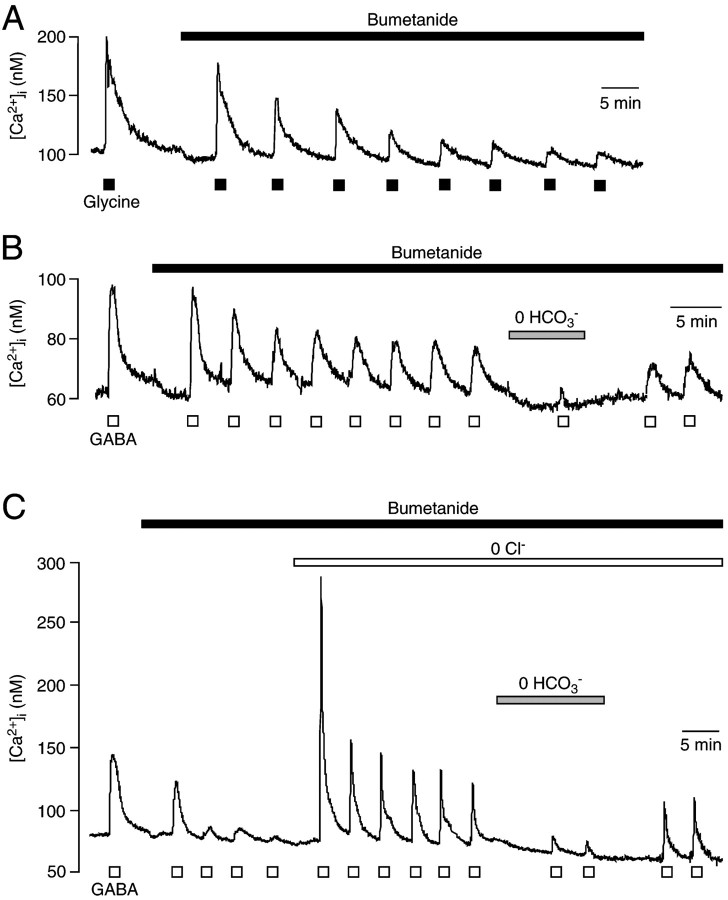
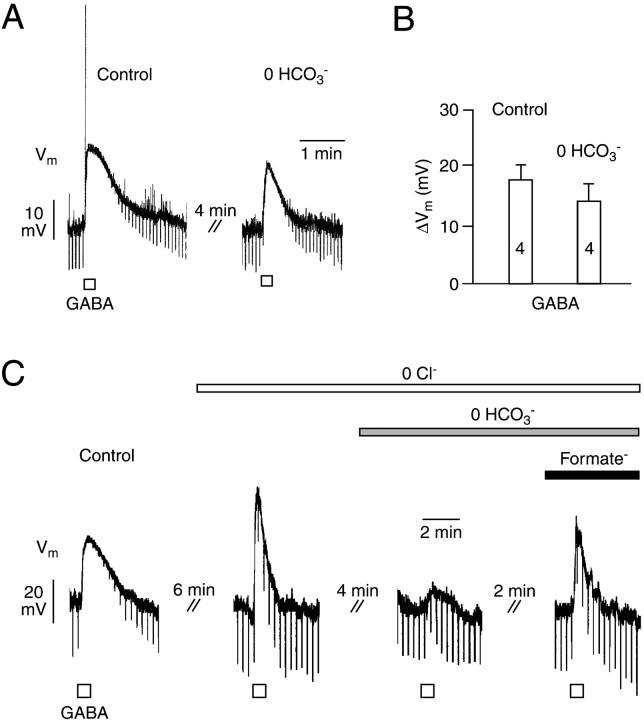
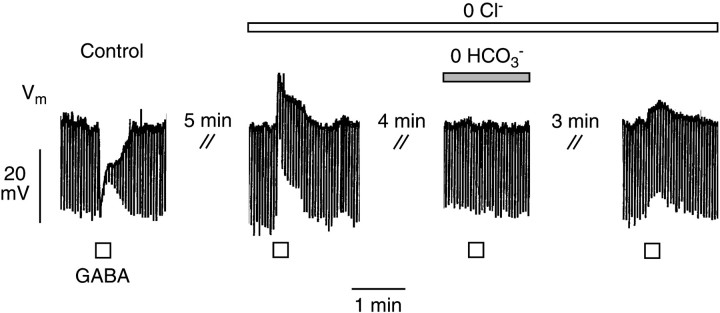
Ca(2+) imaging and (perforated) patch recording were used to analyze the mechanism of GABA- and glycine-induced depolarizations in lumbar motoneurons of spinal cord slices from fetal rats. In fura-2 ester-loaded cells, the agonist-induced depolarizations increased [Ca(2+)](i) by up to 100 nm. The GABA- and glycine-evoked [Ca(2+)](i) transients were suppressed by bicuculline and strychnine, respectively. Their magnitude decreased by approximately 50% between embryonic days 15.5 and 19.5. The [Ca(2+)](i) increases were abolished by Ca(2+)-free superfusate and attenuated by approximately 65% by nifedipine, showing that the responses were mediated by voltage-activated Ca(2+) channels. The [Ca(2+)](i) rises were potentiated by >300% immediately after removal of Cl(-) from the superfusate but recovered to values of 50-200% of control during repeated agonist administration in Cl(-)-free saline. Bumetanide gradually suppressed the [Ca(2+)](i) increases by >75%. Subsequent removal of Cl(-) reconstituted the responses and increased, upon repeated agonist application, the peak [Ca(2+)](i) rises to values above control. Removal of HCO(3)(-) from the Cl(-)-free (bumetanide-containing) superfusate reversibly abolished both the agonist-induced [Ca(2+)](i) rises and depolarizations that were reestablished by formate anions. In Cl(-)-containing superfusate, removal of HCO(3)(-) decreased both the peak and duration of the agonist-evoked membrane depolarization and [Ca(2+)](i) response. Our findings show that HCO(3)(-) efflux has a major contribution to depolarizations mediated by GABA(A) and glycine receptor-coupled anion channels in prenatal neurons. We hypothesize that the HCO(3)(-)-dependent depolarizing component, which is likely to produce an intracellular acidosis, might play an important role during the early postnatal period when the Cl(-)-dependent component gradually shifts to hyperpolarization.
Figures
References
-
- Ballanyi K. In vitro preparations. In: Windhorst U, Johansson H, editors. Modern techniques in neuroscience research. Springer; Heidelberg: 1999. pp. 307–327.
-
- Ballanyi K, Grafe P, Reddy MM, ten Bruggencate G. Different types of potassium transport linked to carbachol and γ-aminobutyric-acid actions in rat sympathetic neurons. Neuroscience. 1984;12:917–927. - PubMed
Publication types
MeSH terms
Substances
LinkOut - more resources
Full Text Sources
Miscellaneous
