


Apoptosis and p53 expression in rat adjuvant arthritis
- PMID: 11056668
- PMCID: PMC17810
- DOI: 10.1186/ar92
Apoptosis and p53 expression in rat adjuvant arthritis
Abstract
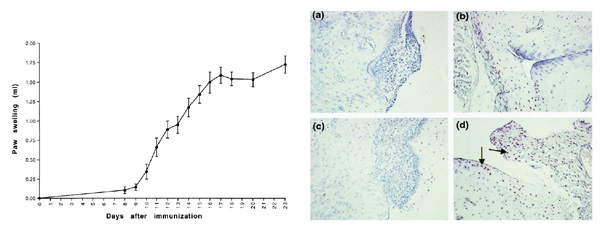
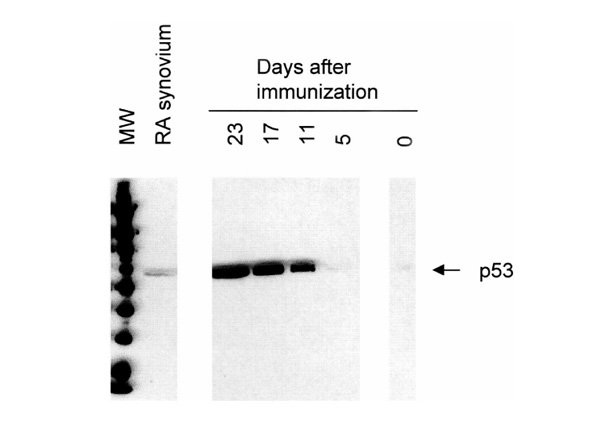
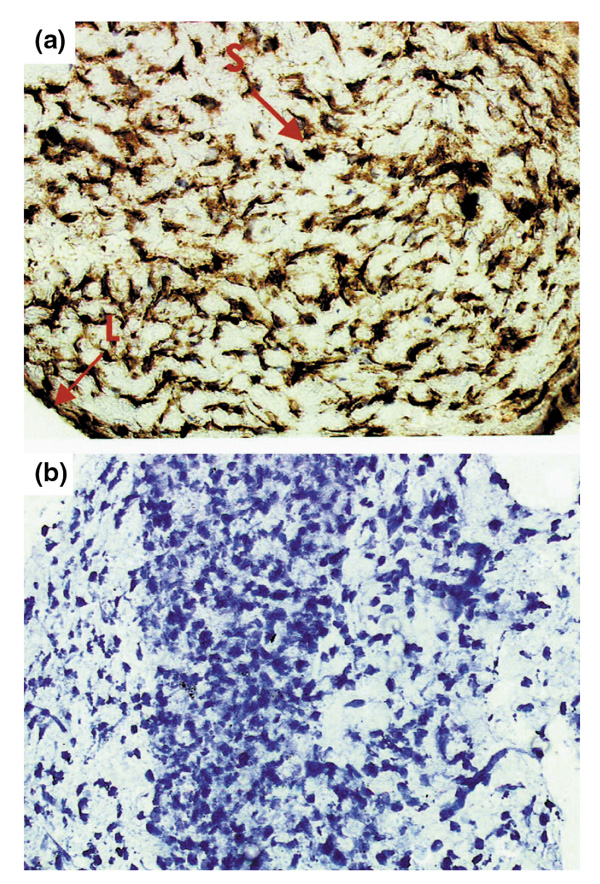
STATEMENT OF FINDINGS: The kinetics of apoptosis and the apoptosis-regulating gene p53 in adjuvant arthritis (AA) were investigated to assess the value of the AA rat model for testing apoptosis-inducing therapies. Very few terminal deoxynucleotidyl transferase-mediated deoxyuridine triphosphate (dUTP) nick end-labeling (TUNEL)-positive cells were detected during the early phases of AA, but on day 23 (chronic arthritis) the percentage of TUNEL-positive cells was significantly increased. Expression of p53 in synovial tissue gradually increased from days 5-23, which was markedly higher than p53 levels in rheumatoid arthritis (RA) synovium. Significant apoptosis only occurs late in rat AA and is concordant with marked p53 overexpression, making it useful model for testing proapoptotic therapies, but rat AA is not the best model for p53 gene therapy because dramatic p53 overexpression occurs in the latter stages of the disease.
Figures
Comment in
-
p53 in rheumatoid arthritis: friend or foe?Arthritis Res. 2000;2(3):175-8. doi: 10.1186/ar82. Epub 2000 Mar 31. Arthritis Res. 2000. PMID: 11094424 Free PMC article. Review.
References
-
- Tak PP, Firestein GS. Apoptosis in rheumatoid arthritis. . Apoptosis and Inflammation Edited by Winkler JD Basel: Birkhauser Publishing Ltd. 1999:149–162.
-
- Nakajima T, Aono H, Hasunuma T, et al. Apoptosis and functional Fas antigen in rheumatoid arthritis synoviocytes. . Arthritis Rheum. 1995;38:485–491. - PubMed
-
- Tak PP, Zvaifler NJ, Green DR, Firestein GS. Rheumatoid arthritis and p53: how oxidative stress might alter the course of inflammatory diseases. . Immunol Today. 2000;21:78–82. - PubMed
MeSH terms
Substances
LinkOut - more resources
Full Text Sources
Research Materials
Miscellaneous
