


Abdominal compartment syndrome: does intra-cystic pressure reflect actual intra-abdominal pressure? A prospective study in surgical patients
- PMID: 11056737
- PMCID: PMC29028
- DOI: 10.1186/cc366
Abdominal compartment syndrome: does intra-cystic pressure reflect actual intra-abdominal pressure? A prospective study in surgical patients
Abstract
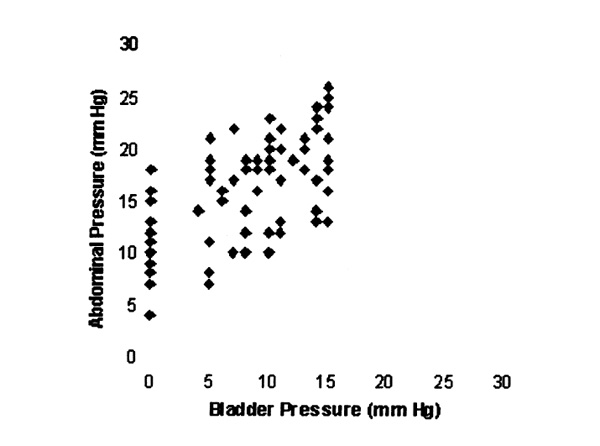
BACKGROUND: Abdominal compartment syndrome is defined as the adverse physiologic effects of increased intra-abdominal pressure. Prolonged, unrelieved pressure may lead to respiratory compromise, renal impairment, cardiac failure, shock, and death. Abdominal compartment syndrome is diagnosed by measuring intra-cystic pressure as a reflection of intra-abdominal pressure. To examine the validity of the technique, we conducted a prospective study in surgical patients by directly measuring bladder and abdominal pressures simultaneously during laparoscopic cholecystectomy using a previously described technique. RESULTS: In the present model, the bladder had higher baseline pressures than did the abdomen. Measurements across the bladder wall were not identical, but had high positive correlation coefficient when evaluated on an individual basis. Global analysis of the data for all patients showed a weak correlation coefficient. CONCLUSION: In the present study model, intra-cystic pressure did not reflect actual intra-abdominal pressure. In spite of some limitations in the study design, we feel that further research is warranted to identify other possible variables that may play a role in the relationship between the urinary bladder and the abdominal cavity pressures, providing better means for diagnosis of abdominal compartment syndrome.
Figures
References
-
- Burch JM, Moore EE, Moore FA, Franciose R. The abdominal compartment syndrome. Surg Clin North Am. 1996;76:833–842. - PubMed
-
- Watson RA, Howdieshell TR. Abdominal compartment syndrome. Southern Med J. 1998;91:326–332. - PubMed
-
- Kashtan J, Green J, Parsons EQ, Holcroft JW. Hemodynamic effects of increased abdominal pressure. J Surg Res. 1981;30:249–255. - PubMed
LinkOut - more resources
Full Text Sources
