


Expression of the nitric oxide synthase 2 gene is not essential for early control of Mycobacterium tuberculosis in the murine lung
- PMID: 11083808
- PMCID: PMC97793
- DOI: 10.1128/IAI.68.12.6879-6882.2000
Expression of the nitric oxide synthase 2 gene is not essential for early control of Mycobacterium tuberculosis in the murine lung
Abstract
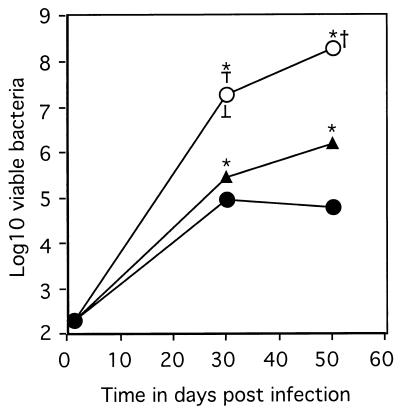
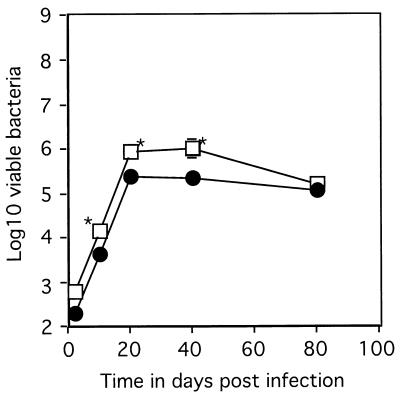
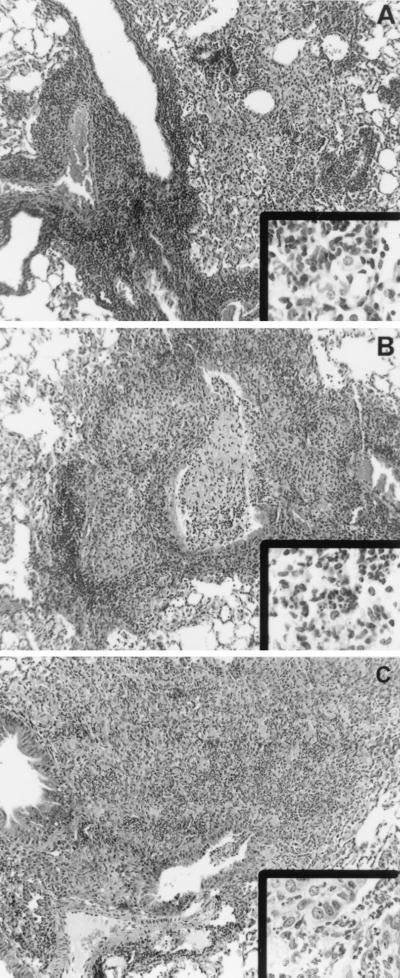
The interleukin-12 and gamma interferon (IFN-gamma) pathway of macrophage activation plays a pivotal role in controlling tuberculosis. In the murine model, the generation of supplementary nitric oxide by the induction of the nitric oxide synthase 2 (NOS2) gene product is considered the principal antimicrobial mechanism of IFN-gamma-activated macrophages. Using a low-dose aerosol-mediated infection model in the mouse, we have investigated the role of nitric oxide in controlling Mycobacterium tuberculosis in the lung. In contrast to the consequences of a systemic infection, a low dose of bacteria introduced directly into the lungs of mice lacking the NOS2 gene is controlled almost as well as in intact animals. This is in contrast to the rapid progression of disease in mice lacking IFN-gamma or a key member of the IFN signaling pathway, interferon regulatory factor 1. Thus while IFN-gamma is pivotal in early control of bacterial growth in the lung, this control does not completely depend upon the expression of the NOS2 gene. The absence of inducible nitric oxide in the lung does, however, result in increased polymorphonuclear cell involvement and eventual necrosis in the pulmonary granulomas of the infected mice lacking the NOS2 gene.
Figures
References
-
- Adams L B, Dinauer M C, Morgenstern D E, Krahenbuhl J L. Comparison of the roles of reactive oxygen and nitrogen intermediates in the host response to Mycobacterium tuberculosis using transgenic mice. Tuber Lung Dis. 1997;78:237–246. - PubMed
-
- Bean A G D, Roach D R, Briscoe H, France M P, Korner H, Sedgewick J D, Britton W J. Structural deficiencies in granuloma formation in TNF gene-targeted mice underlie the heightened susceptibility to aerosol Mycobacterium tuberculosis infection, which is not compensated for by lymphotoxin. J Immunol. 1999;162:3504–3511. - PubMed
-
- Cardona P-J, Cooper A M, Luquin M, Ariza A, Filipo F, Orme I M, Ausina V. The intravenous model of murine tuberculosis is less pathogenic than the aerosol model owing to a more rapid induction of systemic immunity. Scand J Immunol. 1999;49:362–366. - PubMed
Publication types
MeSH terms
Substances
Grants and funding
LinkOut - more resources
Full Text Sources
Other Literature Sources
