


Apoptosis in normal and osteoarthritic human articular cartilage
- PMID: 11087699
- PMCID: PMC1753049
- DOI: 10.1136/ard.59.12.959
Apoptosis in normal and osteoarthritic human articular cartilage
Abstract
Objectives: To investigate whether apoptosis occurs in osteoarthritis (OA), and if this phenomenon is modulated by human recombinant interleukin 1beta (hrIL1beta).
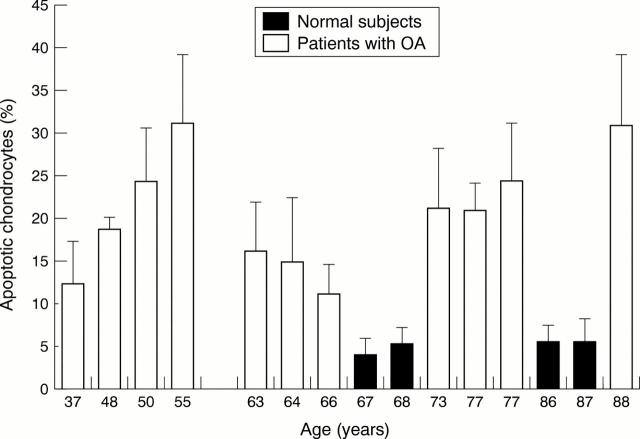
Methods: Human articular cartilage samples were obtained at the time of hip arthroplasty because of femoral neck fracture (normal cartilage) (n=4) or advanced coxarthrosis (OA cartilage) (n=14). Apoptotic chondrocytes, isolated by collagenase digestion and cultivated for 24 hours, or present in situ in frozen cartilage sections, were quantified by fluorescent microscopy using two apoptosis markers: the TUNEL reaction, which detects nuclear DNA fragmentation, and Annexin-V-fluos, which labels at the membrane level the externalisation of phosphatidylserine.
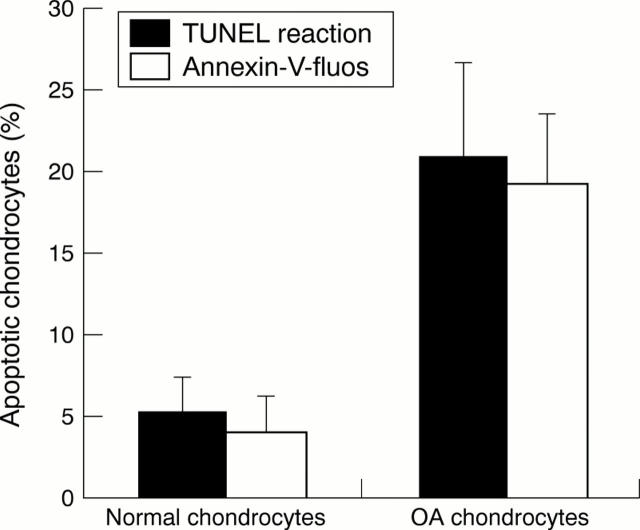
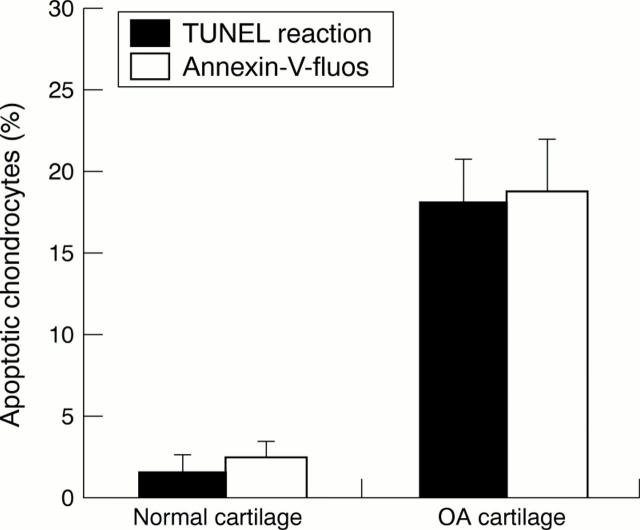
Results: In OA cartilage 18-21% of chondrocytes showed apoptotic features, compared with 2-5% in normal cartilage. The results were similar for the two comparative studies (in situ and in vitro) and for both apoptosis markers. Moreover, hrIL1beta increased the apoptosis rate in vitro in a dose dependent manner in OA and normal chondrocytes.
Conclusion: These results suggest that apoptosis may be an important factor in the evolution of OA and may be a new target for treatment of OA.
Figures


References
MeSH terms
Substances
LinkOut - more resources
Full Text Sources
Other Literature Sources
