


Two-stage hepatectomy: A planned strategy to treat irresectable liver tumors
- PMID: 11088072
- PMCID: PMC1421270
- DOI: 10.1097/00000658-200012000-00006
Two-stage hepatectomy: A planned strategy to treat irresectable liver tumors
Abstract
Objective: To assess feasibility, risks, and patient outcomes in the treatment of colorectal metastases with two-stage hepatectomy.
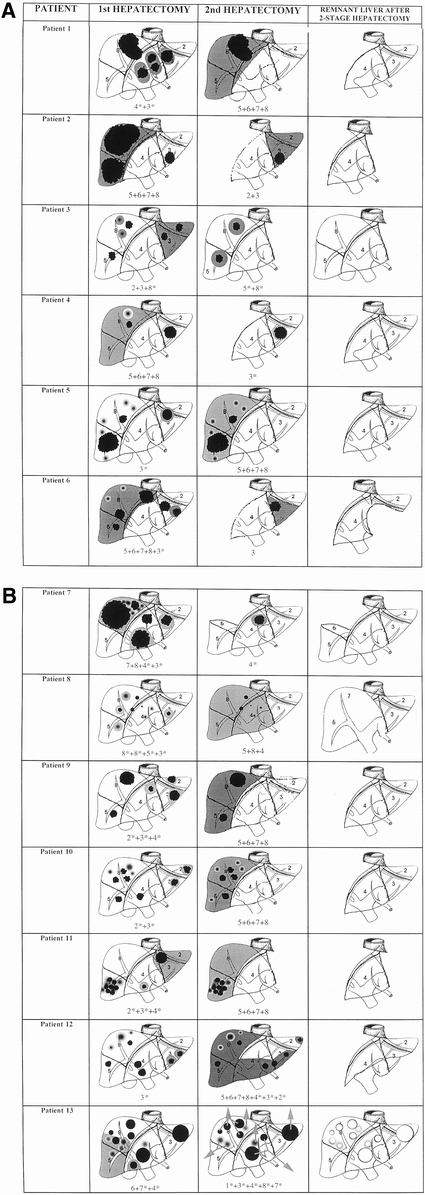
Summary background data: Some patients with multiple hepatic colorectal metastases are not candidates for a complete resection by a single hepatectomy, even when downstaged by chemotherapy, after portal embolization, or combined with a locally destructive technique. In two-stage hepatectomy, the highest possible number of tumors is resected in a first, noncurative intervention, and the remaining tumors are resected after a period of liver regeneration. In selected patients with irresectable multiple metastases not amenable to a single hepatectomy procedure, two-stage hepatectomy might offer a chance of long-term remission.
Methods: Of consecutive patients with conventionally irresectable colorectal metastases treated by chemotherapy, 16 of 398 (4%) became eligible for curative two-stage hepatectomy combined with chemotherapy and adjuvant nonsurgical interventions as indicated.
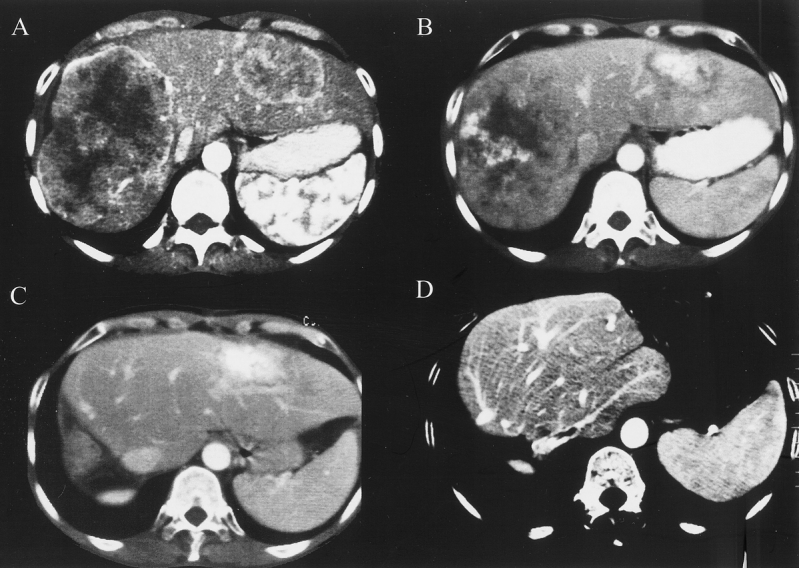
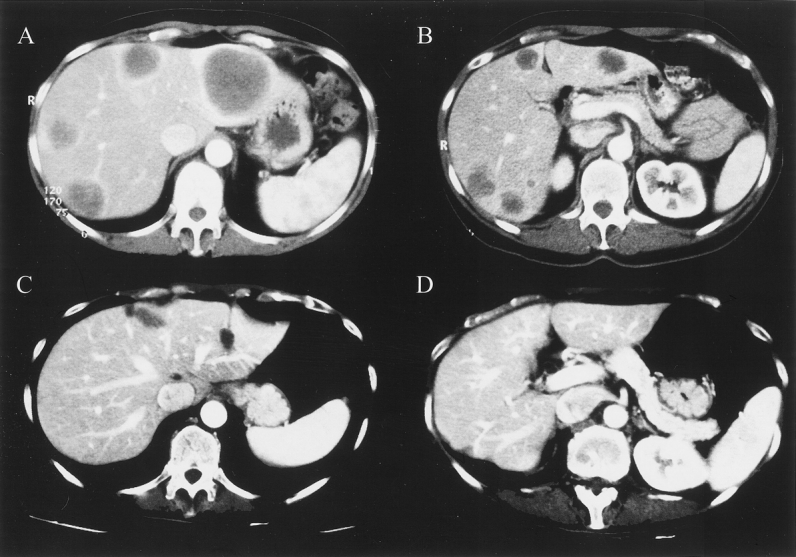
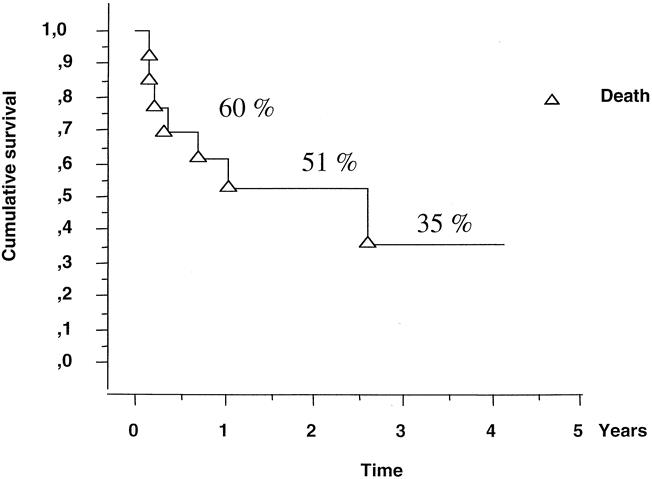
Results: Two-stage hepatectomy was feasible in 13 of 16 patients (81%). There were no surgical deaths. The postoperative death rate (2 months or less) was 0% for the first-stage procedure and 15% for the second-stage one. Postoperative complication rates were 31% and 45%, respectively, with only one complication leading to reoperation. The 3-year survival rate was 35%, with four patients (31%) disease-free at 7, 22, 36, and 54 months. Median survival was 31 months from the second hepatectomy and 44 months from the diagnosis of metastases.
Conclusions: Two-stage hepatectomy combined with chemotherapy may allow a long-term remission in selected patients with irresectable multiple metastases and increases the proportion of patients with resectable disease.
Figures
References
-
- Adson MA, van Heerden JA, Adson MH, et al. Resection of hepatic metastases from colorectal cancer. Arch Surg 1984; 119: 647–651. - PubMed
-
- Hughes KS, Simon R, Songhorabodi S, et al. Resection of the liver for colorectal carcinoma metastases: a multi-institutional study of indications for resection. Surgery 1988; 103: 278–288.
-
- Scheele J, Stangl R, Altendorf-Hofmann A, Paul M. Resection of colorectal liver metastases. World J Surg 1995; 19: 59–71. - PubMed
MeSH terms
LinkOut - more resources
Full Text Sources
Medical
