


Involvement of 5-HT(3) receptors in the nucleus accumbens in the potentiation of cocaine-induced behaviours in the rat
- PMID: 11090100
- PMCID: PMC1572452
- DOI: 10.1038/sj.bjp.0703687
Involvement of 5-HT(3) receptors in the nucleus accumbens in the potentiation of cocaine-induced behaviours in the rat
Abstract
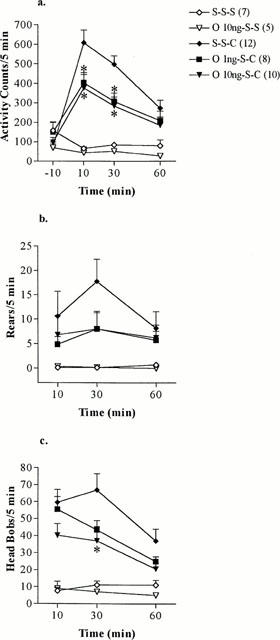
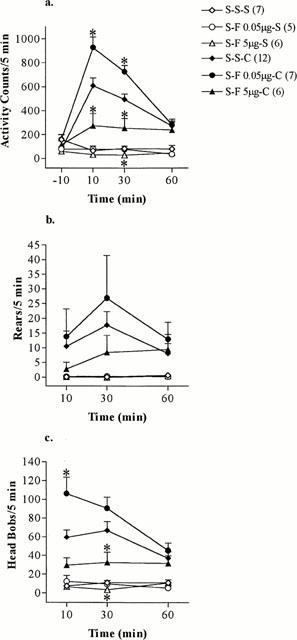
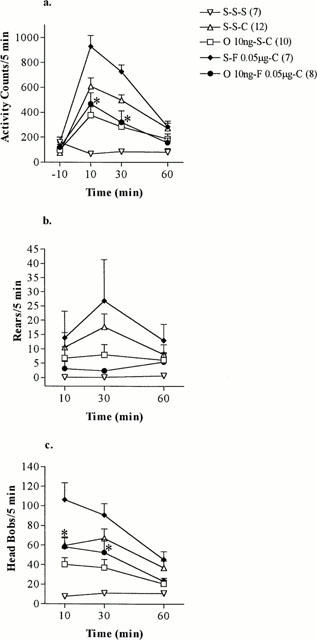
1. The present study investigated the central effects of the selective serotonin reuptake inhibitor (SSRI) fluoxetine and the role of 5-hydroxytryptamine(3) (5-HT(3)) receptors in the core of the nucleus accumbens (NAc) on cocaine-induced behavioural changes in rats. 2. The 5-HT(3) receptor antagonist ondansetron (1 or 10 ng) was microinjected bilaterally into the core of the NAc 60 min prior to peripheral cocaine (15 mg kg(-1), i.p.) administration followed by the assessment of locomotor activity, rearing activity and head bobs. Both doses of ondansetron attenuated cocaine's stimulatory effect on behaviours. 3. Fluoxetine (0.05 or 5 microg) microinjected bilaterally into the core of the NAc 30 min before peripheral administration of cocaine produced dose-dependent biphasic effects on cocaine-induced behaviours. Intra-NAc administration of 0.05 microg fluoxetine resulted in a potentiation of cocaine-induced behaviours, while the higher dose of the SSRI (5 microg) attenuated the stimulant effect of cocaine on behaviours. 4. To investigate a possible involvement of 5-HT(3) receptors in fluoxetine's facilitatory action, ondansetron (10 ng) was microinjected 30 min prior to fluoxetine (0.05 microg), which resulted in a significant attenuation of the facilitatory effect of fluoxetine on cocaine-induced behaviours. 5. Thus, 5-HT(3) receptors in the core of the NAc appear to mediate stimulatory effects on cocaine-induced locomotor activity, rears and head bobs, whereas the attenuation of cocaine-induced behaviours by fluoxetine at the higher dose, suggests the involvement of a different 5-HT receptor subtype.
Figures
References
-
- ADELL A., ARTIGAS F. Differential effects of clomipramine given locally or systemically on extracellular 5-hydroxytryptamine in raphe nuclei and frontal cortex. Naunyn-Schmiedeberg's Arch. Pharmacol. 1991;343:237–244. - PubMed
-
- ALHEID G.F., HEIMER L. New perspectives in basal forebrain organization of special relevance for neuropsychiatric disorders: The striatopallidal, amygdaloid, and corticopetal components of substantia innominata. Neuroscience. 1988;27:1–39. - PubMed
-
- BAGDY E., SOLYOM S., HARSING L.G. Feedback stimulation of somatodendritic serotonin release: A 5-HT3 receptor-mediated effect in the raphe nuclei of the rat. Brain Res. Bull. 1998;45:203–208. - PubMed
-
- BAUMANN P.A., WALDMEIER P.C. Further evidence for negative feedback control of serotonin release in the central nervous system. Naunyn-Schmiedebergs Arch. Pharmacol. 1981;317:36–43. - PubMed
-
- BRADBERRY C.W., ROTH R.H. Cocaine increases extracellular dopamine in rat nucleus accumbens and ventral tegmental area as shown by in vivo microdialysis. Neurosci. Lett. 1989;103:97–102. - PubMed
Publication types
MeSH terms
Substances
Grants and funding
LinkOut - more resources
Full Text Sources
