


Inhibitory regulation of Rac activation, membrane ruffling, and cell migration by the G protein-coupled sphingosine-1-phosphate receptor EDG5 but not EDG1 or EDG3
- PMID: 11094076
- PMCID: PMC102182
- DOI: 10.1128/MCB.20.24.9247-9261.2000
Inhibitory regulation of Rac activation, membrane ruffling, and cell migration by the G protein-coupled sphingosine-1-phosphate receptor EDG5 but not EDG1 or EDG3
Abstract
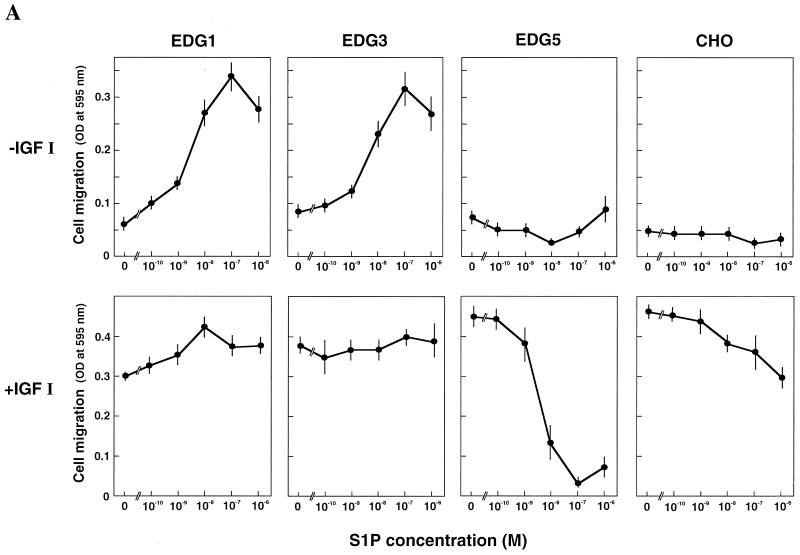
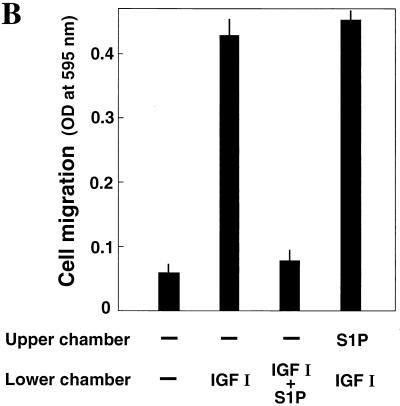
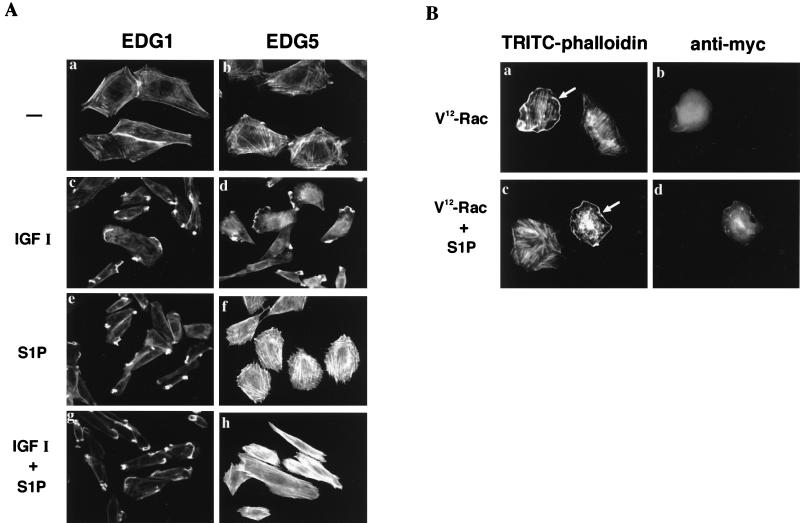
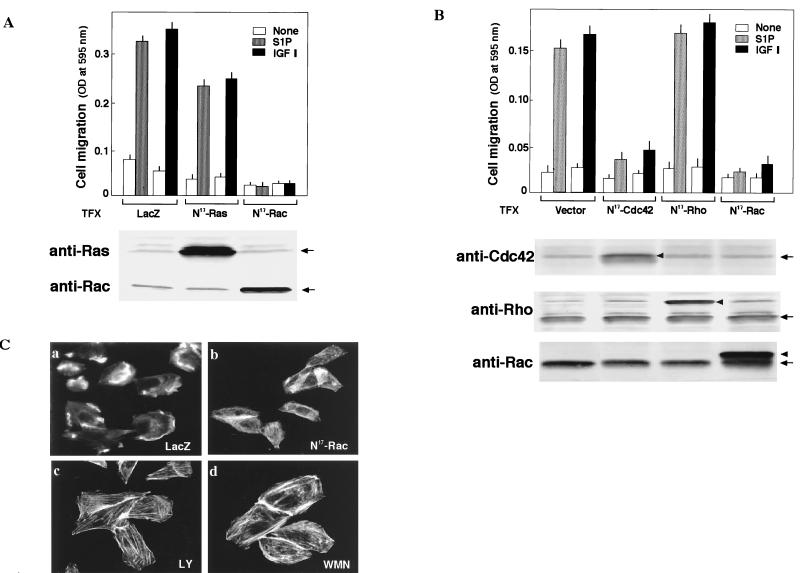
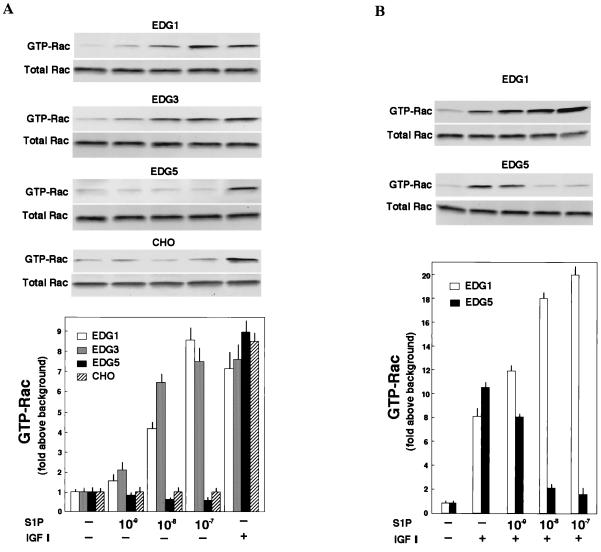
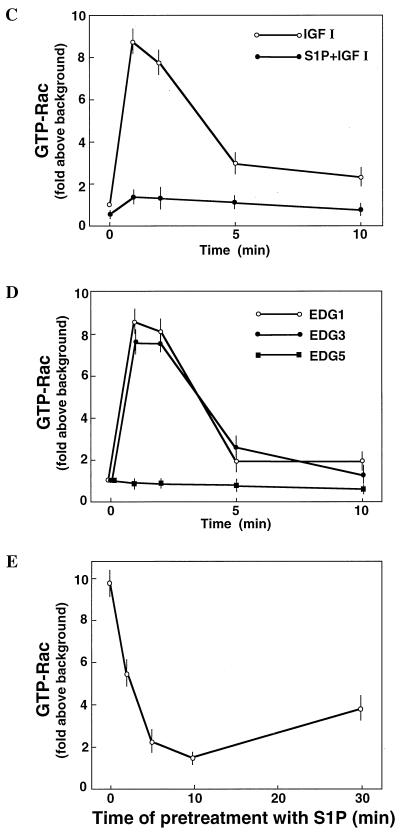
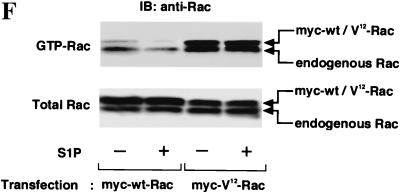
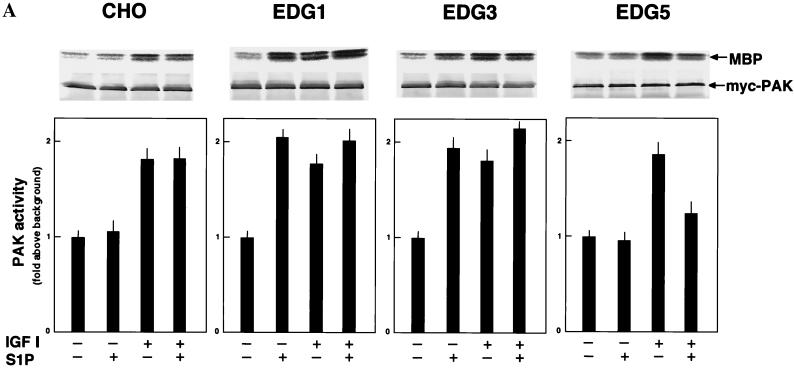
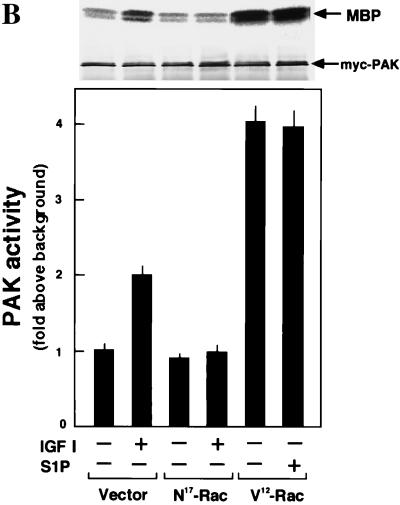
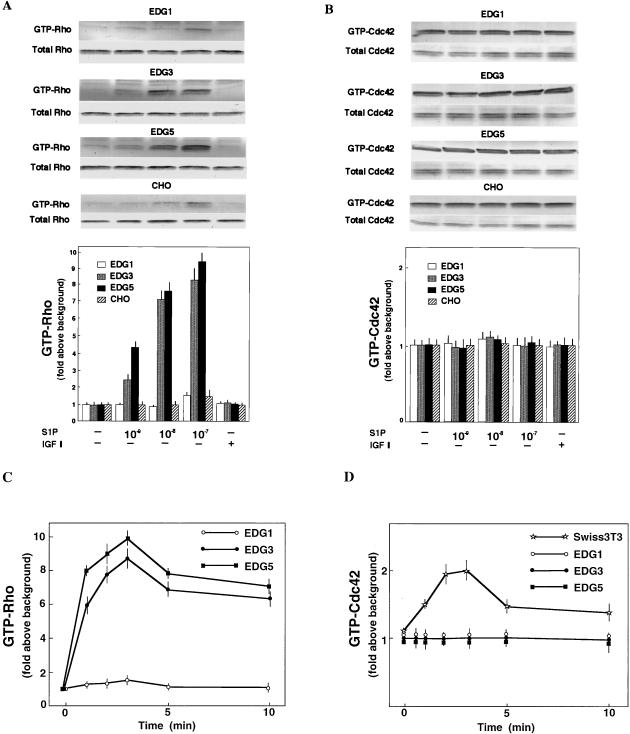
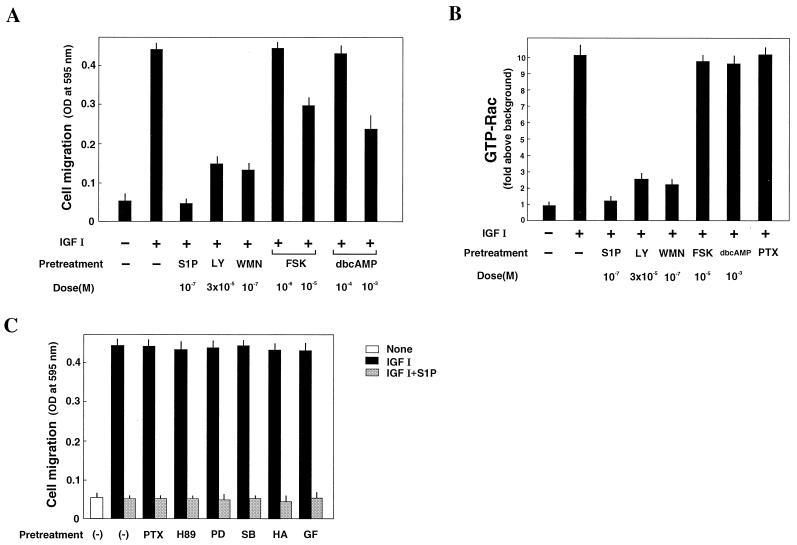
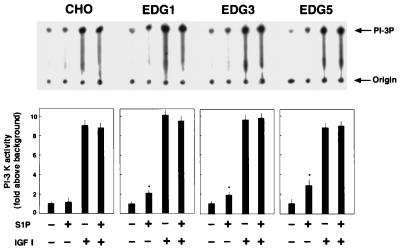
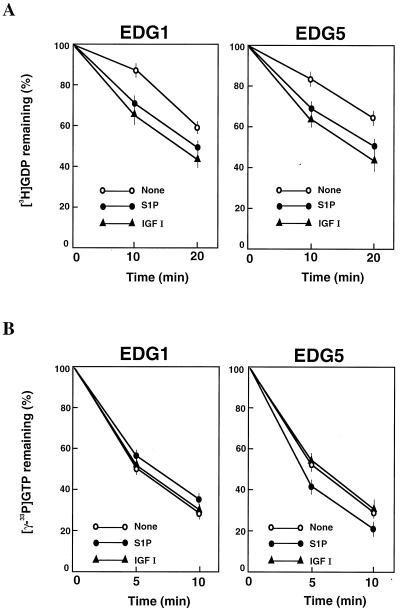
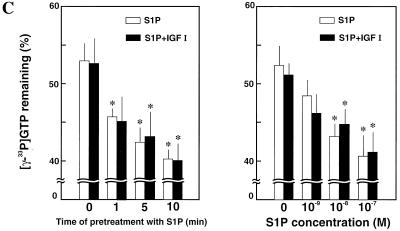
Sphingosine-1-phosphate (S1P) is a bioactive lysophospholipid that induces a variety of biological responses in diverse cell types. Many, if not all, of these responses are mediated by members of the EDG (endothelial differentiation gene) family G protein-coupled receptors EDG1, EDG3, and EDG5 (AGR16). Among prominent activities of S1P is the regulation of cell motility; S1P stimulates or inhibits cell motility depending on cell types. In the present study, we provide evidence for EDG subtype-specific, contrasting regulation of cell motility and cellular Rac activity. In CHO cells expressing EDG1 or EDG3 (EDG1 cells or EDG3 cells, respectively) S1P as well as insulin-like growth factor I (IGF I) induced chemotaxis and membrane ruffling in phosphoinositide (PI) 3-kinase- and Rac-dependent manners. Both S1P and IGF I induced a biphasic increase in the amount of the GTP-bound active form of Rac. In CHO cells expressing EDG5 (EDG5 cells), IGF I similarly stimulated cell migration; however, in contrast to what was found for EDG1 and EDG3 cells, S1P did not stimulate migration but totally abolished IGF I-directed chemotaxis and membrane ruffling, in a manner dependent on a concentration gradient of S1P. In EDG5 cells, S1P stimulated PI 3-kinase activity as it did in EDG1 cells but inhibited the basal Rac activity and totally abolished IGF I-induced Rac activation, which involved stimulation of Rac-GTPase-activating protein activity rather than inhibition of Rac-guanine nucleotide exchange activity. S1P induced comparable increases in the amounts of GTP-RhoA in EDG3 and EDG5 cells. Neither S1P nor IGF I increased the amount of GTP-bound Cdc42. However, expression of N(17)-Cdc42, but not N(19)-RhoA, suppressed S1P- and IGF I-directed chemotaxis, suggesting a requirement for basal Cdc42 activity for chemotaxis. Taken together, the present results demonstrate that EDG5 is the first example of a hitherto-unrecognized type of receptors that negatively regulate Rac activity, thereby inhibiting cell migration and membrane ruffling.
Figures
References
-
- Adam L, Vadlamudi R, Kondapaka S B, Chernoff J, Mendelsohn J, Kumar R. Heregulin regulates cytoskeletal reorganization and cell migration through the p21-activated kinase-1 via phosphatidylinositol-3 kinase. J Biol Chem. 1998;273:28238–28246. - PubMed
-
- Akasaki T, Koga H, Sunimoto H. Phosphoinositide 3-kinase-dependent and -independent activation of the small GTPase Rac2 in human neutrophils. J Biol Chem. 1999;274:18055–18059. - PubMed
-
- An S, Zheng Y, Bleu T. Sphingosine 1-phosphate-induced cell proliferation, survival, and related signaling events mediated by G protein-coupled receptors Edg3 and Edg5. J Biol Chem. 2000;275:288–296. - PubMed
-
- An S. Molecular identification and characterization of G protein-coupled receptors for lysophosphatidic acid and sphingosine 1-phosphate. Ann N Y Acad Sci. 2000;905:25–33. - PubMed
Publication types
MeSH terms
Substances
LinkOut - more resources
Full Text Sources
Other Literature Sources
Molecular Biology Databases
Research Materials
Miscellaneous
