


Uptake and active efflux of polycyclic aromatic hydrocarbons by Pseudomonas fluorescens LP6a
- PMID: 11097918
- PMCID: PMC92472
- DOI: 10.1128/AEM.66.12.5387-5392.2000
Uptake and active efflux of polycyclic aromatic hydrocarbons by Pseudomonas fluorescens LP6a
Abstract
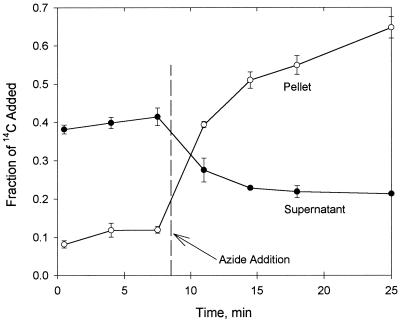
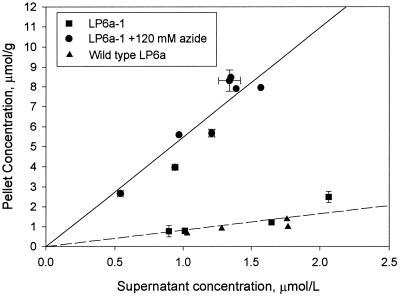
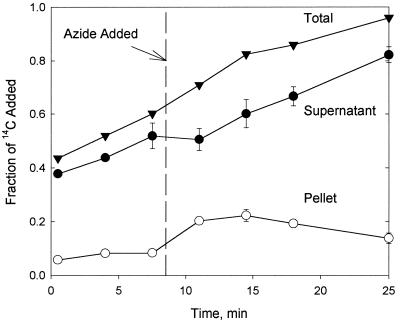
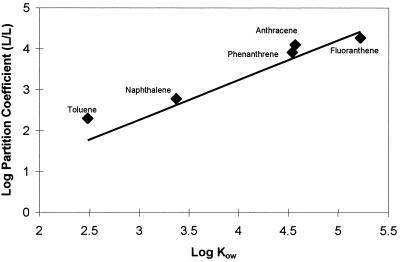
The mechanism of transport of polycyclic aromatic hydrocarbons (PAHs) by Pseudomonas fluorescens LP6a, a PAH-degrading bacterium, was studied by inhibiting membrane transport and measuring the resulting change in cellular uptake. Three cultures were used: wild-type LP6a which carried a plasmid for PAH degradation, a transposon mutant lacking the first enzyme in the pathway for PAH degradation, and a cured strain without the plasmid. Washed cells were mixed with aqueous solutions of radiolabelled PAH; then the cells were removed by centrifugation, and the concentrations of PAH in the supernatant and the cell pellet were measured. The change in the pellet and supernatant concentrations after inhibitors of membrane transport (azide, cyanide, or carbonyl cyanide m-chlorophenyl hydrazone) were added indicated the role of active transport. The data were consistent with the presence of two conflicting transport mechanisms: uptake by passive diffusion and an energy-driven efflux system to transport PAHs out of the cell. The efflux mechanism was chromosomally encoded. Under the test conditions used, neither uptake nor efflux of phenanthrene by P. fluorescens LP6a was saturated. The efflux mechanism showed selectivity since phenanthrene, anthracene, and fluoranthene were transported out of the cell but naphthalene was not.
Figures
References
-
- Alexander M. Biodegradation and bioremediation. San Diego, Calif: Academic Press Inc.; 1994.
-
- Cerniglia C E. Microbial metabolism of polycyclic aromatic hydrocarbons. Adv Appl Microbiol. 1984;30:31–71. - PubMed
-
- Dawson R M C, Elliott D C, Elliot W H, Jones K M. Data for biochemical research. 2nd ed. Oxford, United Kingdom: Oxford University Press; 1969.
-
- de Bont J M. Solvent-tolerant bacteria in biocatalysis. Trends Biotechnol. 1998;16:493–499.
Publication types
MeSH terms
Substances
LinkOut - more resources
Full Text Sources
