


Brain processing of visual sexual stimuli in human males
- PMID: 11098795
- PMCID: PMC6871964
- DOI: 10.1002/1097-0193(200011)11:3<162::aid-hbm30>3.0.co;2-a
Brain processing of visual sexual stimuli in human males
Abstract
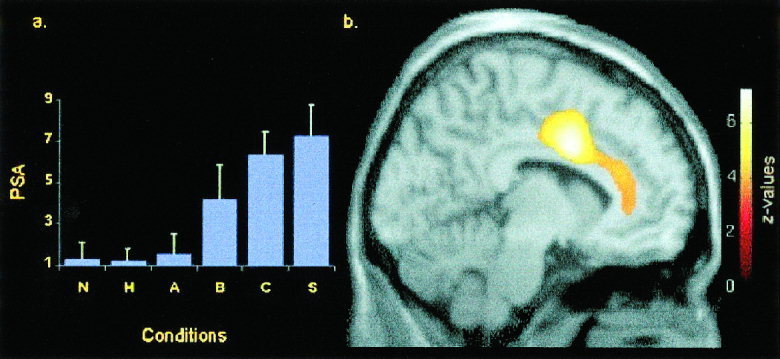
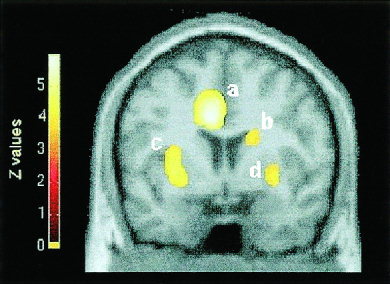
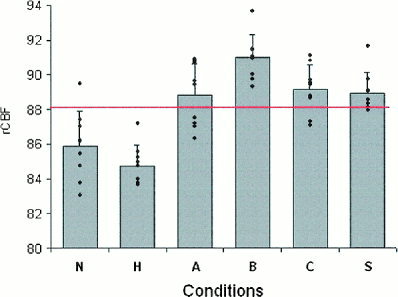
Despite its critical sociobiological importance, the brain processing of visual sexual stimuli has not been characterized precisely in human beings. We used Positron Emission Tomography (PET) to investigate responses of regional cerebral blood flow (rCBF) in nine healthy males presented with visual sexual stimuli of graded intensity. Statistical Parametric Mapping was used to locate brain regions whose activation was associated with the presentation of the sexual stimuli and was correlated with markers of sexual arousal. The claustrum, a region whose function had been unclear, displayed one of the highest activations. Additionally, activations were recorded in paralimbic areas (anterior cingulate gyrus, orbito-frontal cortex), in the striatum (head of caudate nucleus, putamen), and in the posterior hypothalamus. By contrast, decreased rCBF was observed in several temporal areas. Based on these results, we propose a model of the brain processes mediating the cognitive, emotional, motivational, and autonomic components of human male sexual arousal.
Figures
References
-
- Alcock J (1997): Animal behavior. Sunderland, MA: Sinauer Associates, Inc; 625p.
-
- Amaral DG, Price JL (1984): Amygdalo‐cortical projections in the monkey (Macaca fascicularis). J Comp Neurol 230: 465–496. - PubMed
-
- Bancroft J (1989): Human sexuality and its problems. London: Churchill Livingstone; 748p.
-
- Bancroft J (1999): Central inhibition of sexual response in the male: a theoretical perspective. Neurosci Biobehav Rev 23: 763–784. - PubMed
-
- Baum MJ, Everitt BJ, Herbert J, Keverne EB (1977): Hormonal basis of proceptivity and receptivity in female primates. Arch Sex Behav 6: 173–192. - PubMed
MeSH terms
Substances
LinkOut - more resources
Full Text Sources
